< img height="1" width="1" style="display:none" src="https://www.facebook.com/tr?id=1022966456349414&ev=PageView&noscript=1" />
News

Steel Structure Workshop vs Concrete Workshop: Complete Guide to Overhead Crane Selection

2026-05-09

The $200,000 Mistake Nobody Talks About

You specify an equipment model, the workshop gets built, and then six months later your maintenance team reports deformation in the runway beam. The root cause? Improper overhead crane selection where wheel loads fail to match the building structure. Retrofitting the building — adding stiffeners, upgrading column bases, or even replacing corbels — can cost $150,000 to $250,000 and bring your production line to a halt for weeks.

This guide bridges the gap between crane mechanics and structural engineering. Whether you are outfitting a new steel structure workshop or preparing a concrete factory for heavy-duty lifting, you’ll learn exactly how to master overhead crane selection to protect both your building and your budget.


The factory structure is the physical foundation for overhead crane operation. It determines the capacity limit, precision, and service life of the equipment. Steel structures are mainstream in light industry due to high turnover rates. Conversely, concrete structures dominate heavy metallurgy and ultra-heavy processing sectors.

Companies often prioritize equipment over structure, ignoring dynamic wheel load impacts on factory longevity. Errors in headroom calculation also lead to wasted space. This article analyzes overhead crane selection logic for both structures to balance cost and efficiency.
Steel Structure Workshop vs Concrete Workshop: Complete Guide to Overhead Crane Selection

Steel vs. Concrete Workshop: Core Structural Differences

Your workshop structure is not just a shell — it is the primary load path for every vertical and horizontal force the crane generates. Understanding these differences upfront will save you from expensive foundation work or premature fatigue failures.

Characteristic

Steel Structure Workshop

Concrete Structure Workshop

Typical column material

H-shaped steel (Q355B or S355JR)

Reinforced concrete (C30/C40 grade)

Crane runway support

Bolted or welded runway beam attached to column flanges

Cast-in-situ corbel (concrete bracket)

Span range

18 m–36 m (can exceed 40 m with trusses)

15 m–30 m (beyond 30 m requires heavy beams)

Occupied floor space

Slimmer columns (approx. 400–600 mm wide)

Bulkier columns (800–1200 mm square)

Construction speed

12–16 weeks for a 5,000 m² building

20–28 weeks (curing time dominates)

Cost per m² (superstructure only)

$80–$120

$110–$160

Seismic / vibration damping

Low inherent damping (< 2% of critical)

Higher damping (3–5%) — better for high-speed crane operations

Future modification ease

High — columns can be reinforced, runway beams upgraded

Low — corbel capacity is fixed after pouring

The fundamental insight: In steel structures, you design the crane to minimize load effects on a flexible system. In concrete structures, you design the crane to exploit the structure’s rigidity for heavy, constant-duty cycles.
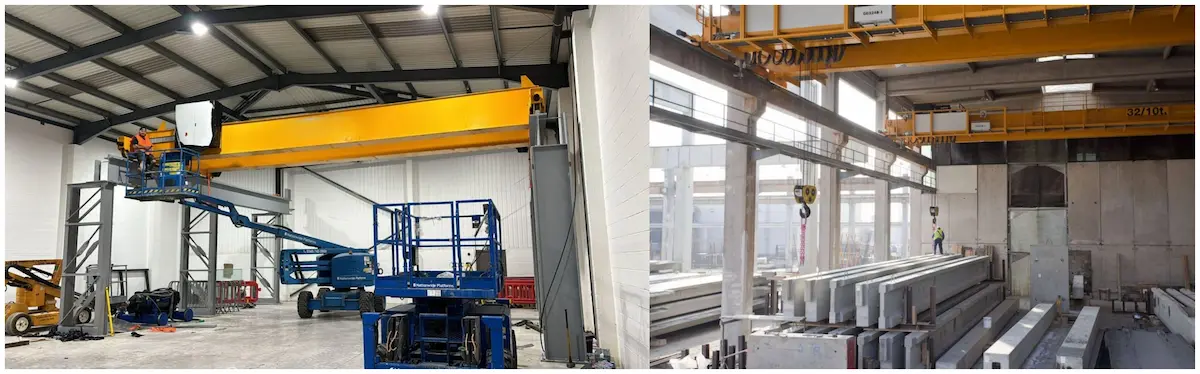
Steel vs. Concrete Workshop: Core Structural Differences

Why Factory Structure Matters in Overhead Crane Selection

Load Capacity Affects Crane Tonnage

The structural strength of the factory sets the baseline for overhead crane selection. The maximum lifting capacity must match the load design of the building.
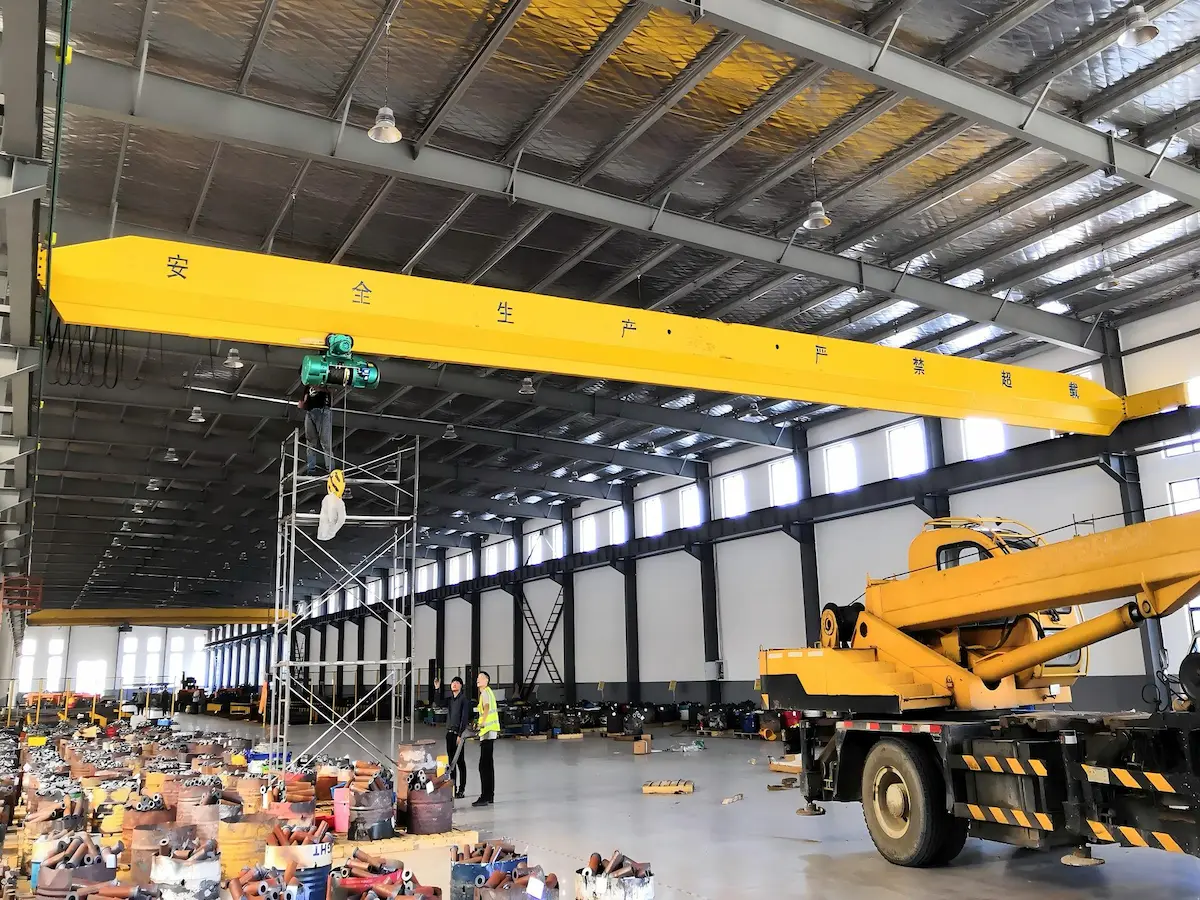
  • Lifting Capacity and Structural Load:Total weight and rated load transfer through wheels to the runway beams. You must verify column and foundation bearing limits before selection.
  • Dynamic and Static Load Analysis:Overhead crane selection must account for static weight and dynamic impact factors. Starting, braking, and hoisting create instantaneous forces. Insufficient rigidity leads to beam deformation or structural fatigue failure over time.

Factory Structure Matters in Overhead Crane Selection

Factory Span Determines Crane Span

The crane span is typically 1 to 2 meters shorter than the factory span. This distance depends on the center-to-center runway rail measurements.
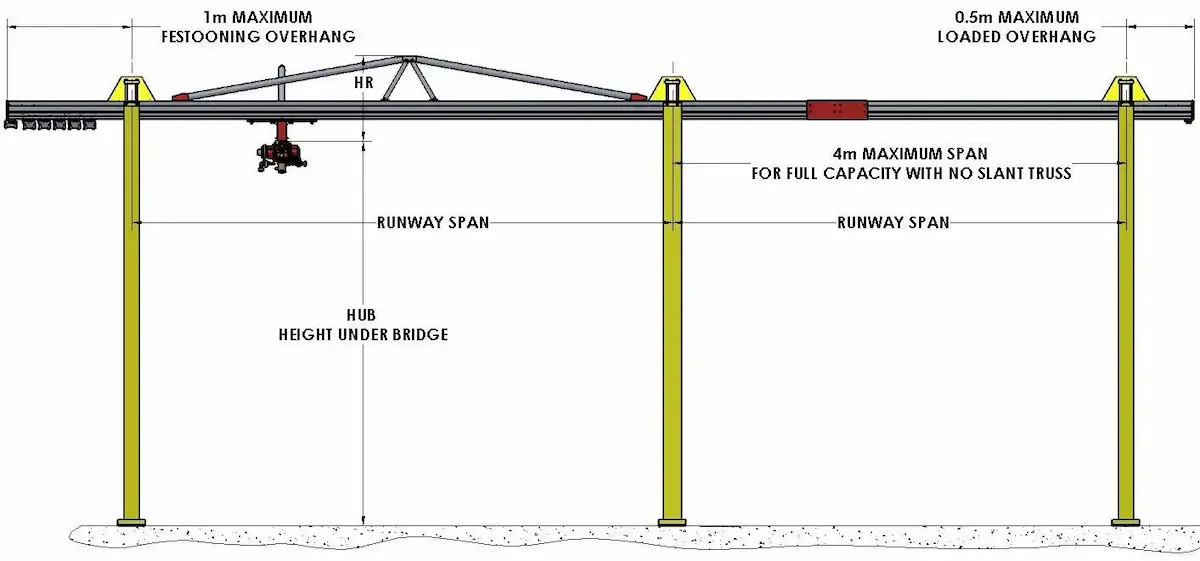
  • Steel Structure Factories:Common spans include 18m, 24m, and 30m. Thin steel columns allow runway beams to be fixed via plates, offering more adjustment space.
  • Concrete Factories:Rail layout is restricted by the width of pre-cast corbels. Inaccurate factory spans lead to wheel wear (rail gnawing) or installation failure.

Factory Span Determines Crane Span

Lifting Height and Headroom Requirements

Headroom is the distance between the lowest building component and the top of the rail.
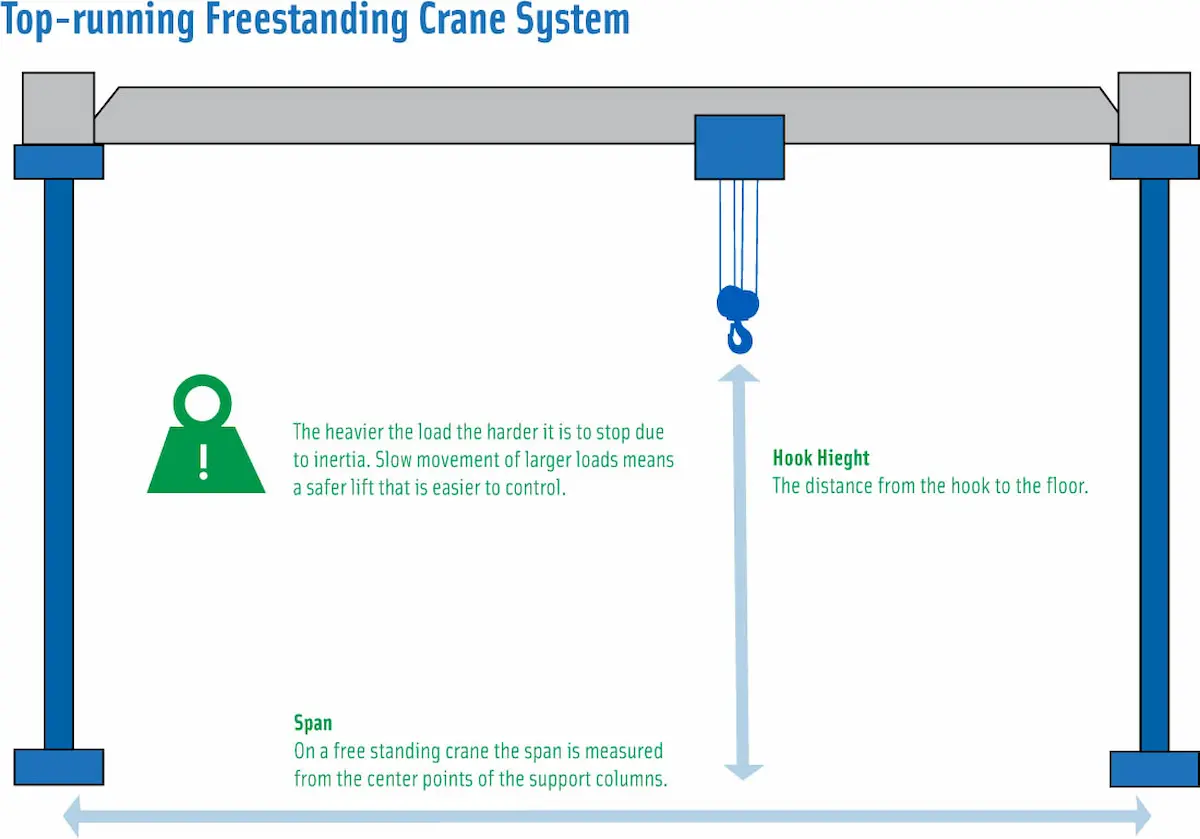
  • Design Constraints:Total factory height minus headroom requirements equals the effective lifting height.
  • Low Headroom Solutions:Use European-style low headroom cranes for renovation projects with low ceilings. Optimized trolley designs increase lifting height by 500mm to 1000mm compared to traditional models. This helps reduce the overall height of new buildings.

Lifting Height and Headroom Requirements

Vibration and Operational Stability

  • Steel Structure Vibration:Steel has good ductility but lower stiffness, causing elastic swaying during crane operation. Selection should include frequency conversion systems to reduce structural impact through smooth movement.
  • Concrete Structure Advantages:High mass and stiffness effectively absorb mechanical vibrations. Concrete provides superior stability for high-frequency work or precision assembly, improving positioning accuracy.

Vibration and Operational Stability

Core Conclusion: Overhead crane selection is not an isolated mechanical purchase. It is an integrated structural calculation involving the machine, rails, beams, and columns. Ignoring factory characteristics risks high reinforcement costs or low operational efficiency.

Key Points for Overhead Crane Selection in Steel Structure Factories

Recommended Overhead Crane Types

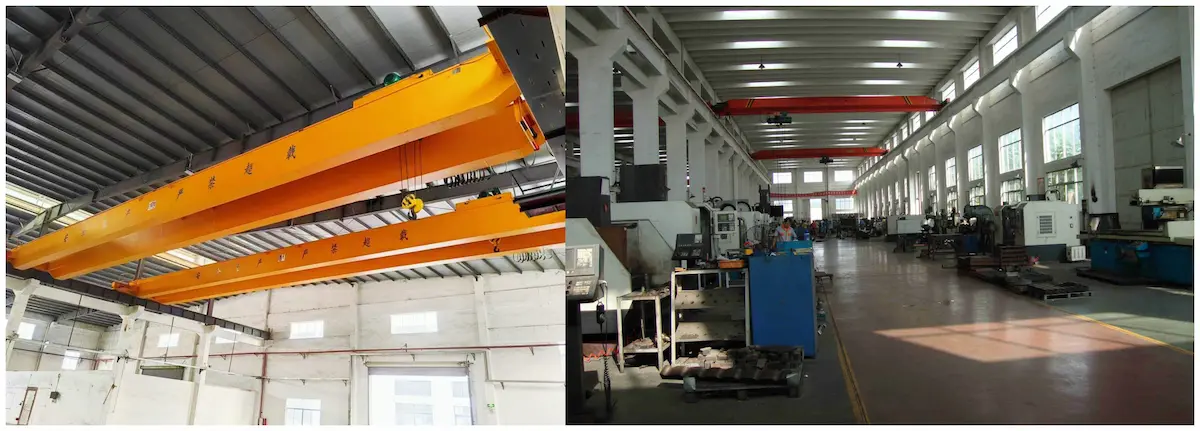
For steel structure factories, which feature low self-weight and flexible rigidity, selection should prioritize lightweight designs to reduce the load on column heads.
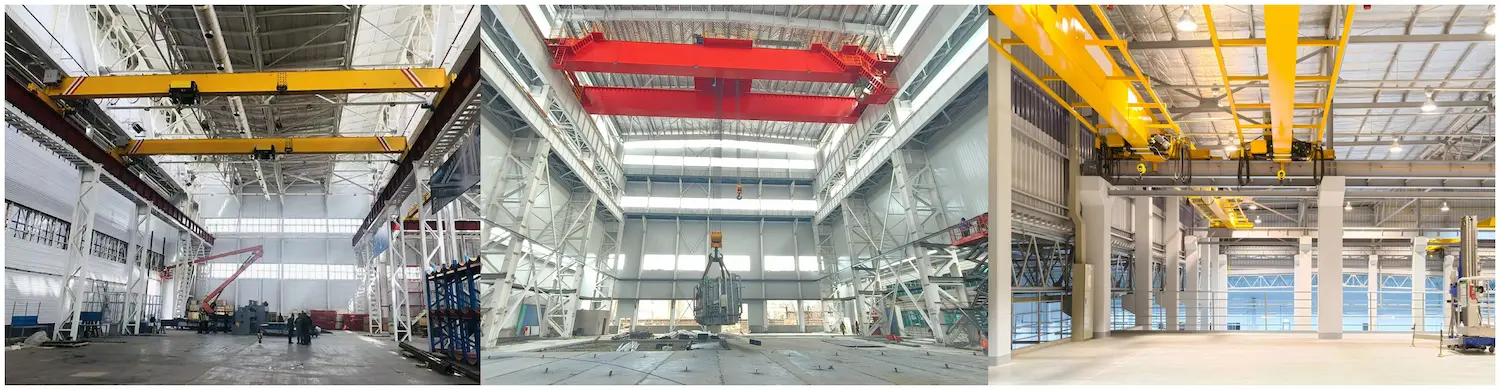
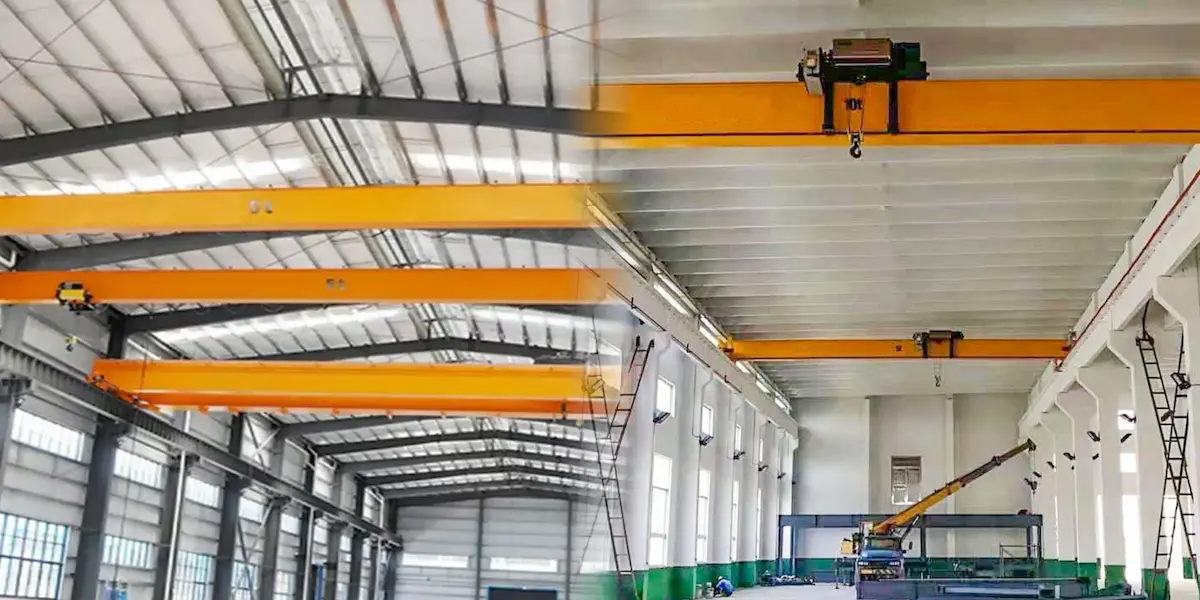
  • Single Girder Overhead Crane:Ideal for spans and capacities typically under 10t. This simple, lightweight structure is the most economical solution with minimal structural requirements.
  • Double Girder Overhead Crane:Selected for capacities exceeding 10t or higher duty cycles (A5 and above). It provides better operational stability and hook coverage for large-span steel workshops.
  • European Low Headroom Overhead Crane:The core recommendation from HSCRANE. The compact hoist design significantly reduces the distance between the hook and the roof truss. It can lower the required factory height by 1m–1.5m for the same lift height, directly cutting steel usage and construction costs.

Recommended Overhead Crane Types

Design Requirements for Runway Beams and Columns

The load-bearing capacity of a steel factory depends on the steel columns and the runway beam support system.
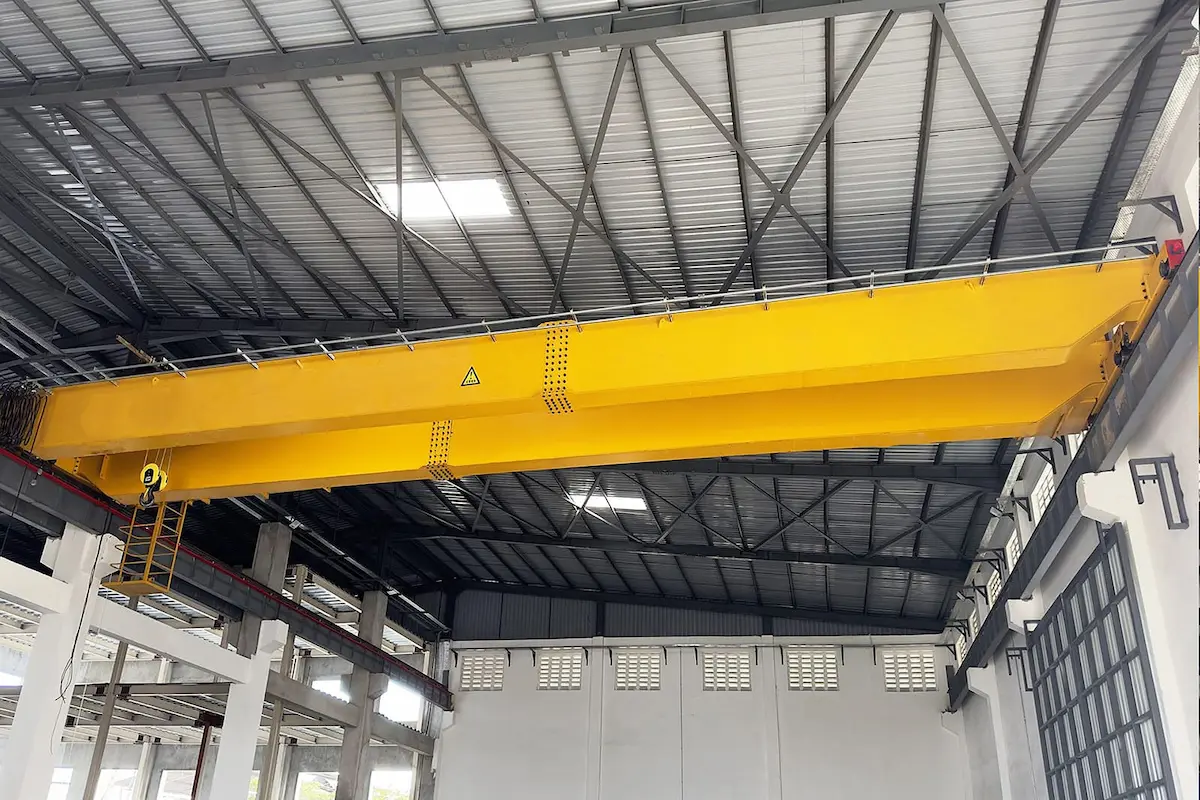
  • Column Stress Analysis:You must provide maximum and minimum wheel load data during selection. Column designs must account for vertical pressure, horizontal braking inertia, and eccentric moments. This ensures column deflection remains within code under dynamic conditions.
  • Anti-Tip and Reinforcement Measures:
  1. Runway Support:Install longitudinal bracing and horizontal tie rods to resist inertial impacts during startup and braking.
  2. Stiffener Design:Add reinforcement webs at the connection between columns and runway beams to prevent local instability.
  3. Eccentricity Control:Optimize the alignment between the runway beam centerline and the column axis to minimize torque.

Overhead Crane Selection in Steel Structure Factories

Suitable Industry Applications

Steel structure factories offer fast construction and modularity, making these cranes ideal for:
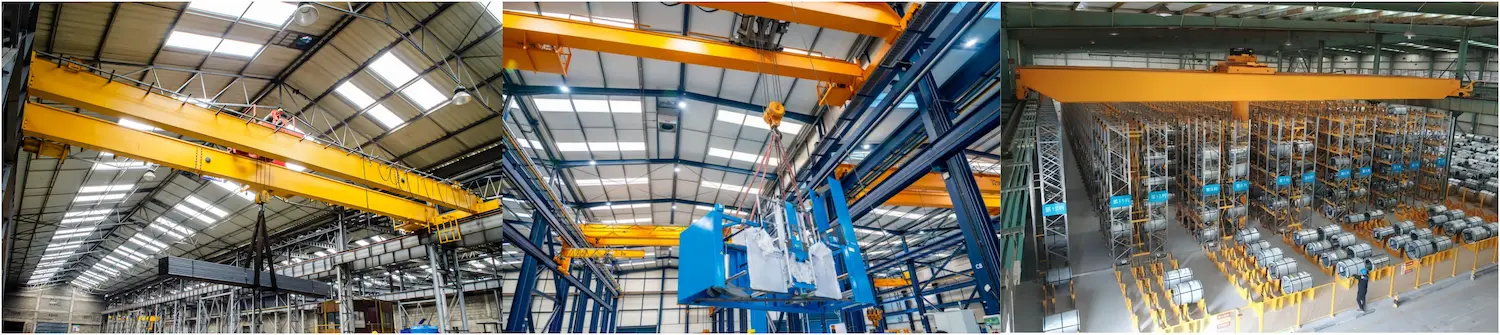
  • Assembly Workshops:Precision positioning for electronics and appliance production lines using single girder or European-style cranes.
  • Machinery Manufacturing:General equipment processing and mold making where space utilization is critical.
  • Warehousing and Logistics:Automated warehouses and distribution centers utilize the large span and headroom advantages of European cranes to increase stacking height.

Suitable Industry Applications

Selection Tip: Steel structures are sensitive to operational impacts. It is highly recommended to equip both the crane bridge and trolley with Variable Frequency Drives (VFD). Smooth acceleration and deceleration reduce lateral swaying and prevent fatigue damage to steel connections.

Key Points for Overhead Crane Selection in Concrete Factories

Advantages in Heavy-Duty Conditions

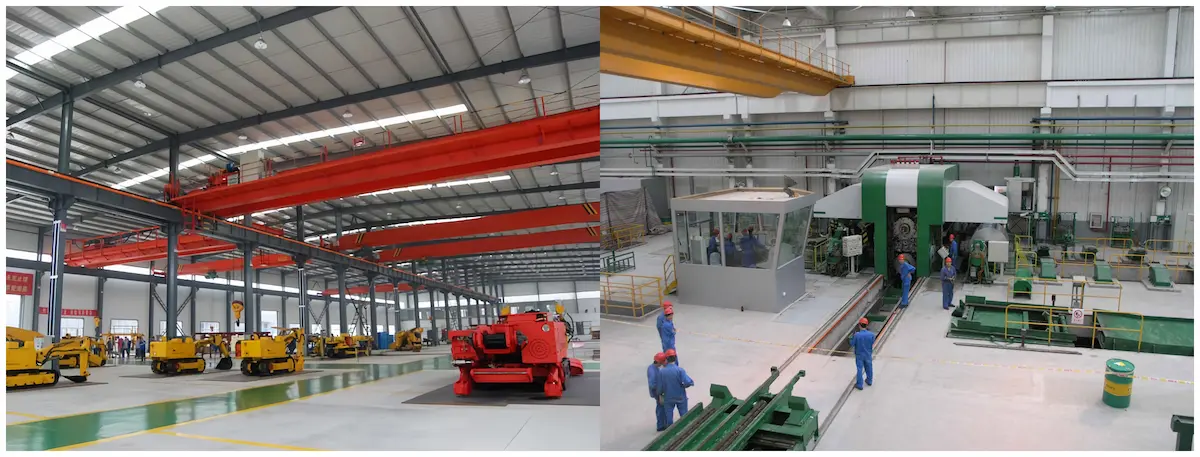
Concrete factories are the preferred choice for heavy industry due to their extreme structural rigidity and thermal stability.
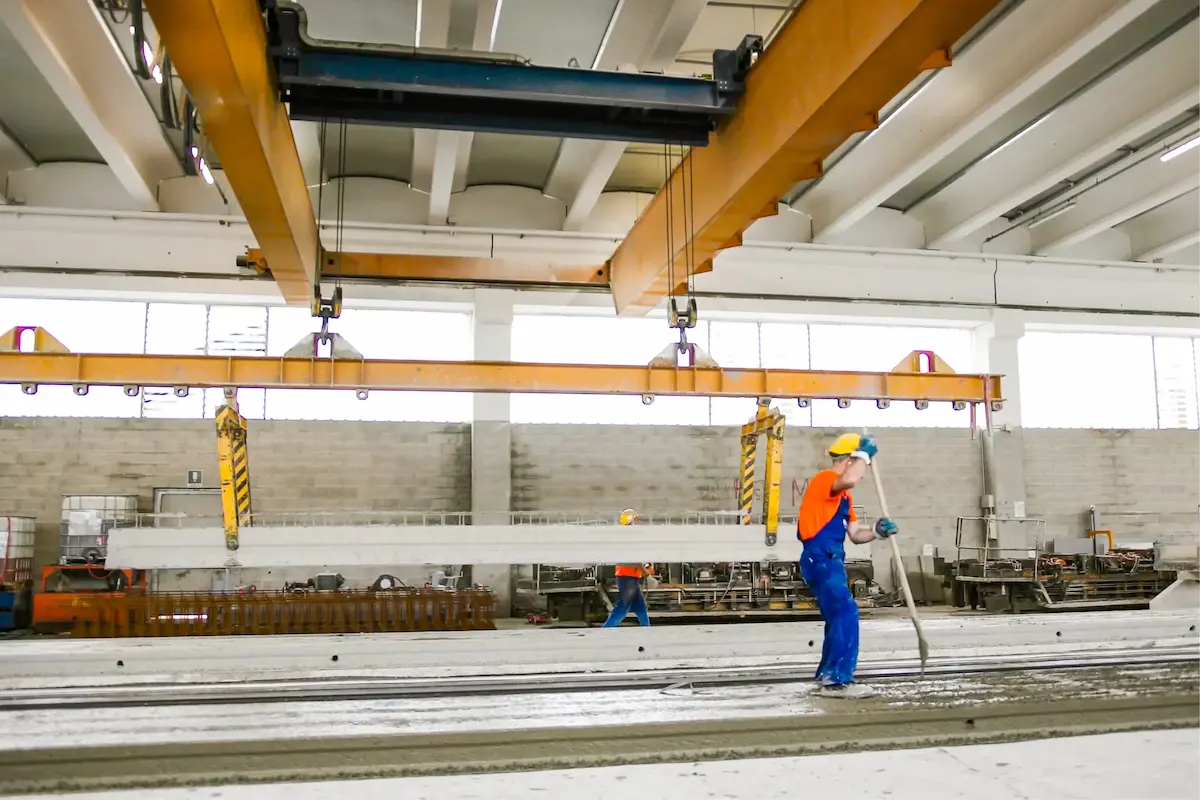
  • Large Capacity Applications:Concrete columns possess immense axial load-bearing capacity. They easily handle loads of 50t, 100t, or even hundreds of tons. Compared to steel, concrete exhibits minimal structural deflection during heavy lifts, ensuring maximum safety.
  • High-Frequency Environments:For A6, A7, or A8 duty cycles, concrete structures absorb most mechanical resonance. During frequent starts, stops, and reciprocating movements, concrete is less prone to fatigue damage, ensuring the long-term stability of the rail system.

Overhead Crane Selection in Concrete Factories

Rail Installation and Civil Engineering Coordination

Crane installation in concrete factories relies heavily on the precision of early-stage civil engineering. This is a typical “irreversible” design process.
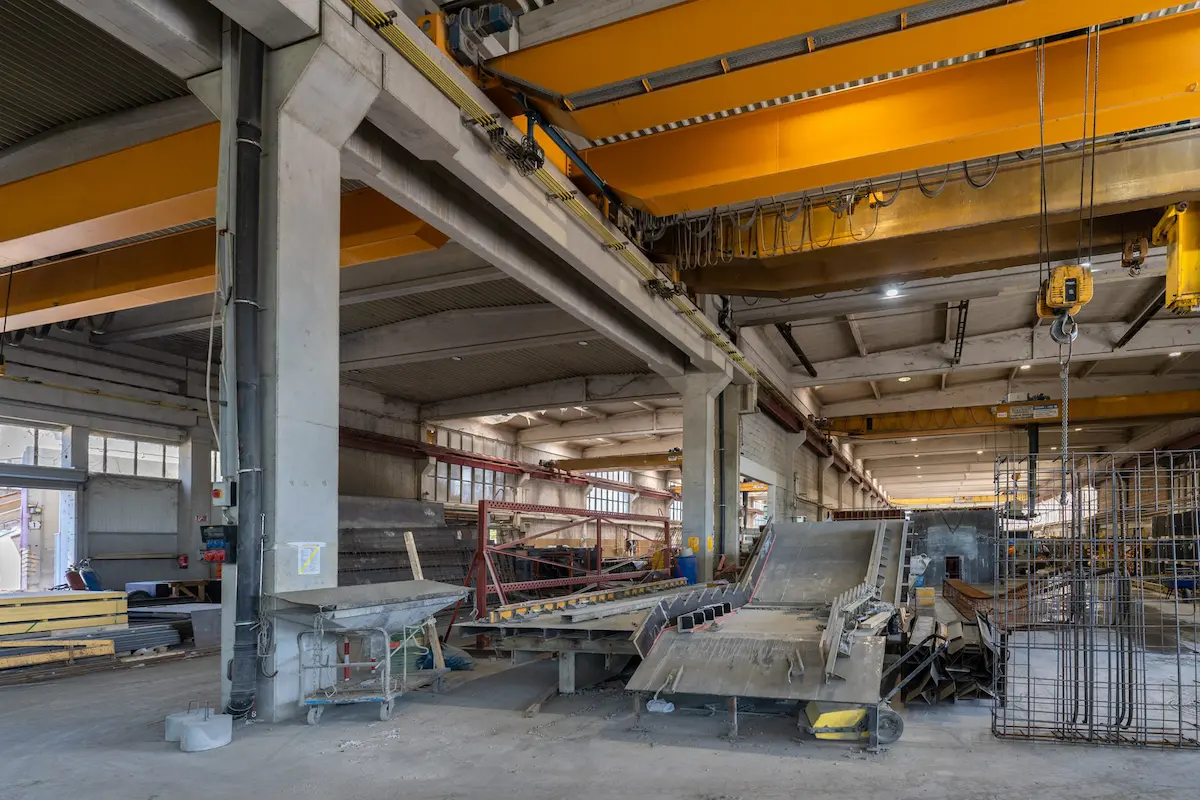
  • Corbel Structural Design:Runway beams are placed directly on the concrete corbels (brackets) of the columns. You must strictly verify the load limits and dimensions of these corbels during selection. Strengthening concrete corbels later is far more difficult and costly than reinforcing steel structures.
  • Rail Precision Requirements:Rail clips are usually fixed via embedded bolts or welded to embedded steel plates. Due to concrete shrinkage and settling, secondary alignment is required during installation.
  • Adjustment Solutions:HSCRANE recommends using adjustable rail clip systems. These compensate for centimeter-level deviations in civil construction, preventing “rail gnawing” caused by span errors.

Overhead Crane Selection in Concrete Factories

Suitable Industry Scenarios

The high fire resistance and rigidity of concrete factories make them excel in harsh conditions:
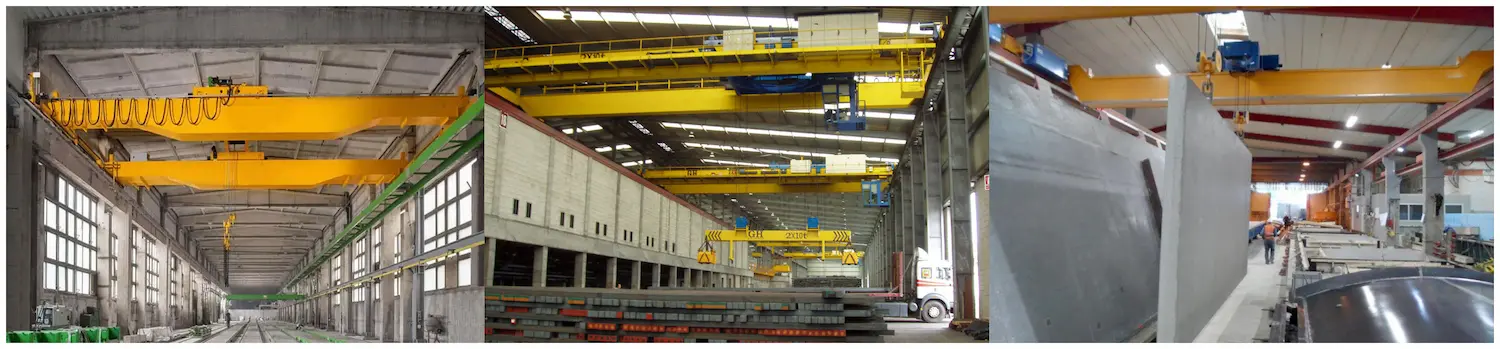
  • Steel Industry:Steelmaking and continuous casting workshops have high temperatures and heavy dust. Concrete structures provide superior thermal protection.
  • Metallurgy Industry:Handling molten metal is high-risk and demands extreme structural stability and impact resistance.
  • Heavy Processing Workshops:For flipping and assembling large rotors or machine bases, cranes must have high micro-motion precision under heavy loads. The low-vibration characteristic of concrete is vital here.

Suitable Industry Scenarios

Core Logic: Overhead crane selection for concrete factories must be “design-first.” Because post-construction modifications are extremely expensive, you must reserve sufficient capacity redundancy and headroom dimensions initially. Focus heavily on the distribution precision of embedded parts.

Comparison: Steel vs. Concrete Structures for Overhead Crane Selection

The following table evaluates how factory structure impacts overhead crane selection and total lifecycle costs:

Comparison Dimension

Steel Structure Factory

Concrete Structure Factory

Load Capacity

High strength-to-weight ratio; ideal for light-to-medium loads and large spans.

Exceptional compressive strength; ideal for ultra-heavy loads and impact forces.

Installation Cost

Lower; high prefabrication leads to less on-site labor.

Higher; involves large-scale pouring and complex embedded parts.

Construction Period

Very short; typically 40% faster than concrete structures.

Longer; restricted by formwork assembly and concrete curing cycles.

Maintenance

Requires regular inspection of anti-corrosion coatings and bolt tightness.

Minimal structural maintenance; focus is on rail leveling and alignment.

Expansion Flexibility

Very high; columns can be reinforced or spans adjusted via welding/bolting.

Very low; structural modifications are difficult and extremely costly.

Typical Crane Tonnage

Generally 1t–50t; loads over 100t require massive column sections.

50t–500t+; ideal for large capacity and heavy-duty (A6-A8) cranes.

Operational Stability

Prone to elastic swaying; highly dependent on VFD anti-sway systems.

Excellent damping; smooth operation ideal for precision and high-frequency tasks.

Final Decision Guidance for Overhead Crane Selection

  • Choose Steel Structures if:You prioritize construction speed, have a sensitive budget, or anticipate future changes to your production line layout. This is standard for general manufacturing and warehousing.
  • Choose Concrete Structures if:Your process is fixed, involves extreme heat or corrosion, or requires long-term operation of ultra-heavy cranes. This is the gold standard for metallurgy and heavy machining industries.

Comparison: Steel vs. Concrete Structures for Overhead Crane Selection

HSCRANE Product Advantages

  • Comprehensive Product Line:HSCRANE offers a full range of single girder, double girder, and customized European-style overhead cranes. Our portfolio spans from general-purpose units for standard workshops to 500t heavy-duty metallurgical cranes for extreme conditions. Modular design ensures each crane precisely matches your specific process.
  • Structure-Specific Adaptation:We understand the stress distribution differences between building types. For steel structures, HSCRANE prioritizes dynamic stability to prevent structural resonance. For concrete structures, we optimize long-travel mechanisms to ensure high-frequency precision on corbel supports.
  • Optimization to Lower Investment:Using advanced Finite Element Analysis (FEA), HSCRANE implements lightweight bridge designs. By reducing self-weight and wheel loads without compromising strength, we can help customers save 10%–15% on steel usage in new plant construction, significantly lowering initial civil costs.
  • Intelligence and Safety:All models can be equipped with VFD control and electronic anti-sway systems. These features achieve millimeter-level positioning and minimize structural impact. Our remote monitoring and smart O&M platforms provide real-time status updates and predictive maintenance to ensure zero downtime.
  • Global Project Expertise:HSCRANE possesses extensive international delivery capabilities, complying with GB, FEM, and DIN standards. With proven applications in major industrial zones worldwide, we provide full lifecycle services—from design and installation guidance to after-sales support.

HSCRANE overhead crane

Conclusion: Engineering Synergy

Overhead crane selection is not a simple purchase; it is the deep integration of mechanical performance and structural mechanics.

  • Structure Dictates the Solution:Flexible steel plants require lighter cranes with smooth power responses. Rigid concrete plants provide the physical foundation for heavy-duty, high-frequency operations.
  • Value Comes from Compatibility:Correct selection ensures safety and directly reduces initial civil engineering costs and long-term maintenance by optimizing wheel loads and headroom.

Get Professional Selection Support Now

In the face of complex engineering requirements, blind selection can lead to soaring reinforcement costs or low efficiency. Choose HSCRANE, and our engineering team will provide a one-stop solution—from load calculations to equipment customization—based on your plant blueprints.

[Contact HSCRANE Technical Experts] — Get your customized overhead crane selection plan and quote today.

Expert Tip:

A selection error can lead to millions in structural reinforcement costs!

Whether you are retrofitting an existing facility or planning new construction, structural compatibility is the core of safe operation. Click to view [January 2026 Practice: Key Selection Points for Overhead Cranes in New and Existing Plants] to avoid common civil engineering pitfalls and save on unnecessary structural expenses.

FAQ: Overhead Crane Selection

Q1: Can a steel structure support a 100-ton overhead crane?
A1: Yes, with reinforced columns and beams. HSCRANE’s lightweight designs reduce wheel loads by 18%, allowing capacities up to 150 tons. Detailed finite element analysis is required to manage skewing forces.

Q2: What is the biggest mistake in concrete workshop crane selection?
A2: Underestimating future capacity. Concrete corbels are nearly impossible to modify later. Always reserve 20% extra load capacity and use adjustable rail fasteners to handle potential building settlement.

Q3: How can I reduce installation costs in a new steel building?
A3: Use European-style low-headroom cranes to lower building height by 1–1.5m. This reduces steel tonnage and costs. Standardizing with VFD drives also eliminates heavy impact forces, protecting the structure.

Q4: What technical standards are required for concrete factories?
A4: Cranes must meet FEM/CMAA standards for classification and ISO 12488-1 for deflection. For heavy-duty use, runway beam deflection should stay within L/1000 to prevent fatigue at the corbel connections.

Q5: Can I upgrade a crane in an existing concrete building?
A5: Only if the original corbels have a safety margin. Retrofitting with steel supports or carbon fiber is possible but expensive ($30k–$80k). Designing with a 20%–25% load reserve from the start is highly recommended.

This document is for reference only. Specific operations must strictly comply with local laws and regulations and equipment manuals.

HomeInquiry WhatsApp Mail