Welcome to visit our factory
Email : info@huasuicrane.com


This guide analyzes ten core technical challenges in selecting a jib crane. It aims to prevent low efficiency and safety risks from mismatched parameters. The content covers application matching for pillar, wall-mounted, and wall-traveling jib cranes. It focuses on precise lifting capacity calculation, including attachments and safety factors. It also discusses coverage radius, structural stress matching, and environmental impacts on equipment lifespan. These environments include anti-corrosion, explosion-proof, and dusty conditions. Against efficiency differences of manual and electric rotation, and performance selection of chain and wire rope hoists, this text provides engineering advice based on production cycles. HSCRANE integrates ISO, CE, and FEM international standards with extensive export experience. We offer high-strength steel structures and customized lifting solutions. These solutions help customers avoid installation downtime and reduce life-cycle maintenance costs. They ensure highly efficient and reliable material handling systems.
In lean production layouts, the jib crane is vital for station handling efficiency. It meets the high-frequency cycles of automotive assembly, precise machining positioning, and heavy-duty steel structures. The equipment effectively relieves pressure on large overhead cranes and shortens lifting cycles. If procurement ignores key engineering parameters like duty class, rotational resistance, or foundation bearing capacity, it will directly lead to equipment and process mismatch. This increases mechanism wear and safety compliance risks.
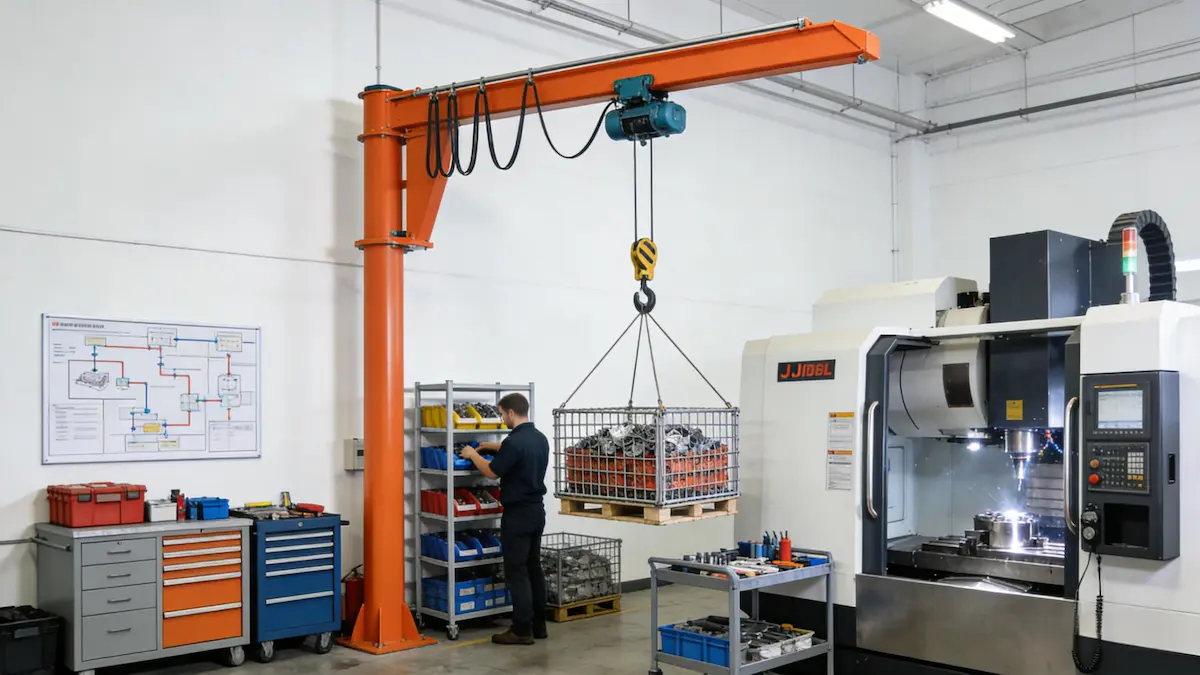
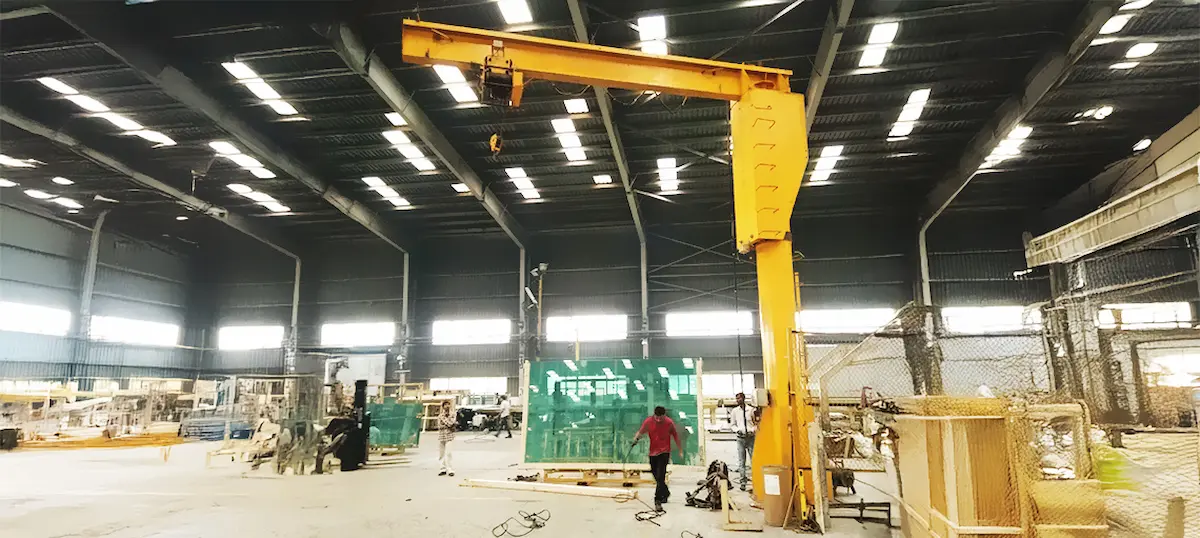
Every jib crane belongs to one of four structural families. Picking the wrong family means you either waste floor space or overload a building element. The table below gives you immediate filtering criteria.
|
Type |
Structural Features |
Core Advantage |
Typical Applications |
|
Pillar-mounted (BZ series) |
Independent column fixed into a reinforced concrete foundation; 360° rotation |
Maximum flexibility, no dependency on building structure |
Outdoor loading docks, standalone machining stations |
|
Wall-mounted (BX series) |
Bracket bolted onto an existing steel column or load-bearing wall; usually 200° rotation |
Zero floor footprint, lower capital cost |
Tight workshops, auxiliary lifting next to large cranes |
|
Wall-traveling (BB series) |
Upper and lower runway beams mounted on a wall, crane travels linearly along the wall |
Covers long linear work zones without obstructing floor traffic |
Automotive assembly lines, multi-station progressive manufacturing |
|
Ar ticulated & mobile (BZ-Q / portable) |
Two-arm knuckle or a counterweighted base with casters; no foundation required |
Re-deployable in under 30 minutes, no civil work |
Equipment maintenance, temporary production lines, mold change |
Decision logic flowchart in short:

The determination of rated capacity for a jib crane is not an estimation process. Designing a capacity too small causes frequent overloading and triggers safety limits. This delays schedules. Designing a capacity too large increases equipment self-weight. This raises foundation costs and operating energy consumption.
In engineering practice, the safe working load (SWL) must cover all variables in the lifting cycle. The calculation formula is:
Qrated = (Pmax+Pattachments) × K
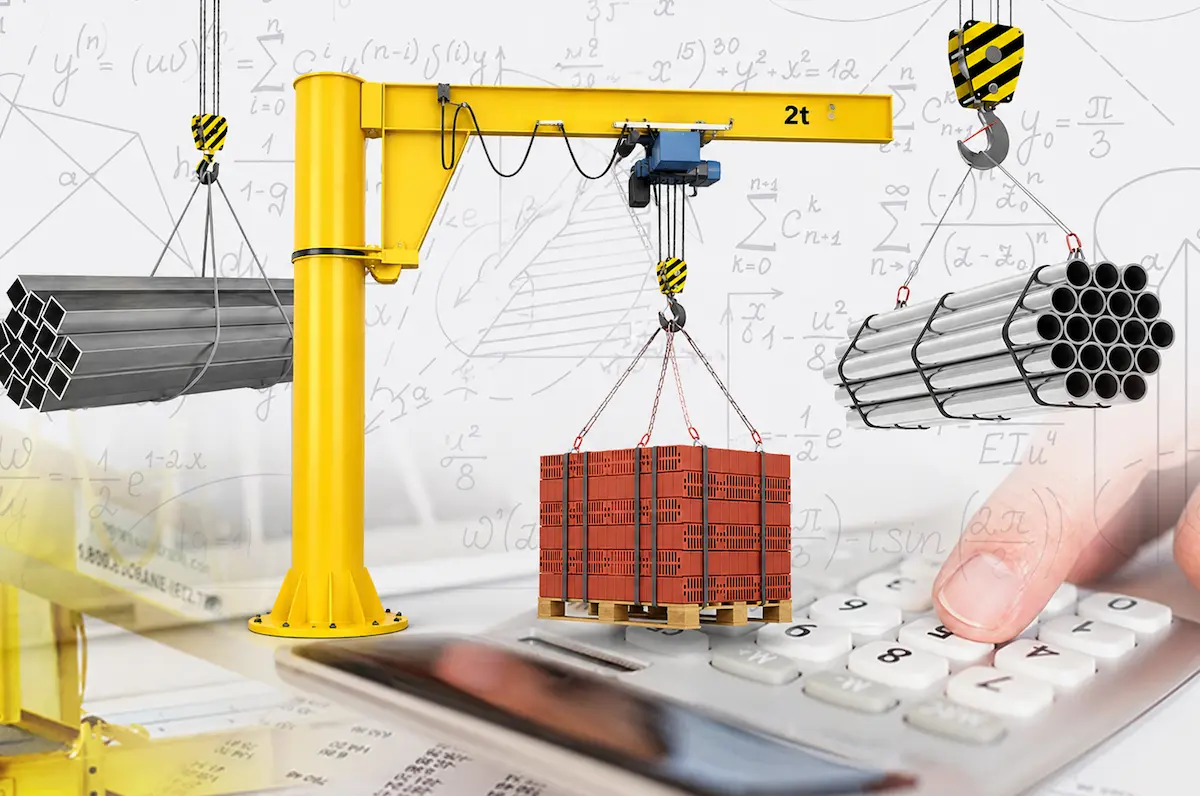
Many buyers tend to reserve excessive tonnage redundancy. This has the following negative impacts on engineering logic:
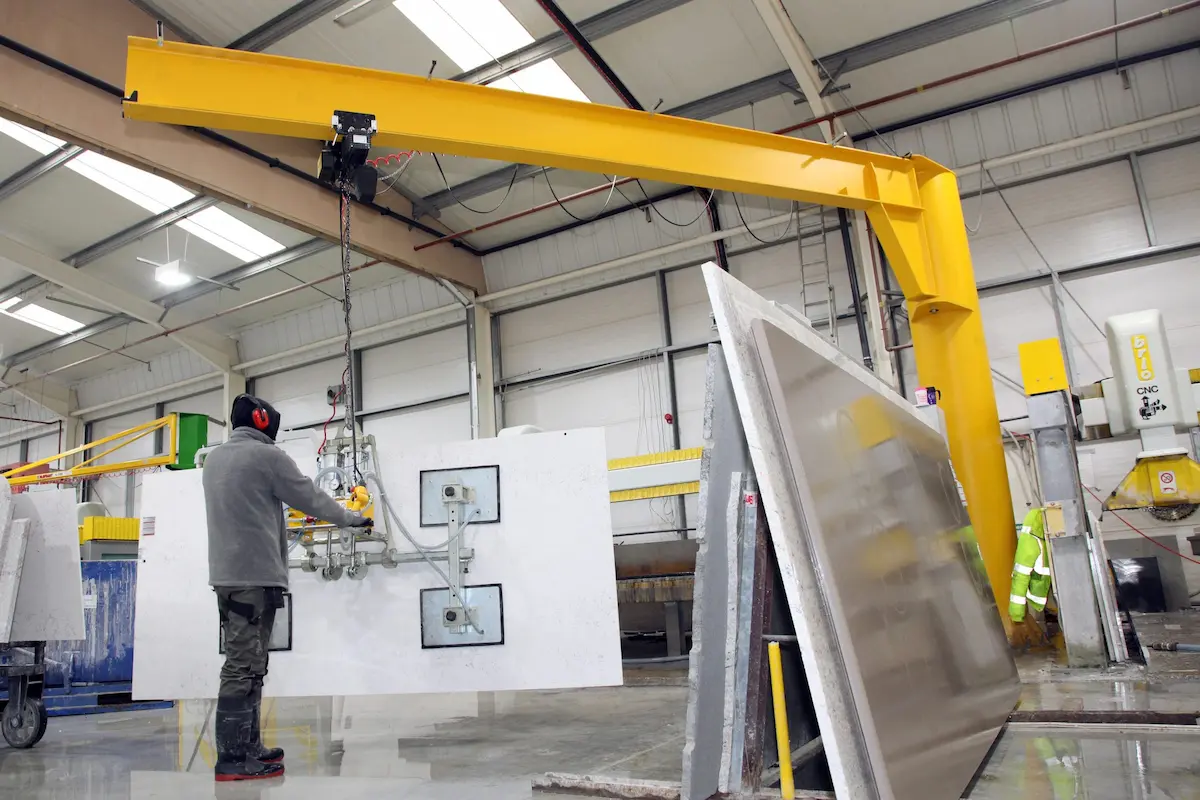
In jib crane specifications, the arm length does not equal the effective working radius. Failing to fully consider the hook limit positions during the design phase will lead to insufficient coverage or structural overloading.
The effective working radius is limited by the trolley travel. When calculating the coverage area, the following “blind spots” must be deducted:
Reffective = Larm – (Sinner + Souter)
When selecting, ensure the effective working radius completely covers the furthest lifting point of the workstation, rather than just referencing the total arm length.
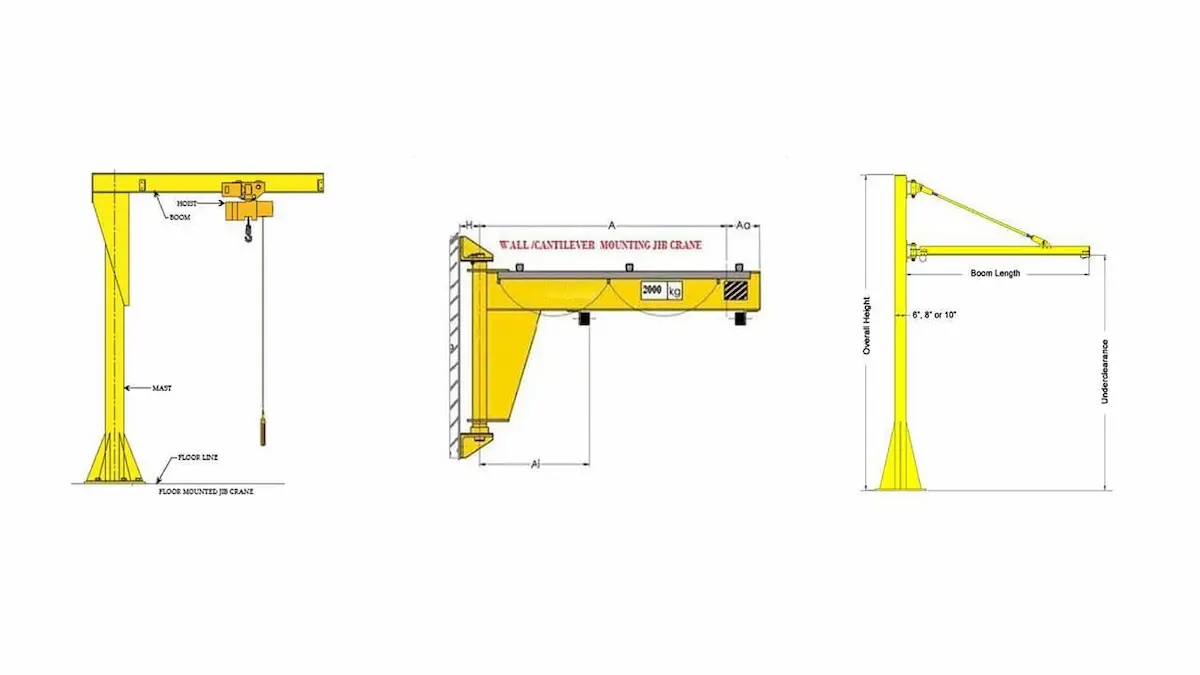
Blindly pursuing a large coverage area by increasing the arm length creates significant physical side effects:
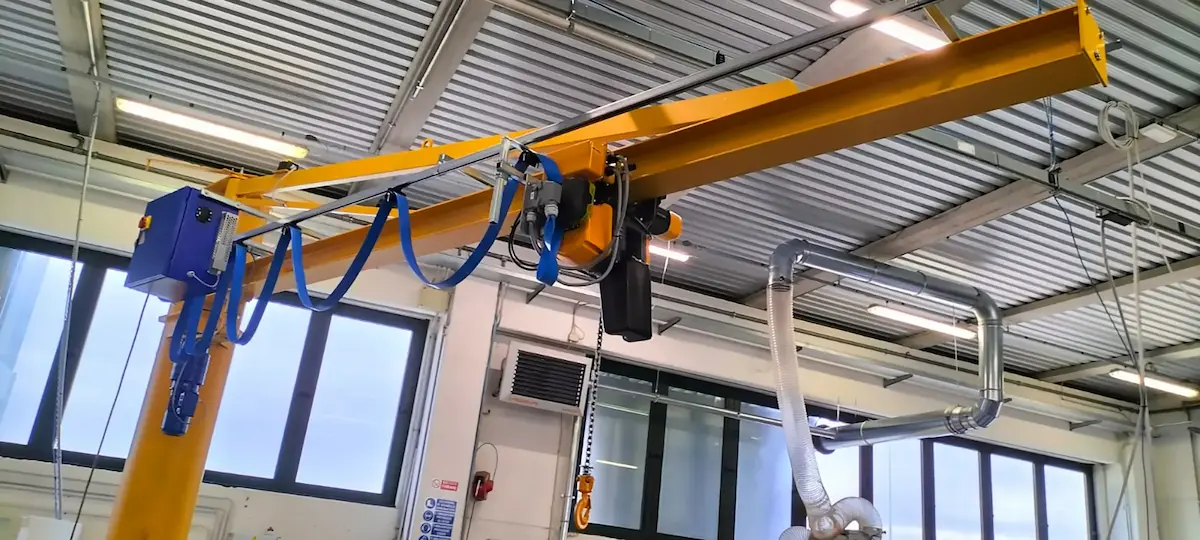
A crane that works perfectly in a clean assembly room can fail within a year when exposed to outdoor rain, foundry dust, or chemical fumes. Define the environment first, then select the protection level.
|
Condition |
Selection Requirements |
Cost Impact (vs. standard) |
|
Outdoor / uncovered |
IP55 or IP65 motors, rain canopy for hoist and panel, anti-corrosion paint system C3 or higher, wind load calculation for the arm |
+20–30% |
|
High dust (foundry, cement) |
Totally enclosed gearboxes, sealed bearings, IP65 electrical cabinet with positive air purge option |
+15–25% |
|
Chemical / coastal corrosion |
C4-C5 paint specification or hot-dip galvanizing, stainless steel chain or galvanized wire rope, electrical enclosures in 316L stainless |
+30–60% |
|
Temperature extremes (-20°C to +60°C) |
Low-temperature grease (-40°C rated), cold-weather pendant cable, motor space heaters or cooling fans |
+10–20% |
|
Explosive atmosphere (ATEX / NEC) |
Ex-rated motors, spark-resistant components, full grounding monitoring, certified assembly |
+50–100% |
Foundation note: Pillar-mounted cranes require a concrete foundation with a minimum C30 compressive strength and soil bearing capacity verified. We have seen installations where the foundation was poured on unconsolidated backfill—after six months the column leaned 12 mm, and the entire foundation had to be re-cast, shutting down the line for three weeks.
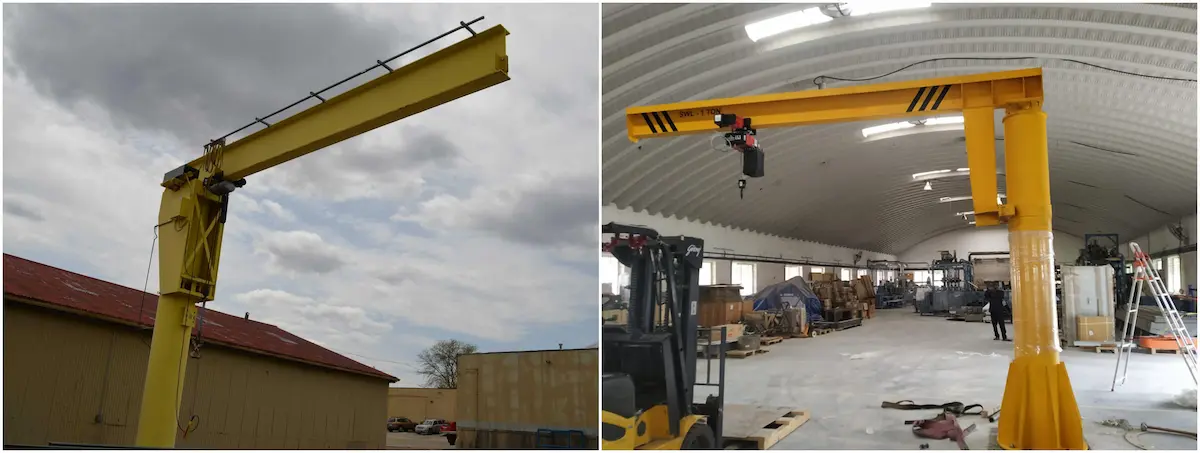
Manual rotation (pulling on the load or a chain wheel) is perfectly adequate—and more precise—for lower duty cycles. But on a 6-meter arm swinging a 2-ton load, the operator is fighting inertia, and productivity drops.
|
Parameter |
Manual Rotation |
Motorized Rotation |
|
Typical duty |
≤ 20 cycles/hour, arm < 5 m, capacity < 2 t |
> 30 cycles/hour or arm > 5 m or capacity > 2 t |
|
Positioning precision |
High tactile feedback, ideal for mold alignment |
Good when fitted with VFD and soft-stop; ±3° to ±5° typical |
|
Cost difference |
Baseline |
+15–25% for motor, gearbox, fixed rotation stop |
|
Safety in hazardous area |
Inherently safe (no electrics) |
Must be certified if in explosive zone |
In a precision instrument factory where assembly alignment tolerances are ±0.5 mm, the fine control of manual rotation may actually beat a motorized drive’s coast-to-stop uncertainty. However, for a production line where a station must complete a lift and return in under 45 seconds, electric rotation with a frequency inverter becomes mandatory.
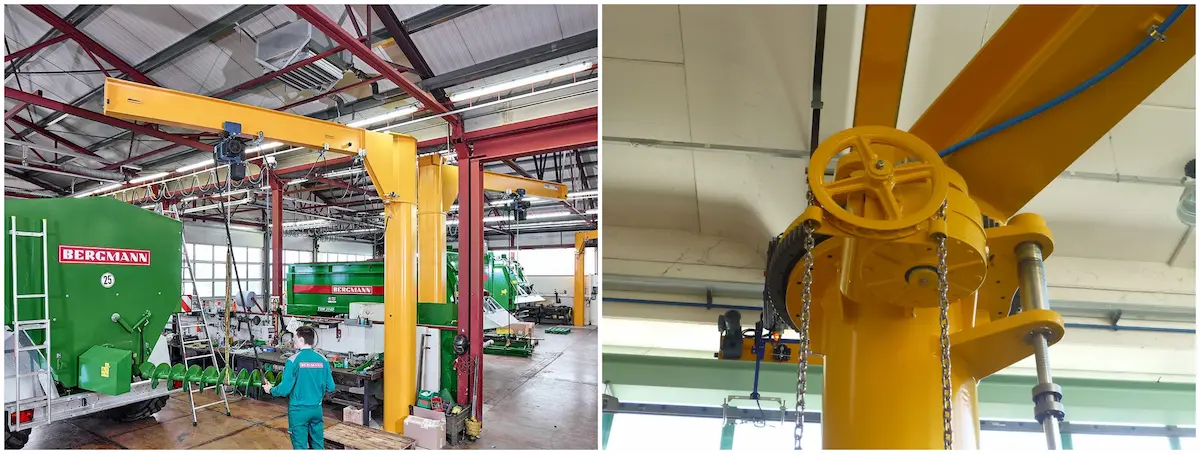
The hoisting mechanism is the core executing unit of a jib crane. If the hoist configuration mismatches actual working conditions, it will cause frequent tripping, premature wire rope wear, or disrupted production cycles.
In jib crane applications, chain hoists are more common due to their compact structure. However, wire rope hoists still hold advantages in heavy-duty scenarios.
|
Comparison Dimension |
Electric Chain Hoist |
Wire Rope Electric Hoist |
|
Size and Self-Weight |
Compact structure, lightweight, saves headroom. |
Larger size, heavy self-weight, occupies more arm space. |
|
Suspension Method |
Vertical lifting, no horizontal displacement. |
Drum winding causes slight horizontal hook drift during lifting. |
|
Maintenance Difficulty |
Simple chain maintenance, low replacement cost. |
Wire rope prone to tangling, requires regular lubrication and broken wire inspection. |
|
Applicable Tonnage |
Commonly used for 0.5t–5t, highly cost-effective. |
Commonly used above 5t or for high-grade continuous heavy-duty conditions. |
|
Durability |
Suitable for frequent workstation start-stops, good shock resistance. |
Smoother operation, suitable for ultra-long lifting height requirements. |
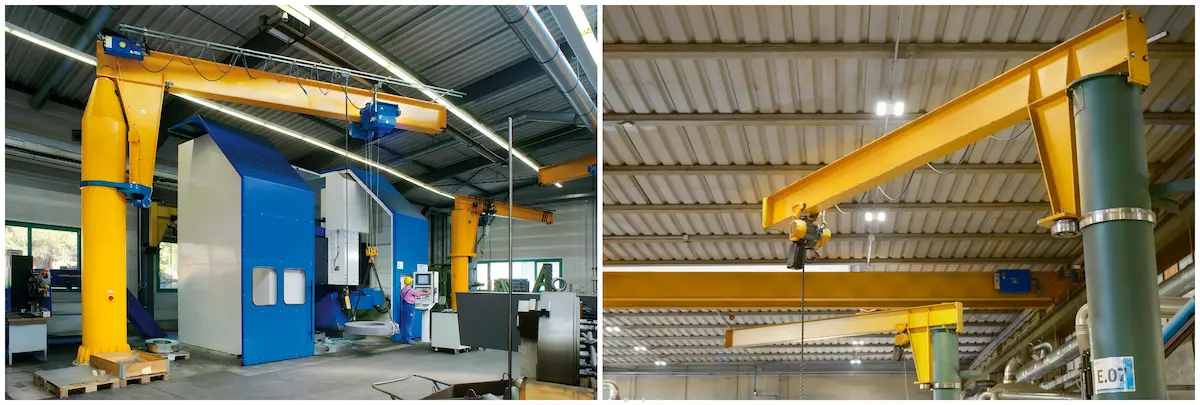
The choice of lifting speed must be calculated based on workstation cycle time, rather than blindly pursuing high speed.
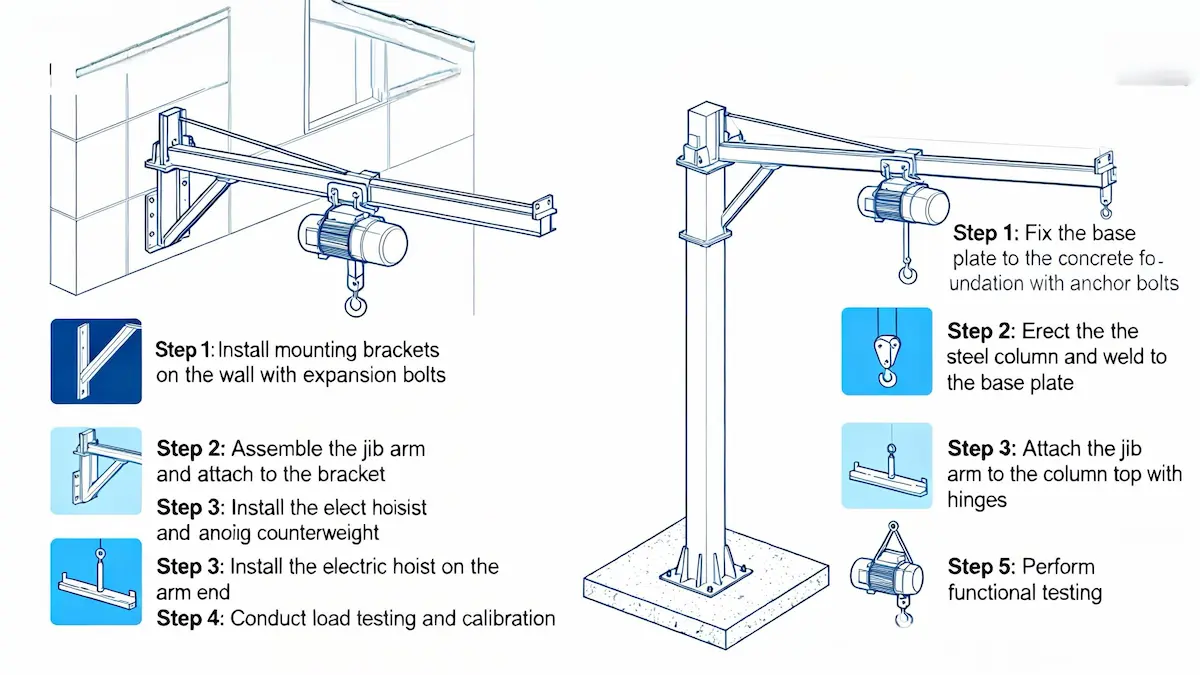
Jib crane installation doesn’t have to mean a two-week shutdown. A modular, pre-planned installation can be completed in 4–8 hours of the actual crane placement, assuming foundation work is already done.
Proven sequence:
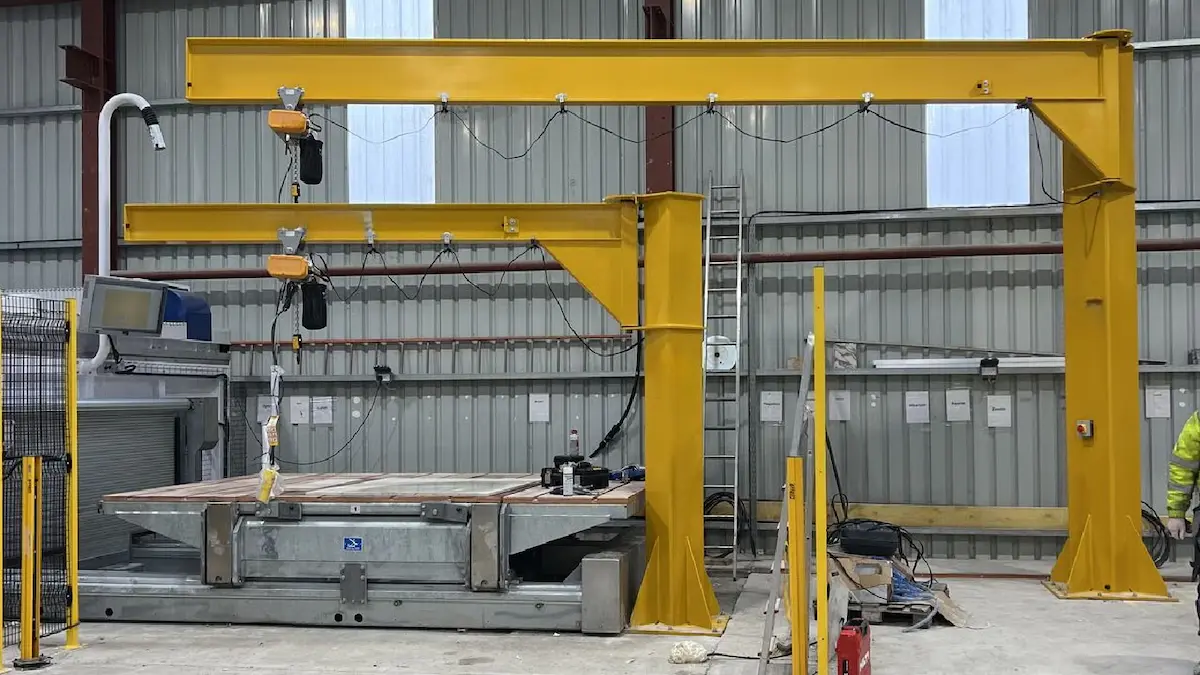
One HuaSui customer, a CNC job shop in Ohio, replaced five manual gantry arrangements with four wall-mounted jib cranes in a single weekend, using existing columns we had previously certified. The shop lost zero production hours and immediately saw a 22% reduction in part handling time.
Preventive maintenance is not about spending more; it’s about avoiding unscheduled downtime that costs 5-10 times as much per hour.
|
Component |
Inspection Point |
Frequency |
Consequence If Ignored |
|
Slew bearing |
Grease condition, audible noise |
Quarterly greasing |
Motor overcurrent, bearing replacement $2,000+ |
|
Lift chain |
Link pitch elongation (>3% replace), lubrication |
Monthly visual |
Chain break, load drop |
|
Brake gap |
Measure armature gap per manual; test for drift |
Monthly functional test |
Uncontrolled lowering, personnel hazard |
|
Limit switches (up/down, rotation) |
Verify cut-out 50 mm before mechanical stops |
Monthly |
Hoist crash, structural damage |
|
Electrical connectors & festoon cable |
Inspect for abrasion, tighten terminals |
6-monthly |
Short circuits, fire risk |
Cost–saving insight: Equip the hoist with a frequency inverter. The soft-start and soft-stop reduce mechanical shock loads by up to 60%, extending gearbox life and preventing fatigue cracks at the arm’s welded joints. A $600 inverter investment can prevent a $12,000 arm replacement.
Bringing a jib crane into the US, EU, or Australia without the right certifications can stop your project at the dock—or result in a crane that cannot legally be put into service.
|
Market |
Required Standards |
Key Requirements |
|
European Union |
2006/42/EC Machinery Directive, EN 13001-1 to 3 |
CE marking, technical file with FEM-based fatigue analysis, declaration of conformity |
|
North America |
ASME B30.11, B30.16, OSHA 1910.179 |
125% static load test, 110% dynamic test; anchor bolts designed per ACI 318 |
|
Australia |
AS 1418.2 (cranes), AS 4991 (lifting devices) |
Design registration with state authority before manufacture |
|
Global reference |
ISO 4301 (crane classification), FEM 9.511 (hoist duty) |
Basis for all professional design |
When purchasing from an overseas supplier, always request a third–party calculation report for the steel structure and a CE type–test certificate (if applicable). Insist on UL- or CSA-marked components for North American installations to avoid field re-inspection delays.
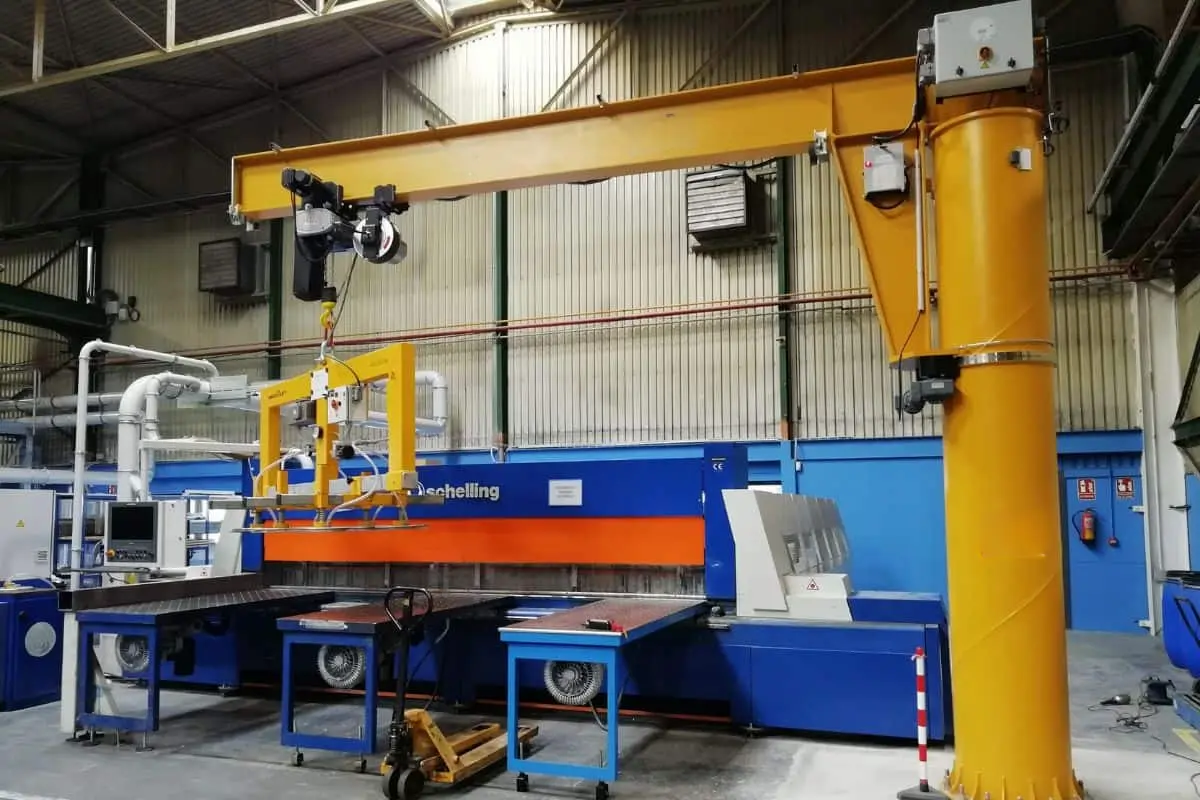
When purchasing a jib crane, selecting an experienced and technically reliable manufacturer is vital. The table below summarizes key dimensions for evaluating supplier reliability. This helps procurement personnel reduce project risks and improve return on investment.
|
Evaluation Dimension |
Why It Matters |
Key Points to Confirm |
Potential Risks (If Supplier Lacks Capability) |
|
Customization Experience |
Different industries, working conditions, and factory layouts have vastly different requirements for jib cranes. Mature manufacturers provide better-fitted solutions. |
Does it support customization for load, span, lifting height, rotation angle, voltage, and special environments (explosion-proof/anti-corrosion/high-temperature)? Is there similar industry experience? |
Equipment mismatches working conditions, leading to repetitive modifications, low efficiency, and increased procurement costs. |
|
Project Case Studies |
Actual cases verify the supplier’s comprehensive capability in design, manufacturing, and delivery. |
Do they have project experience in the same industry? Do they provide case photos, videos, customer feedback, or export project experience? |
Lack of real-world experience easily leads to design errors, installation issues, or delivery delays. |
|
Engineering Design Capability |
Professional engineering design directly affects equipment safety, stability, and long-term operational performance. |
Do they possess an engineering design team? Can they provide load calculations, structural analysis, CAD drawings, and 3D solution designs? |
Insufficient lifting capacity, structural deformation, safety hazards, and high later-stage maintenance costs. |
|
After-Sales Support |
Complete after-sales service reduces downtime and ensures long-term stable equipment operation. |
Do they provide installation guidance, remote technical support, spare parts supply, maintenance training, and response time commitments? |
Failures cannot be resolved in time, increasing downtime losses and shortening equipment lifespan. |
Procurement Advice: When choosing a jib crane supplier, do not just compare prices. Comprehensively evaluate technical capabilities, customization experience, case accumulation, and after-sales systems instead. A reliable manufacturer provides a complete material handling solution tailored to your working conditions, rather than just delivering equipment. This effectively lowers long-term operational risks.
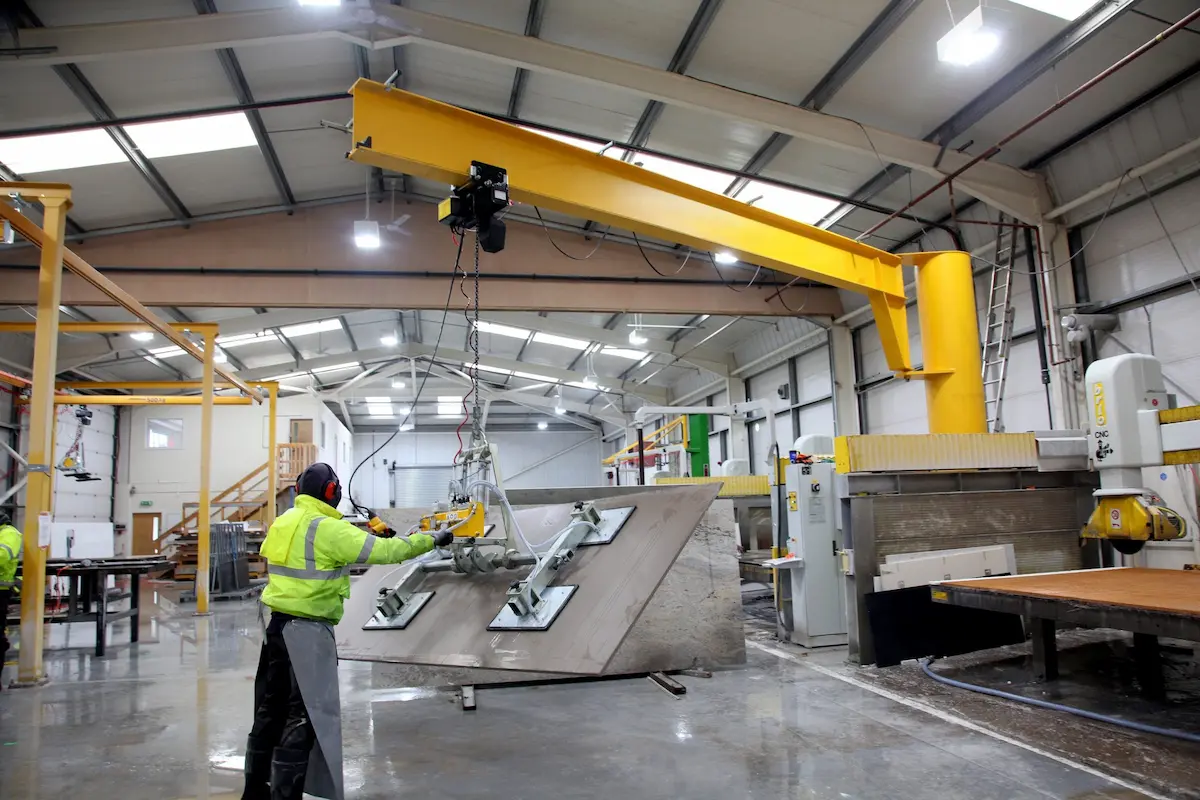
With deep accumulation in industrial lifting technology, HSCRANE has become a trusted partner in the global industrial material handling field. Our core advantages include:
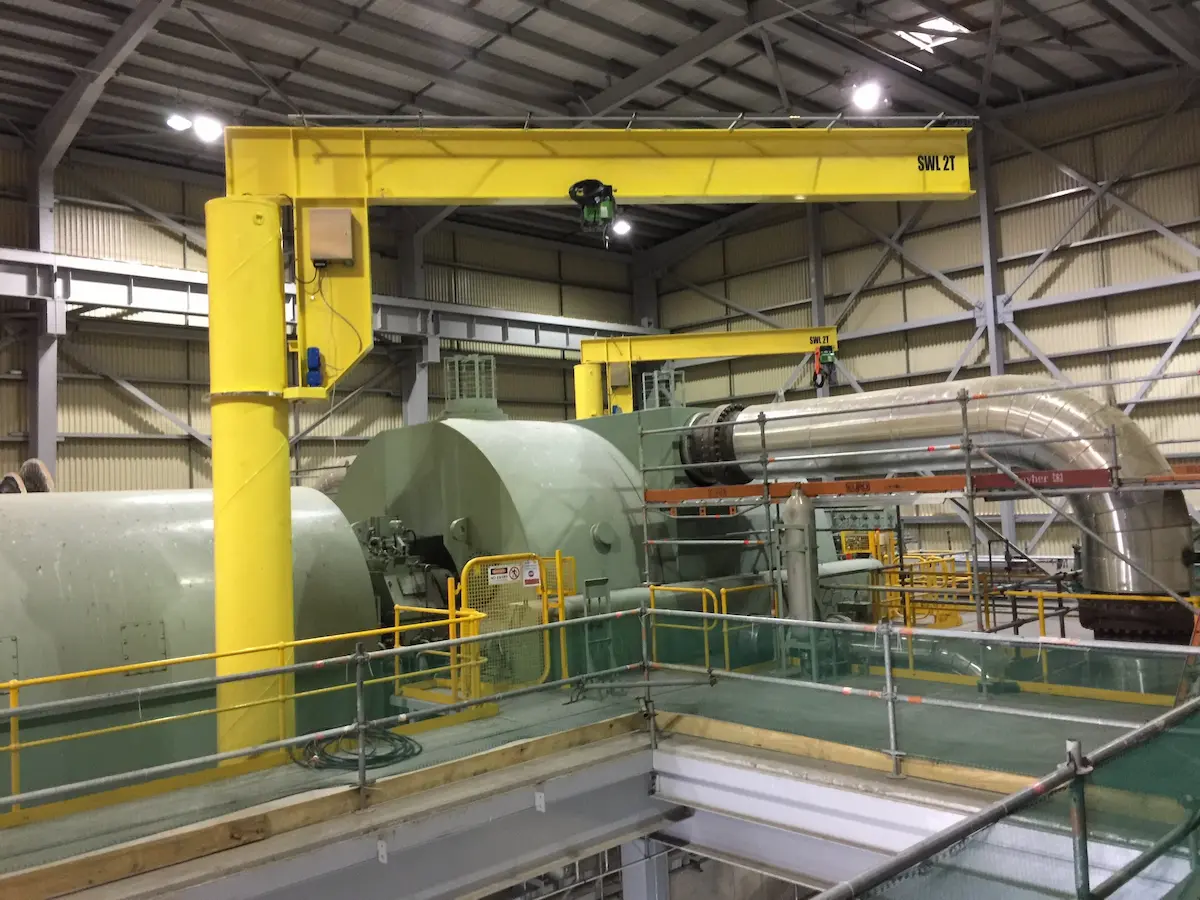
Purchasing a jib crane is a complex systems engineering task; misjudging any single parameter can trigger a chain reaction. Through our deep analysis of the ten major challenges, we can summarize the key paths to avoiding risk:
Before officially entering the bidding or procurement process, “front-loading requirement confirmation” is critical. We recommend self-auditing using the following checklist:
The most effective way to avoid procurement mistakes is to involve experienced engineers in the early planning stages. HSCRANE’s technical team can provide you with comprehensive support, from site surveys and solution simulations to load verification.
If you are preparing a new production line or need to upgrade an existing workstation handling system, please contact us:
【Contact HSCRANE today to get your professional jib crane procurement solution and real-time quote】
Many procurement professionals face trade-offs between installation methods, coverage, load capacity, and budget when choosing a jib crane. Selecting the wrong type not only hurts operational efficiency but can also increase later-stage retrofitting costs.
Further Reading: 《Pillar vs. Wall-Mounted Jib Cranes: Which is Better for Your Workshop?》
Q: What’s the minimum foundation thickness for a 2–ton pillar jib crane with a 5–m arm?
A: It depends on soil bearing capacity, but for a typical 150 kPa soil, a 1.5 m × 1.5 m × 1.2 m deep block of C30 concrete is often required. Always have a geotechnical engineer verify. HuaSui provides a foundation reaction drawing with each quote.
Q: Can I convert a manual rotation jib crane to motorized later?
A: Yes, if the column and slew bearing were originally sized for motor torque. Gearmotor mounting brackets and slip rings must be retrofittable; best specified at original order to avoid expensive re-machining.
Q: How do I know if my existing building column can support a wall–mounted crane?
A: We need the column cross-section, steel grade, and the applied bending moment from the crane. Our engineers run a quick FEM verification using the customer’s structural drawings. If insufficient, a welded backing plate arrangement often doubles the load capacity.
Q: What’s the recommended service life of a jib crane?
A: According to FEM 9.511, a hoist rated 2m has a theoretical service life of 3,200 hours at full load. For a single-shift operation that’s about 10 years. With inverters and high-quality components, many HuaSui cranes operate beyond 15 years before a major overhaul.
This document is for reference only. Specific operations must strictly comply with local laws and regulations and equipment manuals.