< img height="1" width="1" style="display:none" src="https://www.facebook.com/tr?id=1022966456349414&ev=PageView&noscript=1" />
News

Single Girder vs Double Girder Gantry Cranes: Key Differences and Application Scenarios

2026-06-18

Overview

In modern industrial logistics and manufacturing systems, gantry cranes are absolutely the steel backbone supporting ground production. Whether in open-air aggregate yards, busy freight ports, or precision manufacturing workshops, they are always seen moving heavy loads. However, when communicating with customers, we found that the most perplexing question is often not about the brand. The core dilemma is: “Should I buy a single-girder or double-girder one?” Both types of gantry cranes are now widely used in the market. But many enterprises tend to go to two extremes when purchasing. They either blindly choose single-girder to save money, which results in frequent follow-up overload failures. Or they blindly pursue “one step to reach the designated position” by buying double-girder.

This causes a large amount of lifting capacity to lie idle and wastes early investment in vain. Gantry crane selection, in essence, is a precise gamble between “lifting demand” and “return on investment (ROI)”. Choosing correctly will double production efficiency. Choosing incorrectly means a pile of depreciation costs. To help clarify your thoughts, we have compiled a piece of highly practical information. We skip complex professional terms to teach you the secrets behind parameters.

Want a more intuitive comparison?
Click the link below to get the selection guide compiled by senior engineers with one click, avoiding purchasing pitfalls.
[Click to download “Industrial Gantry Crane Precise Selection Report”]
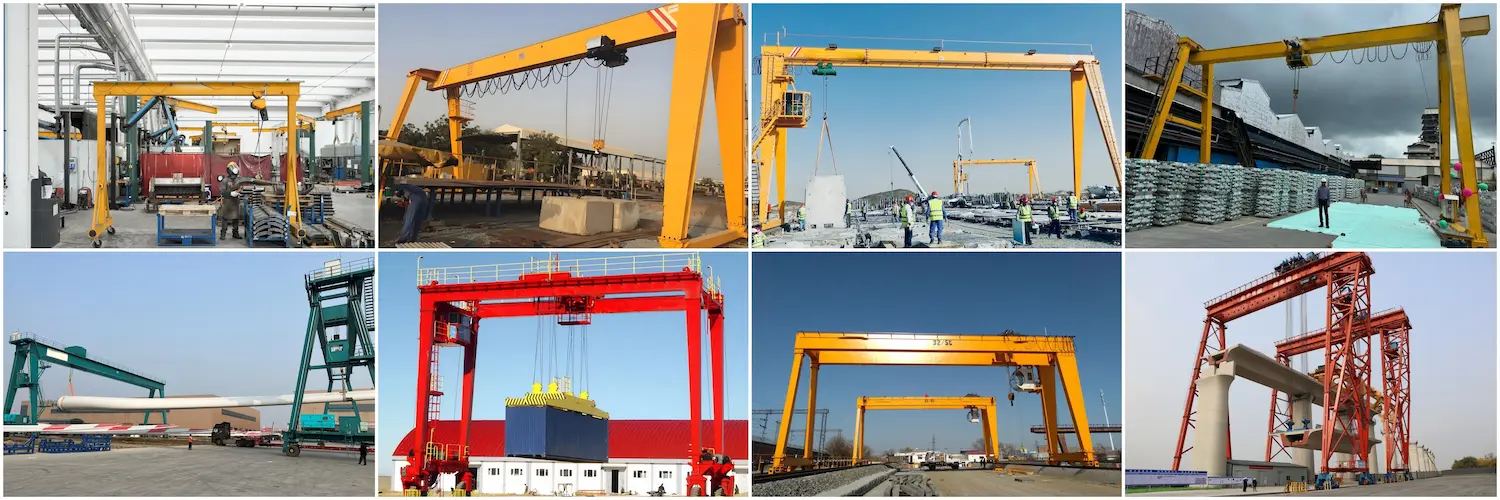
Single Girder vs Double Girder Gantry Cranes

What is a single-girder gantry crane?

Literally, “single-girder” means that it has only one main beam spanning mid-air. If we compare a gantry crane to a weightlifter, a single-girder gantry crane is like a lean athlete—though not bulky, it handles routine handling tasks with ease.

Structural composition of single-girder gantry cranes

Many purchasing personnel who are new to lifting equipment may feel the single-girder gantry crane looks a bit “flimsy” when seeing drawings for the first time. In fact, its mechanical structure has been industrially verified for decades and is extremely mature. A standard single-girder gantry crane can be disassembled into these four core components:
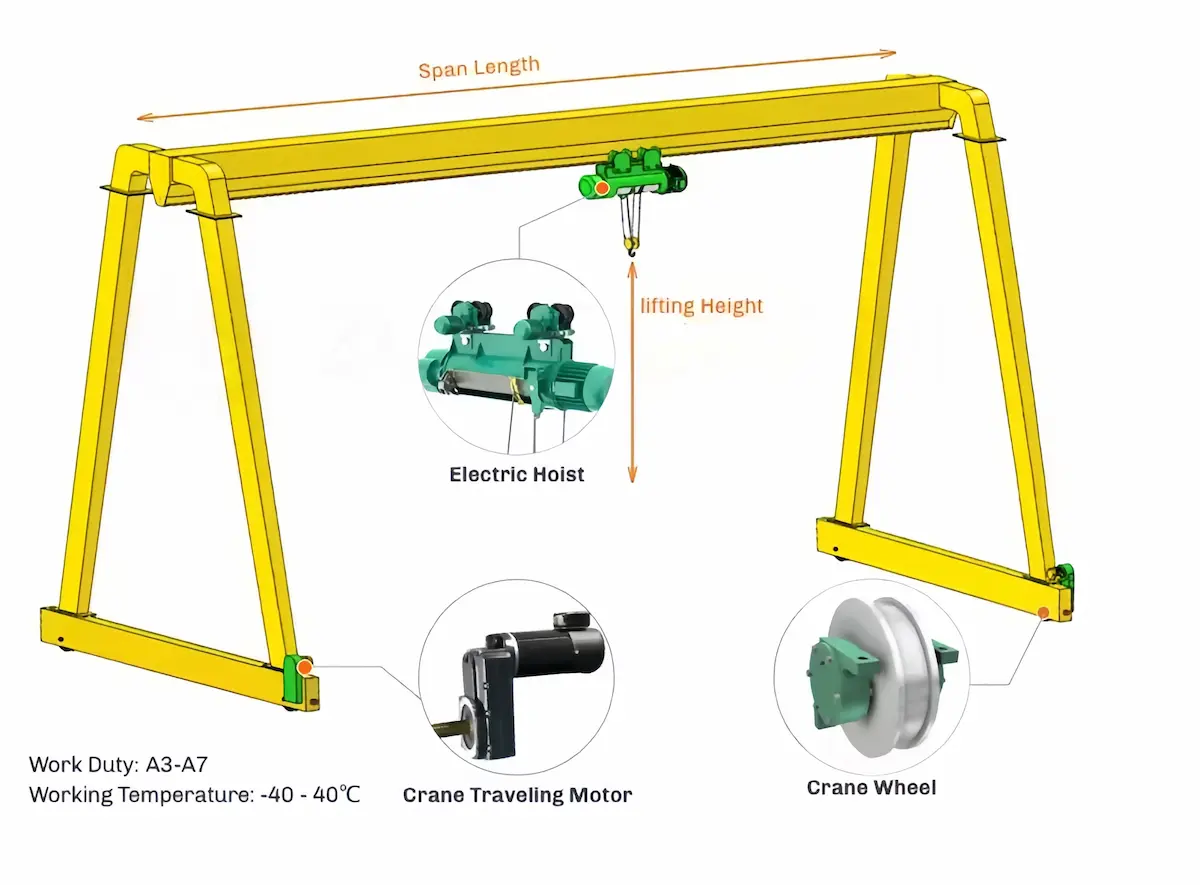
  • Main girder:This is the backbone of the entire equipment, usually using box section or I-beam structure. It spans above the working area and bears the full weight of goods.
  • Supporting legs:These are the steel structure legs showing an “A” or “L” shape at both ends of the main girder. They stably hold up the main girder and transfer the weight to the ground tracks.
  • Electric hoist:This is the most significant feature distinguishing single-girder gantry cranes from double-girder ones. A single-girder gantry crane usually suspends a CD/MD type wire rope electric hoist or chain hoist, which directly hangs on the lower flange of the main girder to move back and forth and perform lifting operations.
  • Traveling mechanism:Installed inside the ground beams at the bottom of supporting legs, it includes motors, reducers, and wheel sets, responsible for driving the entire gantry crane to “run back and forth” longitudinally on the ground tracks.

Structural composition of single-girder gantry cranes

Main characteristics of single-girder gantry cranes

The reason why single-girder gantry cranes can occupy a huge market share in manufacturing and logistics is definitely not just because they “can lift things”, but because they have obvious advantages in commercial returns:
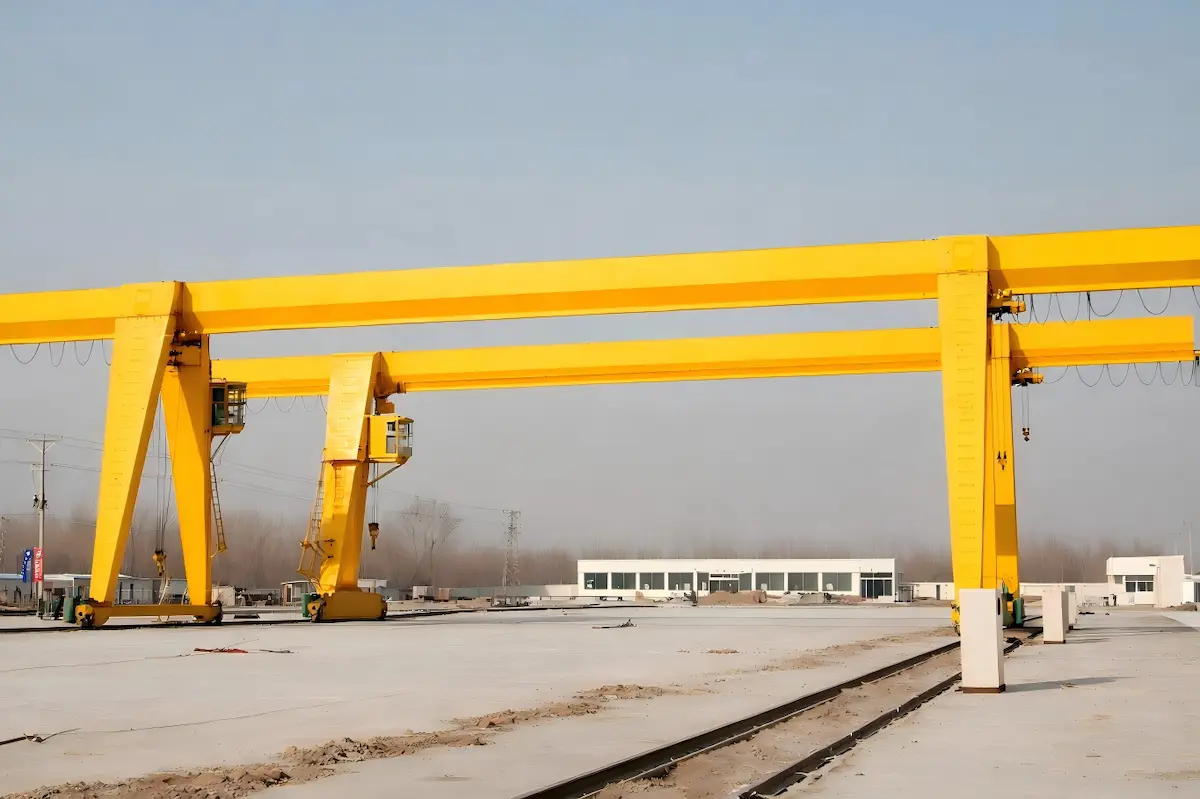
  • Low investment threshold:This is the most direct reason. Since one main beam and a complex winching trolley are omitted, its steel consumption and manufacturing cost are significantly reduced, which is very suitable for enterprises with limited budgets or still in the early stages of development.
  • Lightweight deadweight:The lightweight deadweight of the equipment itself means low wheel pressure on the ground. When laying large vehicle tracks, factories do not need to spend huge sums to construct extremely deep and thick concrete foundations, which invisibly saves a bundle of infrastructure fees.
  • Compact and simple structure:It occupies a relatively small three-dimensional space.
  • Extremely convenient installation and maintenance:It has few components and a straightforward structure. For many projects, it takes only a few short days from equipment arrival to complete installation and commissioning. Subsequent maintenance is also basically concentrated on servicing and lubricating the electric hoist, which ordinary mechanics can handle with slight training.

Main characteristics of single-girder gantry cranes

Common technical parameters of single-girder gantry cranes

When making solutions for customers, we usually have a parameters “comfort zone.” If within these ranges, a single-girder gantry crane is an excellent choice. But if exceeding these critical points, our engineers will strongly recommend upgrading to double-girder. This recommendation is out of consideration for safety and service life.
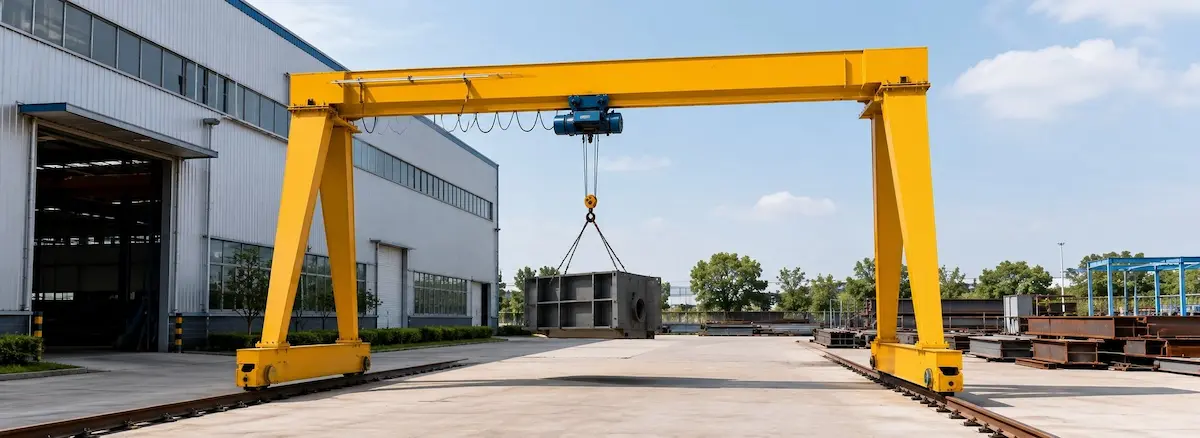
  • Economic lifting capacity range:Usually it is between 1 ton and 20 tons. The most popular models on the market are 5 tons, 10 tons, and 16 tons. It can barely reach 32 tons. But under this tonnage, the cost-effectiveness and stability begin to decline significantly.
  • Applicable span:Generally it is around 5 meters to 30 meters. If the span is too large, the deflection deformation is difficult to control.
  • Effective lifting height:Conventionally it is 6 meters to 12 meters. The electric hoist is suspended below the main beam. Therefore, it occupies a certain vertical space. The hook cannot rise as high as a double-girder one.
  • Working class:Mostly it is A3-A4 (equivalent to ISO standard M3-M4). This means it is a “nine-to-five” light-to-medium physical laborer. It is suitable for working a few hours a day and intermittent use. If your workshop requires high-intensity continuous operations 24 hours a day, the single-girder gantry crane cannot bear it.

Common technical parameters of single-girder gantry cranes

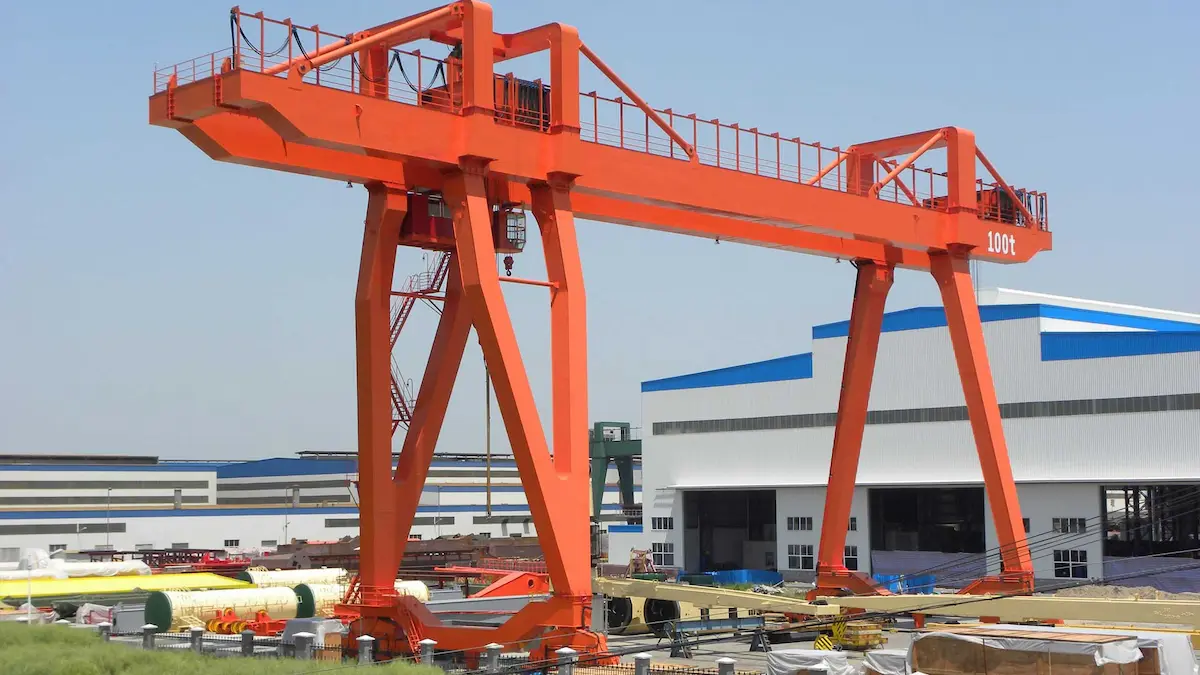
What is a double-girder gantry crane?

On many large project sites, when high-intensity continuous operations are involved, or when lifting precision heavy equipment weighing tens of tons and worth millions, we usually interrupt the customer’s idea of saving money immediately and decisively recommend double-girder gantry cranes. It is born to solve the three hard-core pain points of “heavy load, high frequency, and complex working conditions.”

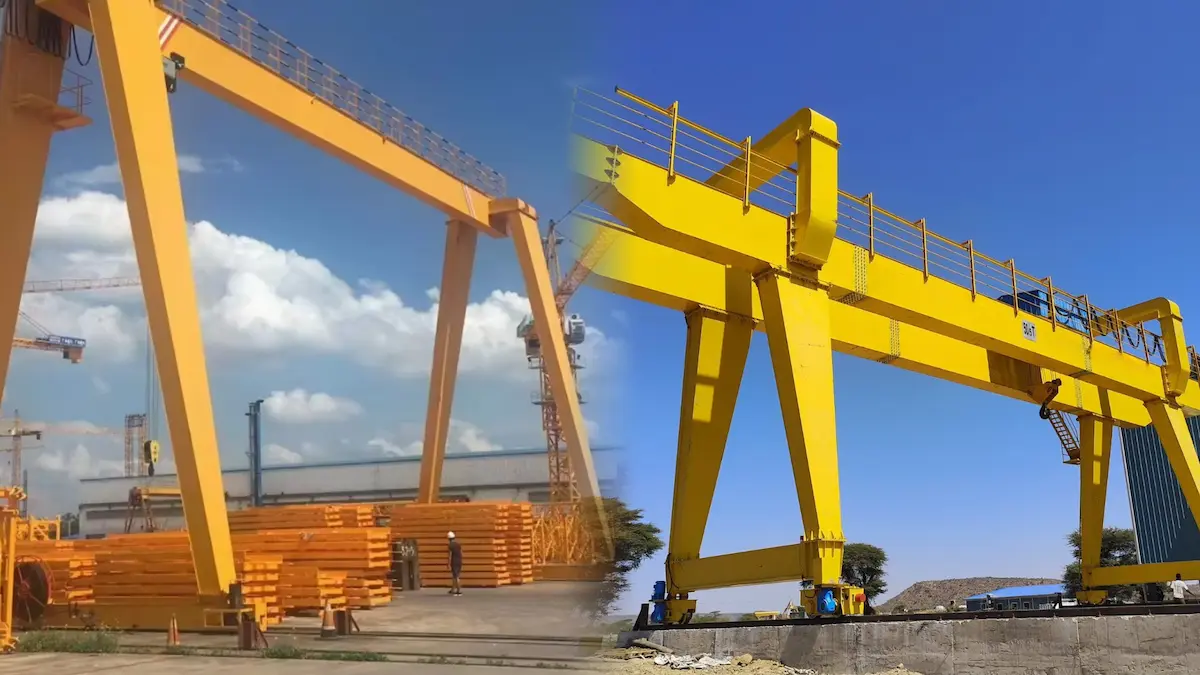
Structural composition of double-girder gantry cranes

Many people think from the appearance that double-girder is nothing more than having one more load-bearing beam than single-girder, but in fact, its internal structural logic has undergone a fundamental change:
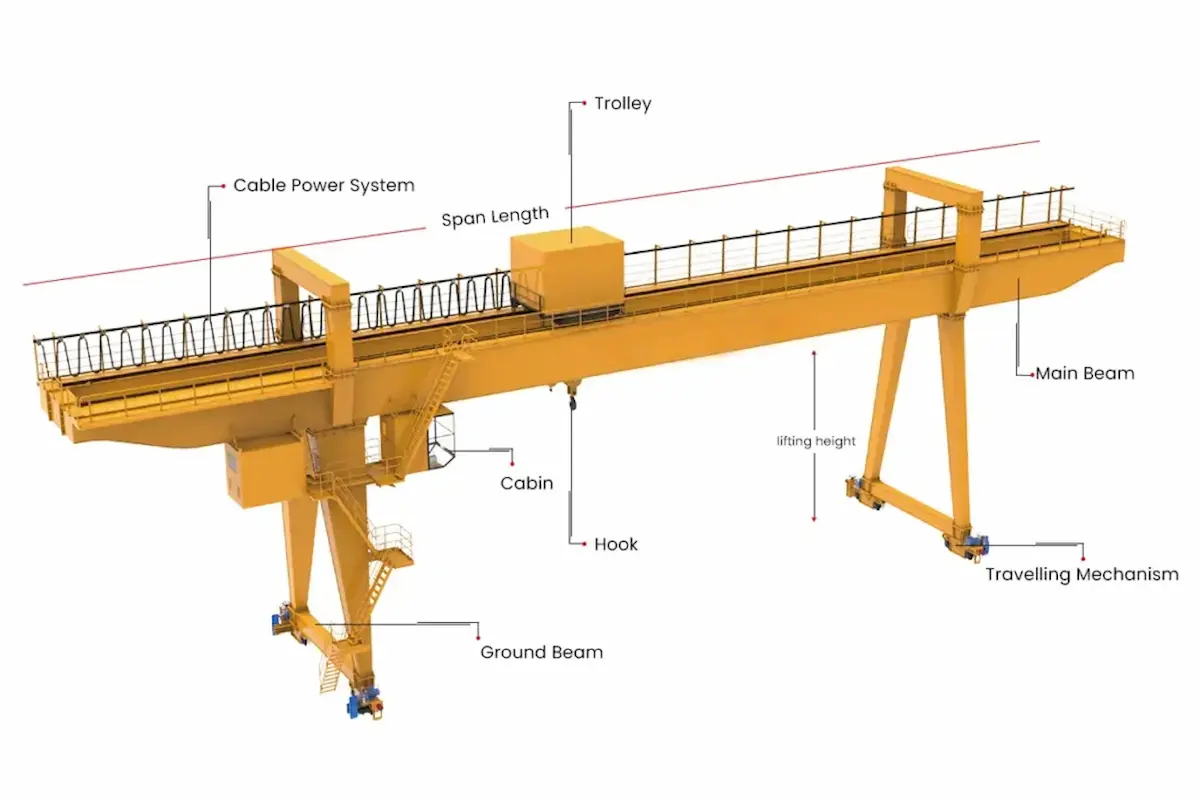
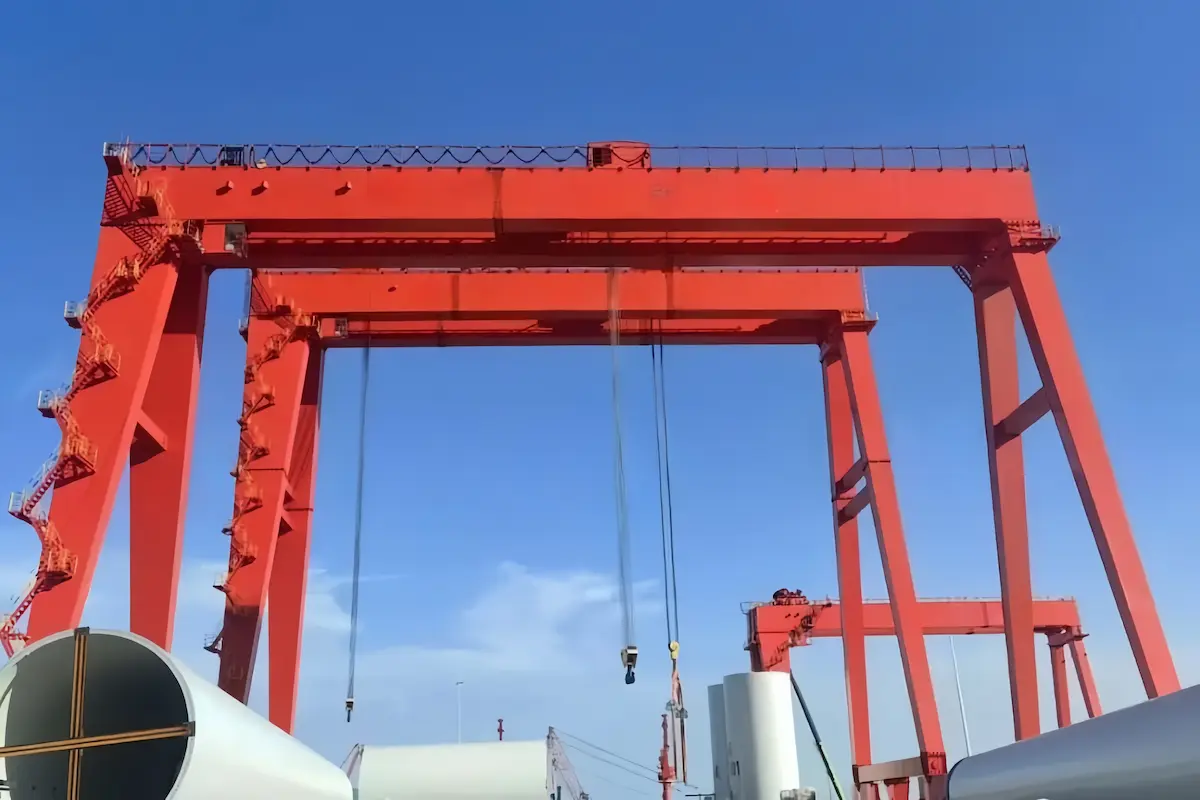
  • Double main girder design:Two parallel box-type main girders form an extremely stable load-bearing platform. This structure has extremely high torsional rigidity, so even when traversing across a large span under full load, the deformation of the main girders can be controlled within an extremely small safe range.
  • Trolley running and lifting mechanism:This is the biggest difference from the single-girder type! The single-girder type runs “hanging under the beam,” while the double-girder type is equipped with an independent winching trolley, which runs firmly “riding on the tracks of the two main girders.” The winching system usually adopts thick drums and higher-level reducers, possessing extremely strong explosive power.
  • Electrical control system:Because it does heavy and fine work, the electrical system of the double-girder gantry crane is much more complex. It usually comes standard with Variable Frequency Drive (VFD) for the whole crane, ensuring smooth starting and braking without impact, and many are also paired with luxurious enclosed driver’s cabins and PLC automation control systems.

Structural composition of double-girder gantry cranes

Main characteristics of double-girder gantry cranes

The early CAPEX (capital expenditure) for purchasing a double-girder gantry crane is indeed not low, but large steel mills, ports, and heavy equipment manufacturing plants still prefer it, mainly due to several irreplaceable advantages:
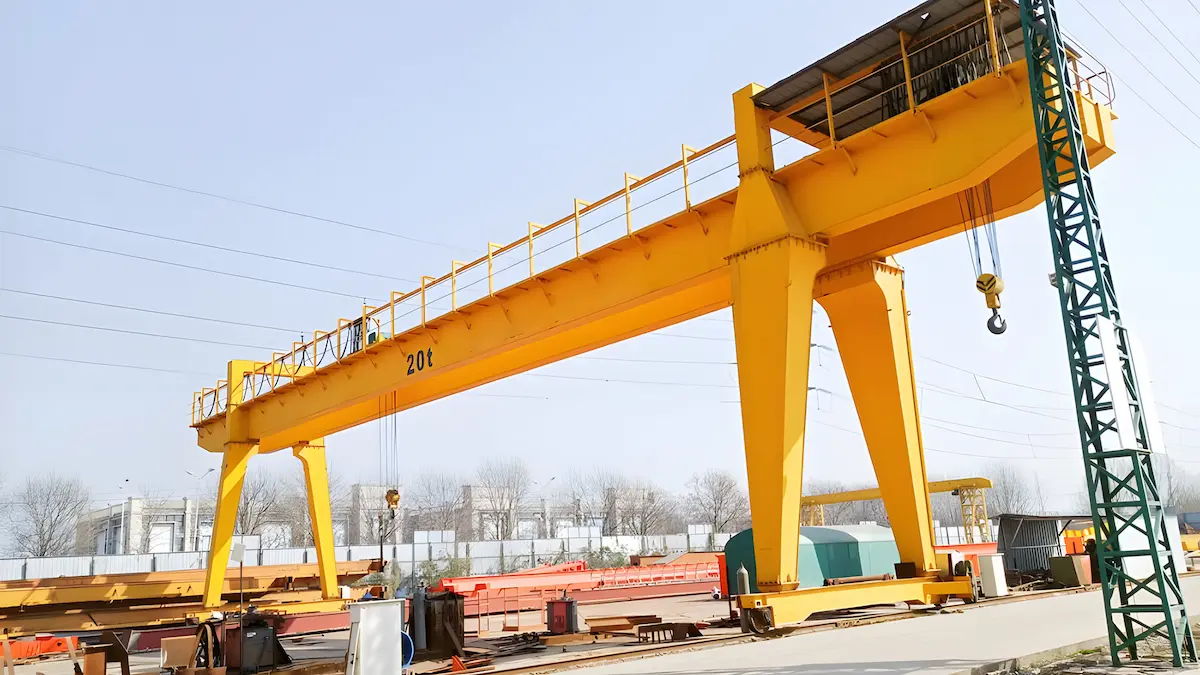
  • Crushing-level load capacity:The combination of double main girders and a top-running trolley makes its upper lifting limit extremely astonishing. Whether it is a steel coil of tens of tons or a hull block of hundreds of tons, it can handle it stably.
  • Ultimate operational stability:Utter stability is the greatest operating experience of the double-girder type. Since the center of gravity is higher and the support surface is wider, the swinging amplitude of goods is extremely small when lifting heavy objects, which is a vital safety requirement for mold lifting or hazardous goods (such as molten steel) handling that needs precise positioning.
  • Greater lifting height:This is a very practical piece of engineering trivia—because the trolley of the double-girder type runs above the main girders, the hook can retract upward into the gap between the two main girders. This means that in a workshop or yard with the same net height, a double-girder gantry crane can gain more effective vertical lifting space than a single-girder one.
  • Configurable with various specialized lifting tools:The electric hoist of a single-girder type basically can only hang a hook, but the winching trolley of a double-girder type has powerful dynamics, under which it can easily be replaced with hydraulic grabs, electromagnetic chucks, or even container specialized lifting tools, completely satisfying customized operations.

Main characteristics of double-girder gantry cranes

Common technical parameters of double-girder gantry cranes

During technical clarification for double-girder gantry cranes, the parameter sheet usually represents its powerful performance foundation:
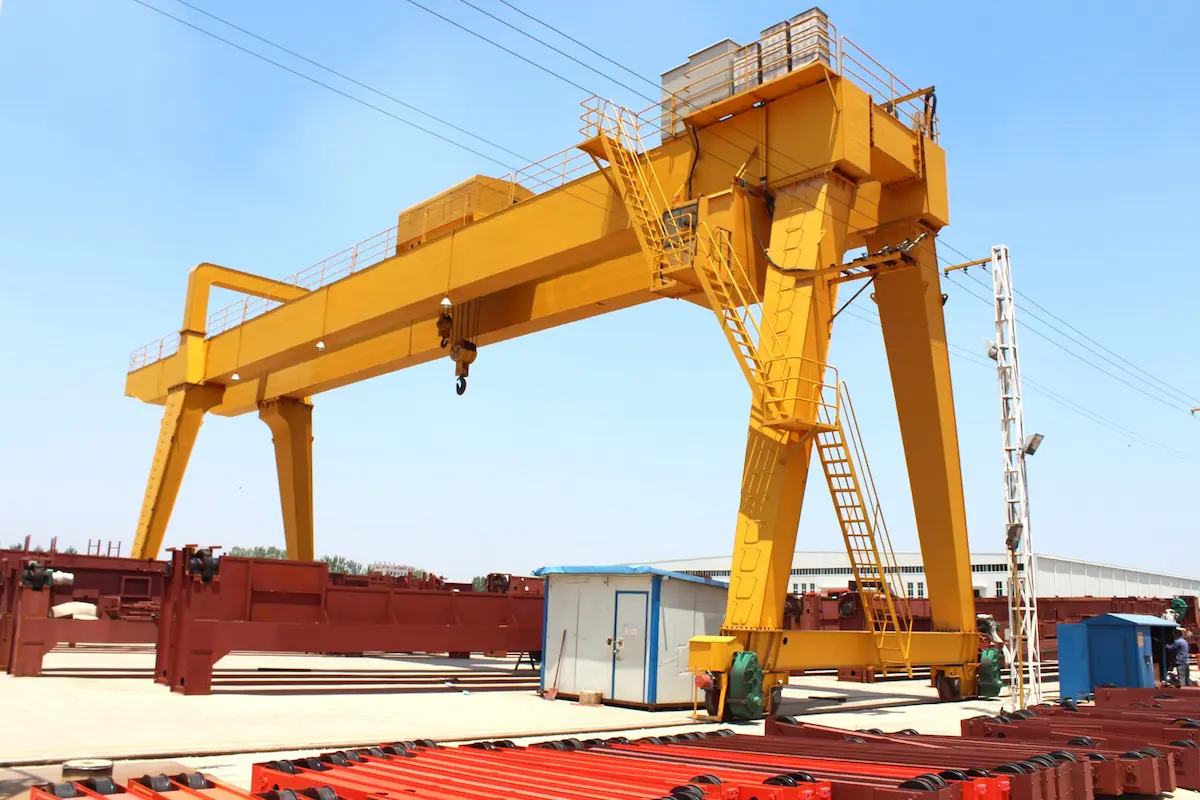
  • Lifting capacity range:It usually starts at 20 tons, and the upper limit can reach 500 tons or even higher (commonly seen in shipyard gantry cranes). It is the only solution for large-tonnage lifting.
  • Span range:It can easily break through the 30-meter limit; customized spans of 35 meters, 50 meters, or even larger can be achieved through precise structural calculations, perfectly covering large freight yards.
  • Working class:This is the data that the double-girder type is proud of, usually between A5 and A8 (ISO standard M5-M8). This means it is a “can’t-stop iron man,” fully capable of handling three-shift, 24-hour uninterrupted extreme continuous operations.
  • Special customization capability:Highly extensible. It can not only add anti-sway systems and positioning anti-collision radars, but also upgrade to single-cantilever or double-cantilever structures according to site conditions, or undergo special heavy duty anti-corrosion treatment for seaside salt spray environments.

Common technical parameters of double-girder gantry cranes

Key Differences Between Single-Girder and Double-Girder Gantry Cranes

To help you report quickly to your team, we have condensed the key operational differences between these two gantry cranes into the table below.

Dimension

Single-girder Gantry Crane

Double-girder Gantry Crane

Design

One main beam with a suspended hoist. Lightweight framework and smaller footprint.

Two parallel main beams with a top-running winching trolley. Extremely high rigidity.

Capacity

Best for 1t-20t. Overloading easily causes main beam deflection.

Starts from 20t up to 500t+. The only solution for heavy-duty lifting.

Lifting Height

Low hook clearance because the hoist hangs underneath the main beam.

Higher hook clearance as the hook can retract up between the two beams.

Efficiency

Class A3-A4. Best for intermittent use; not for 24/7 high-frequency work.

Class A5-A8. Built for heavy-duty, high-frequency, continuous 24/7 operations.

Costs

Low equipment and infrastructure costs. Simple hoist maintenance later.

High upfront and civil costs, but minimal downtime and low long-term TCO.

Installation

Fits regular trailers. Fast on-site setup with small cranes in days.

Requires oversized transport and large truck cranes for complex assembly.

Expert Tips: Choosing blindly either wastes your budget or leads to daily repairs.

Unsure which one fits your workshop? Contact HSCRANE technicians now with your capacity and site info, and get a free customized matching plan within 24 hours.
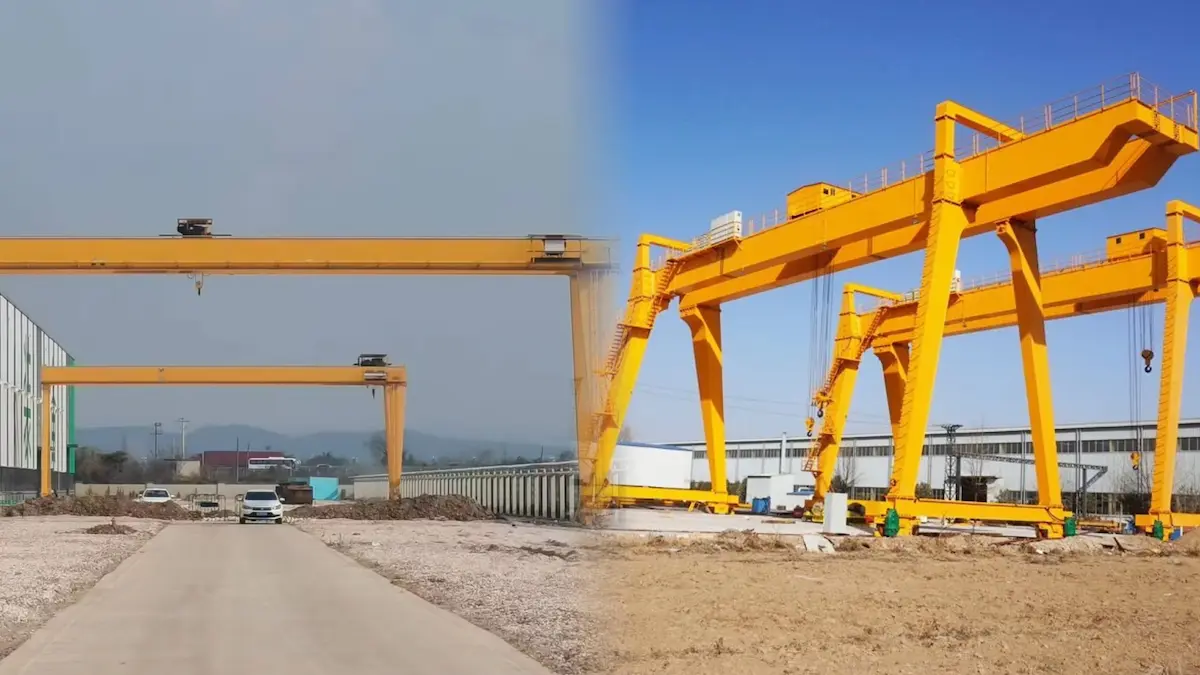
Key Differences Between Single-Girder and Double-Girder Gantry Cranes

Which gantry crane is really suitable for your site conditions?

In many cases, buying the wrong equipment is more headache-inducing than buying an expensive one. If a piece of lifting equipment serves in the wrong scenario, it either wastes electricity and depreciation like “a big horse pulling a small cart,” or faces wire rope wear and motor overload repair calls every day like “a small horse pulling a big cart.”

To help everyone find a corresponding reference more intuitively, we have classified thousands of project sites we have served over the past decade. You can compare with the industry application scenario quick reference table below to see how your peers are choosing.

Gantry crane typical application scenario comparison table

In the actual browsing experience of the website, we found that many customers easily lose patience when looking at dry text, so we have directly compiled the following practical application benchmarks for you:

Industry Sector

Single-girder Gantry Crane

Double-girder Gantry Crane

Manufacturing Production Line

Lathe parts loading/unloading, small and medium equipment assembly lines, light mold replacement

Ultra-long wind power blade and tower tube handling, mining machinery final assembly, large locomotive manufacturing

Warehousing, Logistics & Yards

Scattered goods loading/unloading in logistics parks, daily delivery in small steel/pipe yards

Heavy steel coil/billet handling in steel mills, container terminals (RMG/RTG), bulk cargo terminal grab operations

Infrastructure & Engineering Projects

Light cement precast parts handling, ground lifting of scaffolding and conventional building materials

Hundred-ton high-speed railway concrete box girder lifting and shifting, large hull block flipping and assembly

Metallurgy & High-temperature Environment

Rarely applicable; conventional configurations cannot cope with high temperature radiation and high dust environment

Equipped with specialized metallurgical trolleys and thermal radiation protection devices, used for lifting glowing ladles and large castings

Gantry crane typical application scenario comparison table

How to choose the right gantry crane based on working conditions?

If after reading the industry classifications above, you feel your working conditions are just stuck right between the two, you might as well directly refer to the “absolute selection conditions” summarized by engineers below. As long as more than two of them are met, you can decisively make a decision.
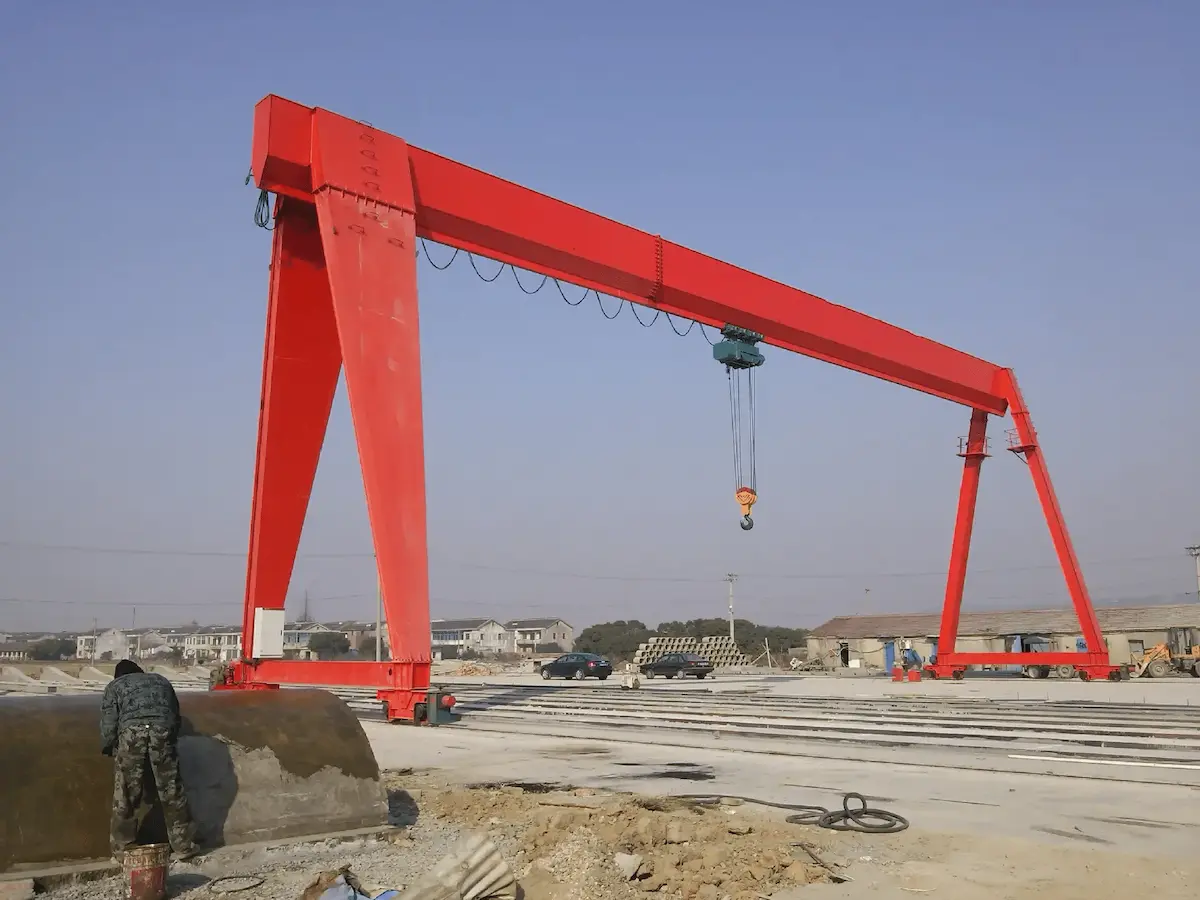
Situations where 【single-girder gantry crane】 is strongly recommended:

  • Look at tonnage:The weight of the maximum lifted object on site is strictly controlled at 20 tons and below.
  • Look at frequency:It belongs to “intermittent operation,” working a few hours a day, not a continuous three-shift rotation.
  • Look at budget:It is in the early stage of factory construction, or the budget for this station is limited, wishing to recover investment costs fastest.
  • Look at space:There is no extreme squeezing requirement for vertical lifting height; conventional suspended hoist heights can satisfy it.

Situations where 【single-girder gantry crane】 is strongly recommended:

Situations where 【double-girder gantry crane】 is strongly recommended:

  • Look at tonnage:Frequently needing to lift heavy objects above 20 tons, or even hundred-ton large items.
  • Look at frequency:It belongs to the “core throat” on the production line, requiring high-frequency, continuous, and uninterrupted extreme operations (A5-A8 working class).
  • Look at height:The net height of the workshop is limited, or the yard stacking is extremely high, must use the double-girder advantage to “steal” greater lifting height.
  • Look at function:Not just using hooks; subsequent frequent replacement of electromagnetic chucks, hydraulic grabs, container lifting tools, and other special equipment is needed.

Situations where 【double-girder gantry crane】 is strongly recommended:

Conclusion: Whether it is the economic practicality of single-girder or the powerful stability of double-girder, in the final analysis, it is all to match your true production capacity. When making budget planning, it is suggested not only to look at the equipment ex-factory price, but also to calculate civil infrastructure costs, electricity bills for the next 5 years, and potential downtime maintenance costs altogether, so that the most realistic return on investment can be obtained.

Why do global customers choose to entrust their heavy loads to HSCRANE?

In the heavy-asset and long-cycle industry of cranes, competition is never about whose PPT is beautifully made, but whose equipment can be “durable and have fewer troubles” under daily harsh working conditions. This requires manufacturers to understand not only mechanics, but also the customer’s true process flow.

HSCRANE single-girder and double-girder gantry crane advantages

We know you buy gantry cranes to make money, not to buy a “big toy” for daily repairs. Therefore, HSCRANE adheres to several strict standards:
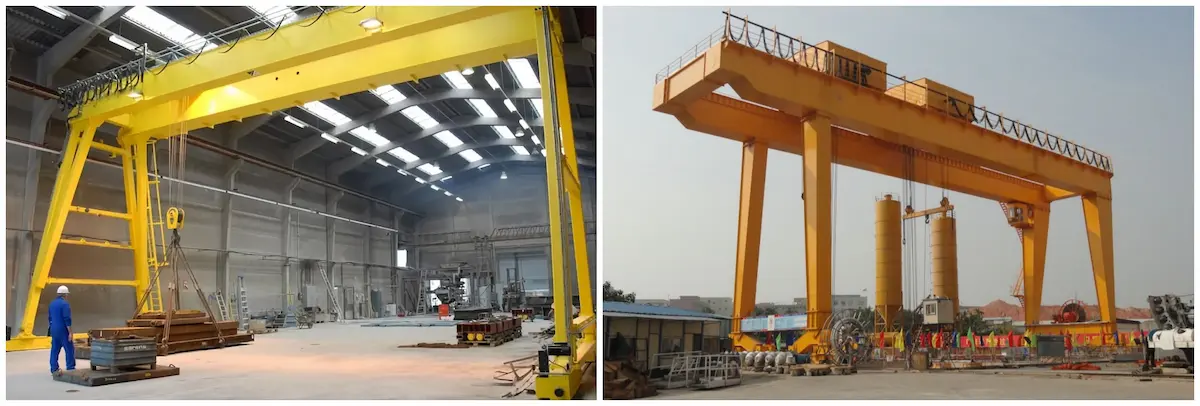
  • Rich industry experience:Over 30 years of crane manufacturing foundation allows us to handle various conditions from extreme cold to rainforests, and dusty yards to cleanrooms.
  • Strict quality control:Strictly executing ISO, FEM, and EN standards, with processes fully benchmarking international norms to ensure excellent quality.
  • Customized solutions:We evaluate your site wind load, wheel pressure limits, and work frequency to tailor-make the perfect span, height, and lifting tools.
  • Reliable core components:Selecting top-tier brands (like SEW, ABB, Yaskawa, etc.) as the core power source, combined with VFDs to minimize downtime.
  • Global support:Providing detailed drawings, 3D videos, and onsite turnkey services including installation guidance, commissioning, and operator training worldwide.
  • Product matrix:Offering standard single/double-girder cranes, semi-gantry cranes, and specialized RMG and RTG cranes for modern ports and logistics hubs.

HSCRANE single-girder and double-girder gantry crane

HSCRANE gantry crane classic cases

Good equipment speaks for itself. Here are two real case snippets delivered recently, showing how your peers solved site pain points through correct selection:
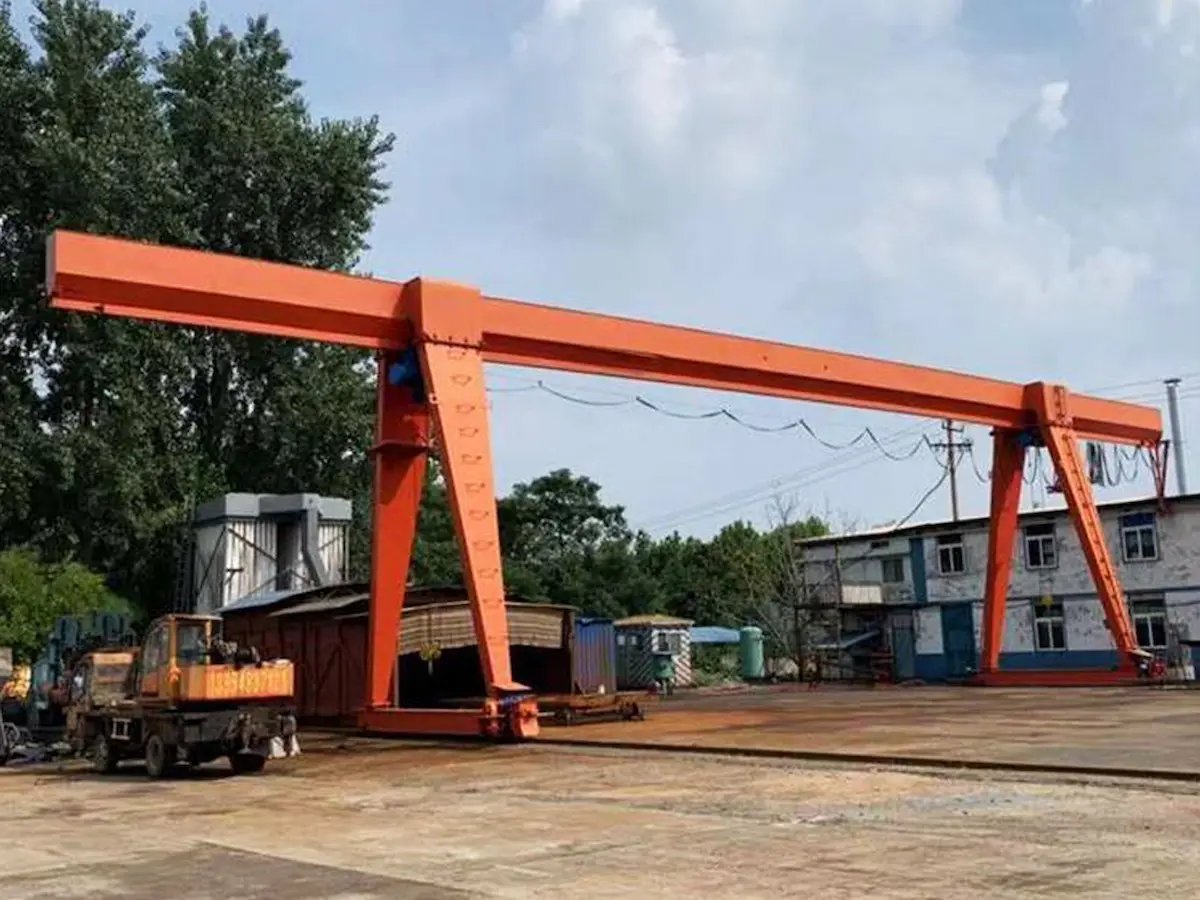
Case 1: Running logistics acceleration with single-girder gantry cranes

  • Project background:An outdoor pipe yard of a large infrastructure project in Southeast Asia. The customer’s initial budget was tight, but they needed high-frequency loading/unloading of 12-meter-long steel pipes, requiring rapid production.
  • Our solution:After a site visit, HSCRANE engineers customized 2 units of 10t-25m single-girder gantry cranes instead of expensive double-girder ones. By optimizing the main beam’s windward structure and adding a customized anti-sway hanger under the electric hoist, the swinging problem during pipe traversing was perfectly solved.
  • Delivery result:The whole project took only 45 days from production to commissioning. With the extremely light deadweight, the customer saved nearly 20% on ground track infrastructure costs, maximizing the return on investment.

Case 1: Running logistics acceleration with single-girder gantry cranes

Case 2: Double-girder heavy equipment, conquering extreme large item lifting

  • Project background:A well-known wind power equipment manufacturing enterprise in the Middle East needed to assemble and flip wind tower tubes weighing up to 80 tons. The workshop net height was limited, and the hook positioning accuracy required millimeter-level precision.
  • Our solution:We designed a 100t/20t-31.5m double-girder gantry crane with an auxiliary hook. To grab operational space within the limited workshop height, an ultra-low headroom top-running winching trolley was adopted, equipped with closed-loop VFD control systems and high-resolution laser anti-collision rangefinders.
  • Delivery result:At the acceptance site, the operator used only a single-hand joystick to lower the 80-ton huge tower tube smoothly and silently onto the designated base, with a docking error of less than 2 mm. This equipment has run continuously without failure for over 8,000 hours, becoming the true mainstay of the workshop.

Case 2: Double-girder heavy equipment, conquering extreme large item lifting

Conclusion

In the final analysis, there is never an absolute “good or bad” between single-girder and double-girder gantry cranes. There is only “which one is more suitable for your current workshop.” If you are involved in light manufacturing or intermittent logistics turnover, the single-girder gantry crane is your choice. It is the “economical and practical guy” that helps you quickly recover costs. It also reduces expenditures and increases efficiency.
However, your plant might undertake around-the-clock continuous operations with tens of tons of heavy loads. Then, gritting your teeth to invest in a double-girder gantry crane is definitely the right choice. It is the “steel backing” that will allow you to sit back and relax for the next ten years. True professional procurement is never just staring at two quotation sheets to compare prices. Instead, it means standing at the height of “Total Cost of Ownership (TCO)”. You must take into account future capacity expansion needs, downtime risks, and civil engineering depreciation altogether.

Instead of agonizing over it yourself, leave the math to the professionals!

If you have a crane procurement project on hand and are unsure about selection, span, or wheel pressure calculations, Please contact the HSCRANE technical team immediately.
Just provide your plant layout or general requirements, and our senior engineers will issue a “Custom Gantry Crane Solution” for you for free within 24 hours, including precise drawings and ROI estimates, helping you spend every penny wisely!

Still hesitating between single-girder and double-girder?
Choosing the wrong gantry crane means either wasting hundreds of thousands in early investment like “a big horse pulling a small cart,” or causing subsequent daily repair shutdowns like “a small horse pulling a big cart.” To help you avoid selection traps, we have compiled this no-nonsense “pitfall avoidance guide” based on our real delivery experience of thousands of sites over the past decade.
Deep analysis: Single Girder vs Double Girder Gantry Cranes: Which One Fits Your Project Better?

FAQ

Q: My budget is tight now. Can I buy a single-girder gantry crane first and modify it into a double-girder one later when capacity expands?
A: Strongly discouraged. The modification involves altering tracks, foundations, and power systems, which costs almost as much as buying a new machine. If expansion is planned within one or two years, it is recommended to choose a double-girder type from the start.

Q: What is the approximate price difference between single-girder and double-girder gantry cranes?
A: Under the same tonnage and span, a double-girder crane is generally 40% to 70% more expensive than a single-girder one, and its heavier deadweight also increases civil foundation costs.

Q: Our workshop ceiling is low but lifting height requirement is high. My budget only allows for a single-girder type, is there a solution?
A: Yes. HSCRANE can customize a single-girder gantry crane with a low-headroom electric hoist, which can squeeze out an extra 0.5 to 1 meter of effective lifting height as a cost-effective compromise.

Q: In windy outdoor environments, which is safer, single-girder or double-girder?
A: The double-girder crane offers superior wind resistance due to its stabler structure, wider span, and better center of gravity. For both types, HSCRANE equips outdoor cranes with rail clamps and wind alarms to ensure safety.

Q: How long is the delivery cycle for single-girder and double-girder cranes?
A: Standard single-girder cranes take about 30-45 days due to their simple structure, while double-girder cranes require 60-90 days because of complex welding, non-destructive testing, and load debugging. Please plan ahead if urgent.

This document is for reference only. Specific operations must strictly comply with local laws and regulations and equipment manuals.

HomeInquiry WhatsApp Mail