Welcome to visit our factory
Email : info@huasuicrane.com


This paper provides a comprehensive comparison between FEM standard overhead cranes and conventional overhead cranes, focusing on differences in design philosophy, structural weight, duty classification, operating performance, and maintenance costs. FEM standard overhead cranes adopt a lightweight and modular design, offering advantages such as smooth operation, lower energy consumption, and predictable service life. In contrast, conventional overhead cranes follow more traditional design approaches and are typically suited for basic working conditions. In addition, this paper highlights HSCRANE’s advantages in FEM standard design, intelligent control systems, core component configuration, and customized services, helping enterprises select more efficient and reliable lifting solutions while achieving cost reduction and operational efficiency.
Overhead cranes are essential equipment in modern industrial production and are widely used in manufacturing, warehousing, and logistics. Different design standards directly affect safety, efficiency, and service life, among which the FEM standard stands out due to its advanced engineering principles. This article provides a detailed comparison between FEM standard overhead cranes and conventional overhead cranes, helping you determine which solution best fits your industrial requirements.
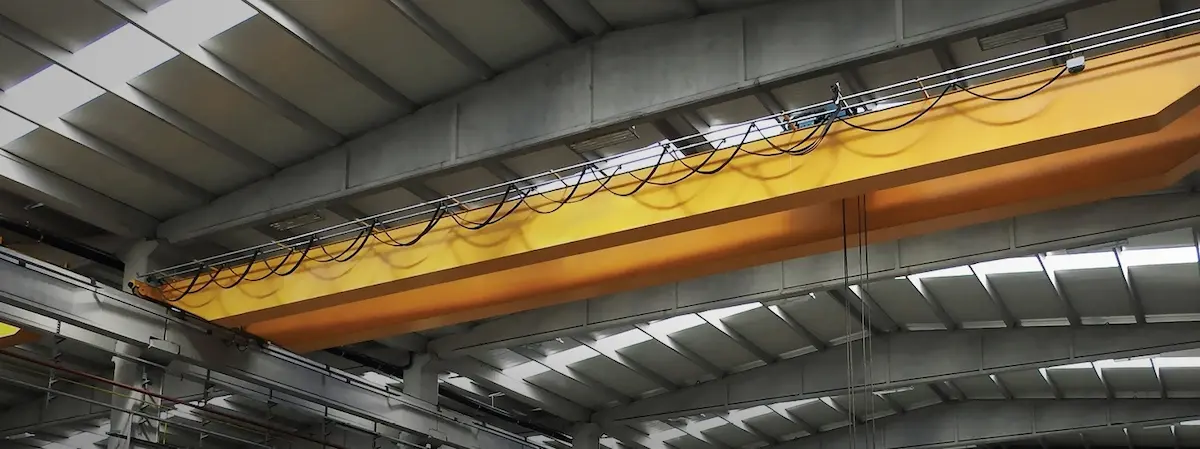
In the crane industry, the FEM standard (European Federation of Materials Handling) is widely recognized as one of the most advanced and rigorous technical standards in the global material handling sector.
Compared with traditional cranes, a FEM standard overhead crane represents not only “European design,” but also the highest level of modern lifting technology in terms of precision, intelligence, and long service life.
The FEM standard is developed by the European Federation of Materials Handling. It not only covers structural strength calculations, but also provides detailed quantitative requirements for mechanical components such as transmission systems, wheel assemblies, and drums, including wear and service life.
Because its calculation models are closer to real working conditions, cranes designed according to FEM standards can achieve higher safety margins with more optimized structural dimensions.

The dominance of FEM standard overhead cranes in the high-end market is driven by three core design principles:

The FEM standard provides a highly precise classification of crane durability based on load spectrum and average daily operating time:

Thanks to their compact structure and high reliability, FEM standard overhead cranes are widely used in:

Conventional overhead cranes (typically designed based on traditional national or industry standards) remain a cornerstone in many basic industrial sectors due to their high reliability and cost-effectiveness.
Conventional overhead cranes are mainly designed according to traditional mechanical standards (such as China’s GB/T 3811). The core concept is safety redundancy, meaning structural strength is ensured by increasing material thickness and overall dimensions.
Although the design approach is relatively traditional, it is technically mature and highly versatile.
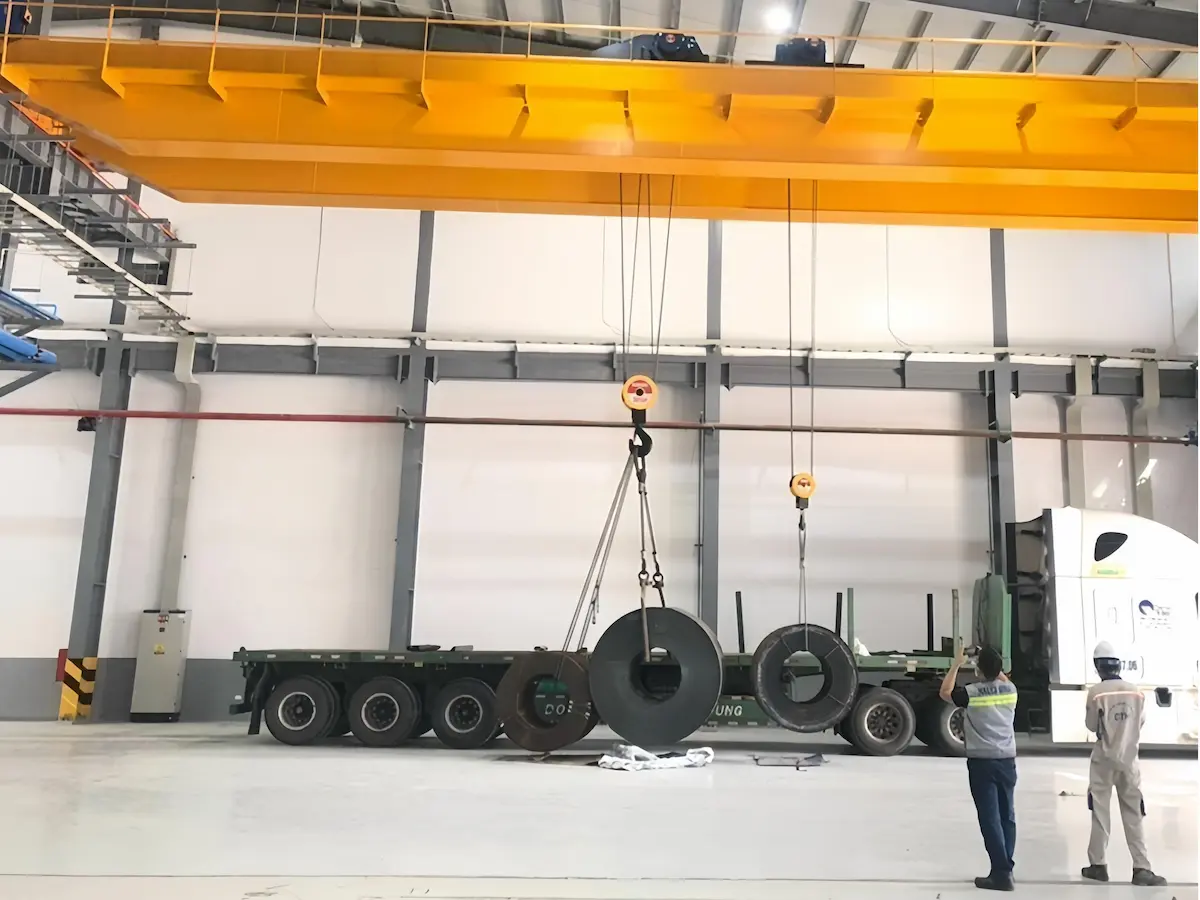
Due to relatively simplified stress calculations in traditional design methods, thicker steel plates are typically used in the main girder and end beams to ensure load capacity.
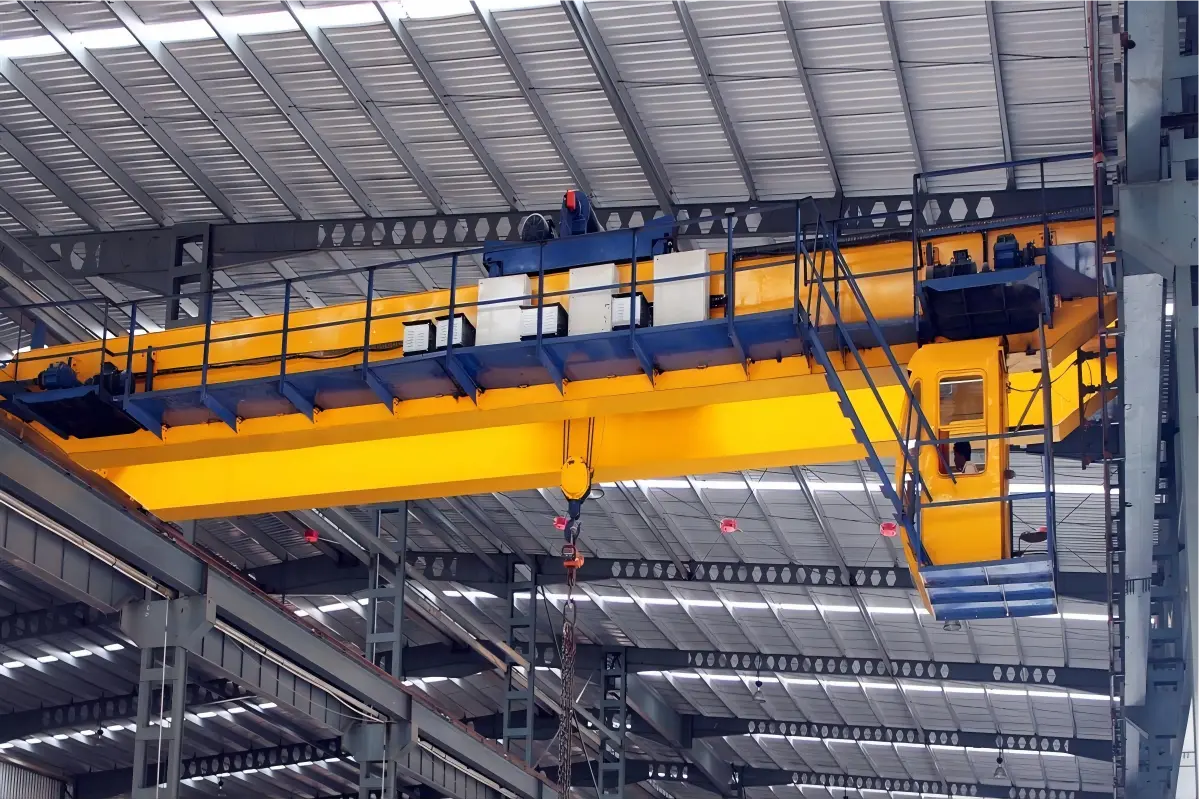
Conventional overhead cranes are designed with a focus on simplicity, durability, and ease of maintenance:
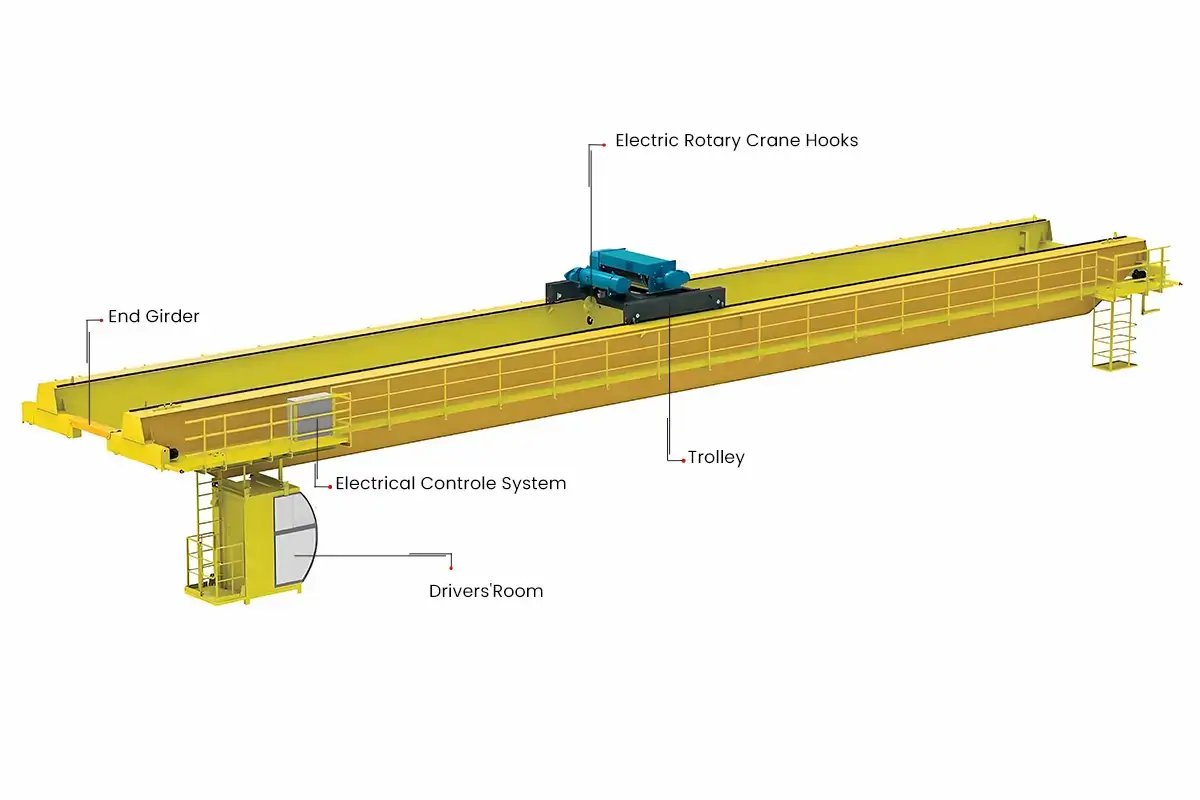
Thanks to strong environmental adaptability, conventional overhead cranes are still widely used in:

For a clearer comparison, the following table provides a systematic analysis across key dimensions:
|
Comparison Item |
FEM Standard Overhead Crane |
Conventional Overhead Crane |
|
Design Philosophy |
Uses limit-state design and precise calculations; optimized structure with reduced redundancy |
Relies on empirical design with higher safety redundancy; more conservative structure |
|
Structure & Self-Weight |
Lightweight design reduces overall weight and wheel load, lowering building requirements |
Heavier structure with higher self-weight, requiring stronger building support |
|
Duty Classification & Service Life |
Clearly defined duty classes; predictable and calculable service life |
Less precise classification; service life estimation is less accurate |
|
Energy Consumption & Efficiency |
High efficiency, low energy consumption, aligned with energy-saving trends |
Higher energy consumption and long-term operating costs |
|
Maintenance & Operating Cost |
Modular design, easy maintenance, low failure rate, better lifecycle cost |
More complex maintenance, frequent replacement of wear parts, higher long-term cost |
In summary, FEM standard overhead cranes offer clear advantages in advanced design, operational performance, and long-term cost efficiency, making them ideal for modern, high-efficiency, and intelligent industrial environments.
Meanwhile, conventional overhead cranes, due to their lower initial cost, still retain practical value in certain basic applications.
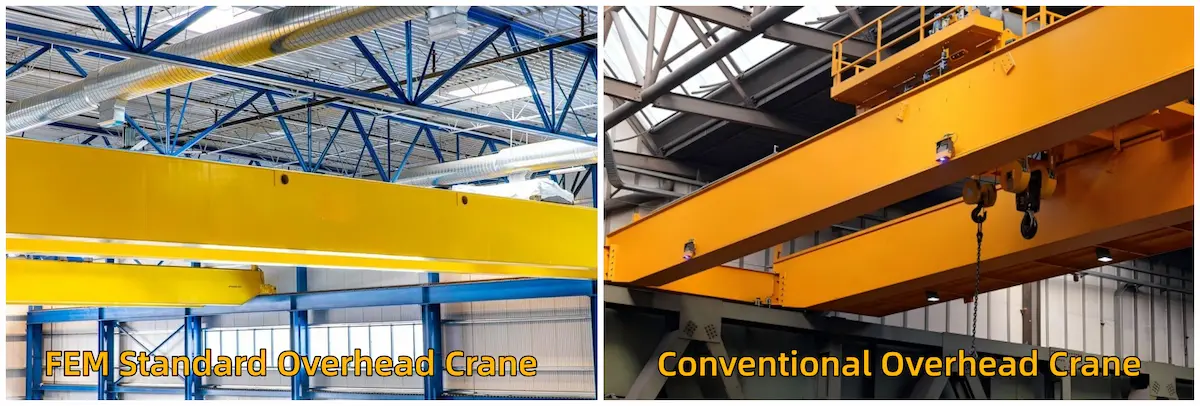
When choosing between FEM standard and conventional overhead cranes, companies often struggle between performance optimization and cost control. HSCRANE recommends evaluating the following four key factors to find the optimal balance between cost and performance.
The service life of an overhead crane depends not only on lifting capacity, but also on lifting frequency and load ratio.
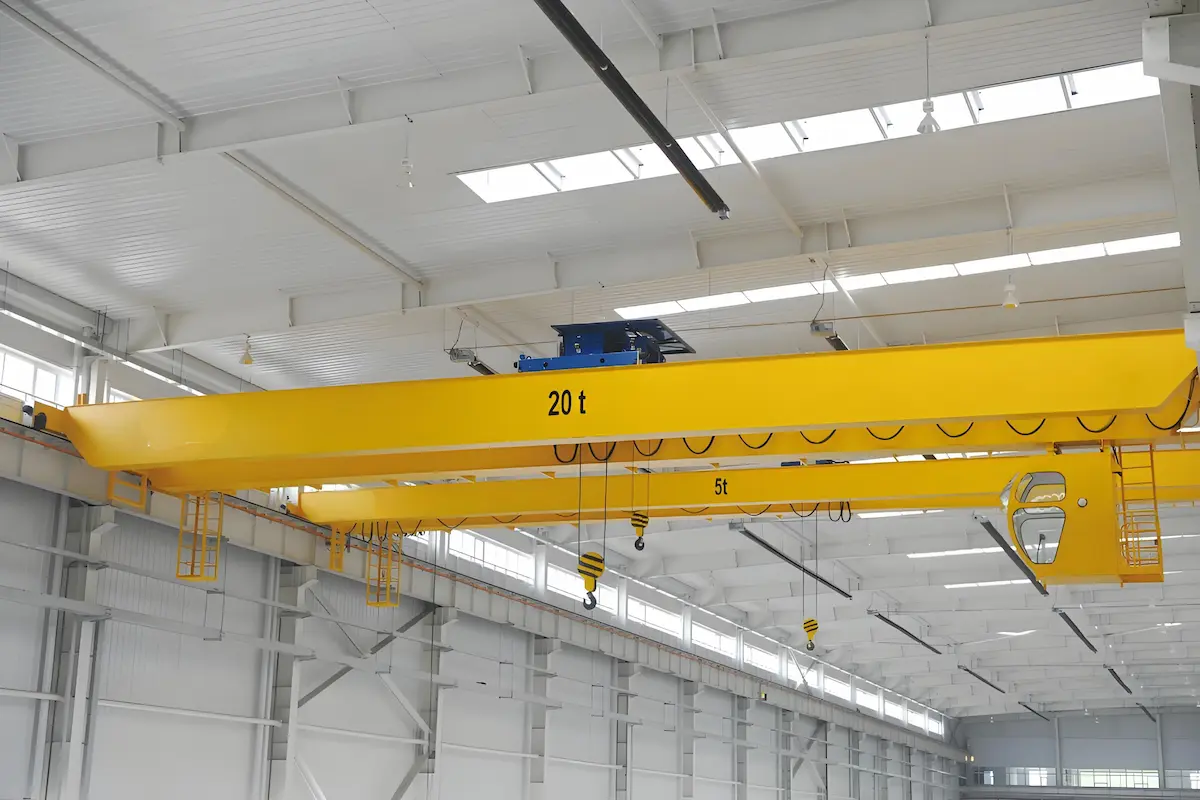
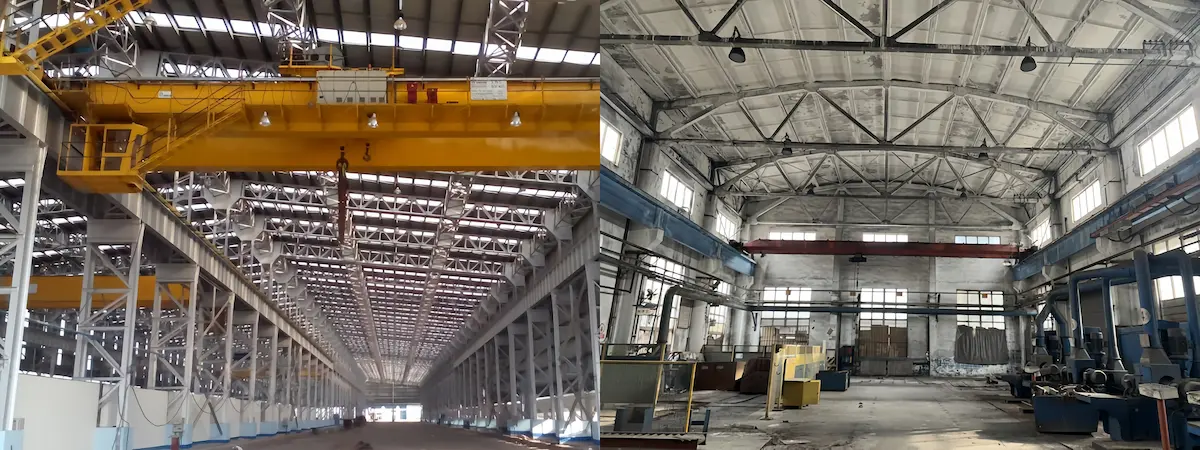
The crane and the building structure are closely interconnected, so facility conditions must be considered:
Procurement decisions should focus on Total Cost of Ownership (TCO) rather than just purchase price.
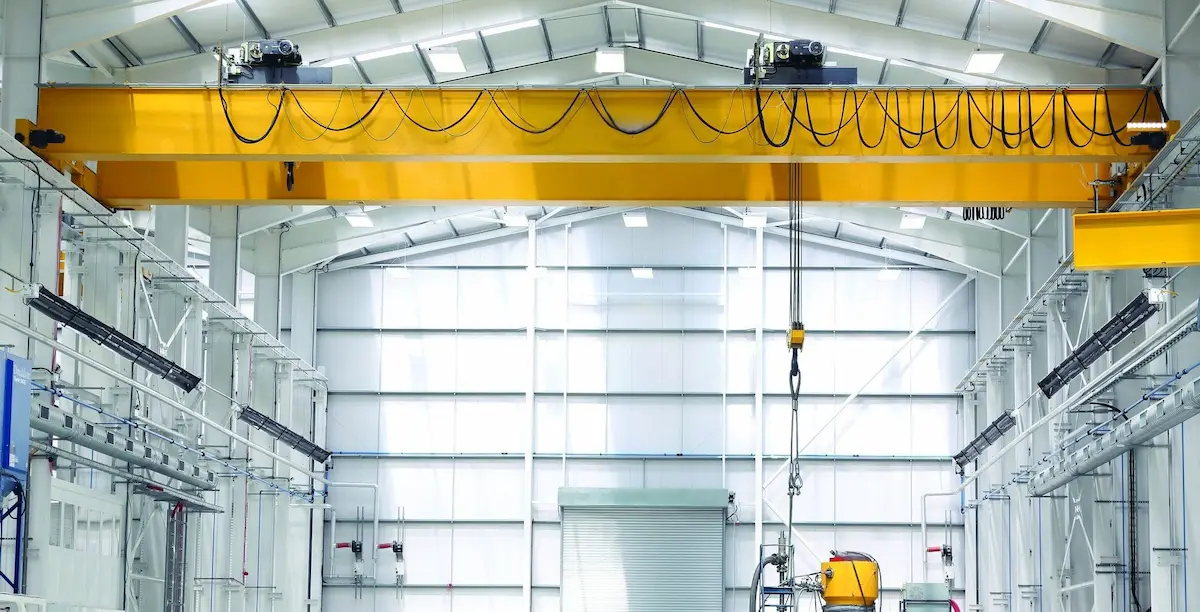
For the following scenarios, HSCRANE strongly recommends choosing FEM standard overhead cranes:
For high-frequency operations, FEM standard overhead cranes are recommended; for basic applications, conventional overhead cranes remain a practical and economical choice.
Many customers mistakenly believe that “bigger, heavier, and thicker steel means more durable.” In modern industry, this is a misconception.
Precision engineering and optimized design deliver far greater reliability than simply increasing material thickness for perceived safety margins.
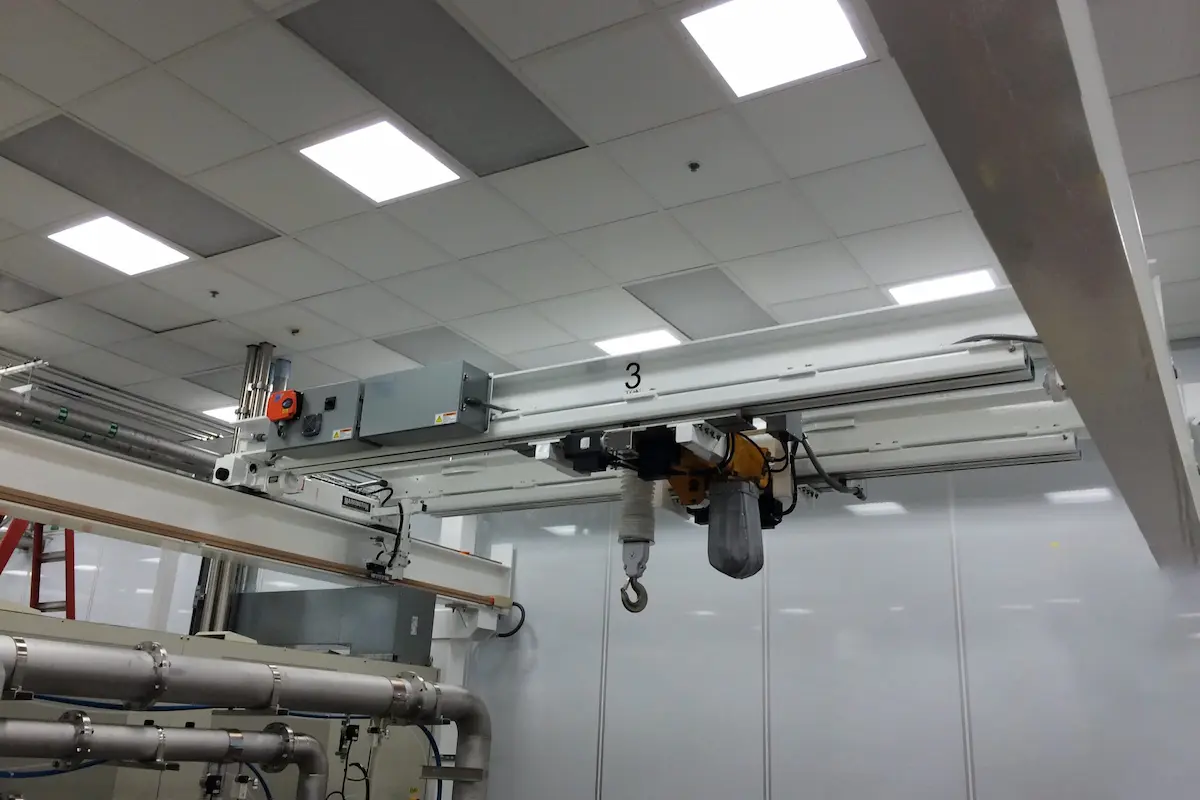
As a leading provider of material handling solutions, HSCRANE integrates advanced European technology with local operating conditions, delivering strong core competitiveness:
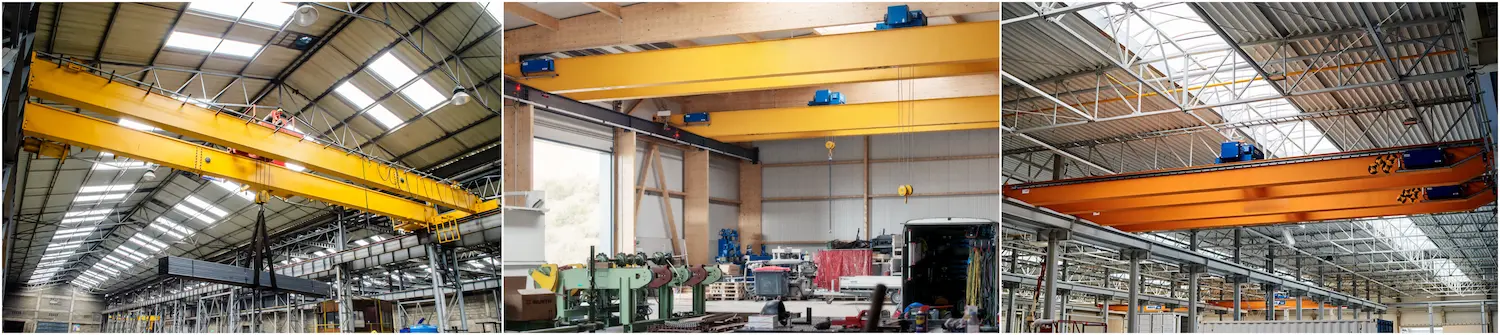
Overall, FEM standard overhead cranes are becoming the industry trend due to their lightweight design, precise engineering, and energy efficiency, especially in modern industrial environments requiring high frequency, high precision, and intelligent operation. Meanwhile, conventional overhead cranes, with their simpler structure and lower initial cost, remain suitable for basic applications and budget-limited projects.
Therefore, when selecting an overhead crane, companies should evaluate usage frequency, load requirements, facility conditions, and long-term operating costs to choose the most cost-effective solution. By comparing FEM standard overhead cranes with conventional overhead cranes, you can better identify the most suitable and efficient solution for your application.
Whether you are building a new facility or upgrading existing equipment, our technical experts will provide free application evaluation and tailored recommendations.
Click below to get the latest HSCRANE product catalog and quotation:
【Contact Us Now】
“Comparison of CMAA, FEM, and China Crane Standards: Design Differences and Advantages”
Includes duty classification conversion (M5/M6/M7 vs. Class C/D/E/F), structural safety factor comparisons, and global HSCRANE application cases.
Q1: How much higher is the initial cost of a FEM standard overhead crane compared to a conventional overhead crane?
A1: Typically, FEM standard overhead cranes cost 15%–25% more than conventional cranes of the same capacity. However, due to reduced building load requirements, lower energy consumption, and minimal maintenance, the cost difference is usually recovered within 2–3 years.
Q2: Can I replace an existing conventional overhead crane with a FEM standard overhead crane?
A2: Yes, and the benefits are significant. FEM cranes are lighter and offer lower headroom, reducing wheel loads on existing structures and often providing additional lifting height—making them ideal for facility upgrades.
Q3: What is the service life corresponding to FEM duty classes 1Am, 2m, and 3m?
A3: It depends on actual load conditions. For example, 2m (ISO M5) typically provides a design life of around 10 years (10,000 working hours) under moderate usage. HSCRANE’s intelligent monitoring system can track operating time and help predict maintenance cycles accurately.
Q4: Are FEM standard crane components readily available in the market?
A4: Yes. Although based on European standards, core components (such as inverters, bearings, and electrical parts) are sourced from global brands like Schneider Electric, ABB, and SEW-Eurodrive. HSCRANE’s global supply chain ensures fast availability of spare parts.
Q5: Why do FEM standard overhead cranes operate more smoothly than conventional overhead cranes?
A5: The key difference lies in the drive system. FEM cranes are equipped with VFD control, enabling soft start and stop, which effectively eliminates load swing. Conventional cranes typically use direct starting methods, resulting in higher impact forces.
This document is for reference only. Specific operations must strictly comply with local laws and regulations and equipment manuals.