Overview
Many buyers only look at quote numbers when buying a jib crane. They often overlook hidden costs like installation, foundation, and maintenance. Honestly, choosing the wrong type seriously affects your budget. The total cost of ownership (TCO) difference can easily exceed 20%. Is a space-saving wall-mounted jib crane more cost-effective? Or does a freestanding pillar type offer better value? We will calculate costs from purchase to later maintenance. We deeply analyze wall-mounted and pillar jib cranes. This ensures your workshop spends money wisely.
Unsure which type saves more money for your factory?
HSCRANE engineers can customize the most economical jib crane solution. We base this on your structure, lifting needs, and budget. We also provide free one-on-one selection guidance.
[Contact HSCRANE engineers now] to get your exclusive quote and cost analysis report!
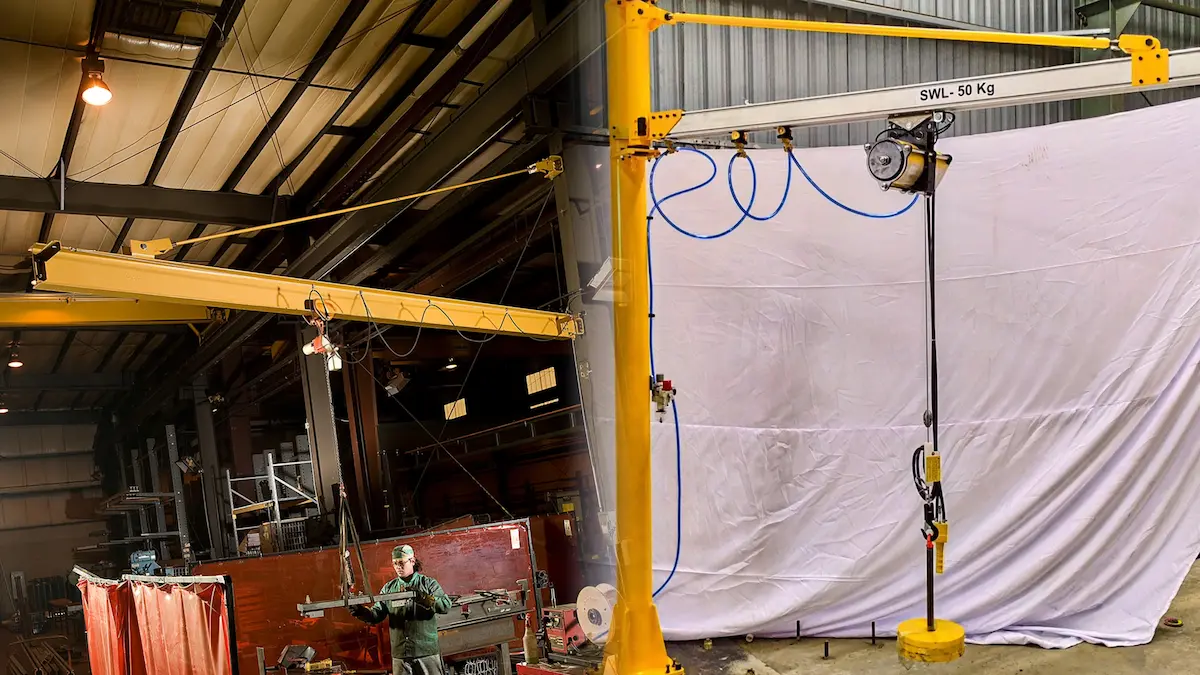
Why Shouldn’t You Only Look at Jib Crane Prices?
When receiving quotes, many buyers just compare total prices first. They often try to pick the cheapest option available. However, industrial lifting equipment is not a plug-and-play microwave. The factory price you see is just the iceberg’s tip.
What is the Total Cost of Ownership (TCO) for a Jib Crane?
Industry insiders usually evaluate the Total Cost of Ownership (TCO). They do this when reviewing different lifting solutions. Simply put, this is the total money your company spends. It covers everything from purchase to final scrapping. Let’s clearly break down these real expenses:
- Equipment Purchase Cost:This is the machine price on the invoice. It includes the arm, pillar/bracket, hoist, and control system.
- Foundation Construction Cost:This is an easily overlooked hidden expense! Poor foundations need new digging, embedded parts, and concrete pouring. These civil works can cost as much as the equipment.
- Installation and Wiring Costs:Site construction requires renting mobile cranes and aerial lifts. It includes material and labor costs for cables and busbars.
- Daily Maintenance and Parts Replacement:This covers regular maintenance fees. It includes costs for replacing bearings, wire ropes, or chains.
- Downtime Cost:Frequent breakdowns can stop the entire production line. Waiting for parts causes lost capacity and delivery delays. This might cost more than buying a brand-new crane.
- Service Life:Cheap equipment may need major overhauls after three years. High-quality equipment can serve stably for fifteen years. Their annual holding costs are completely different.
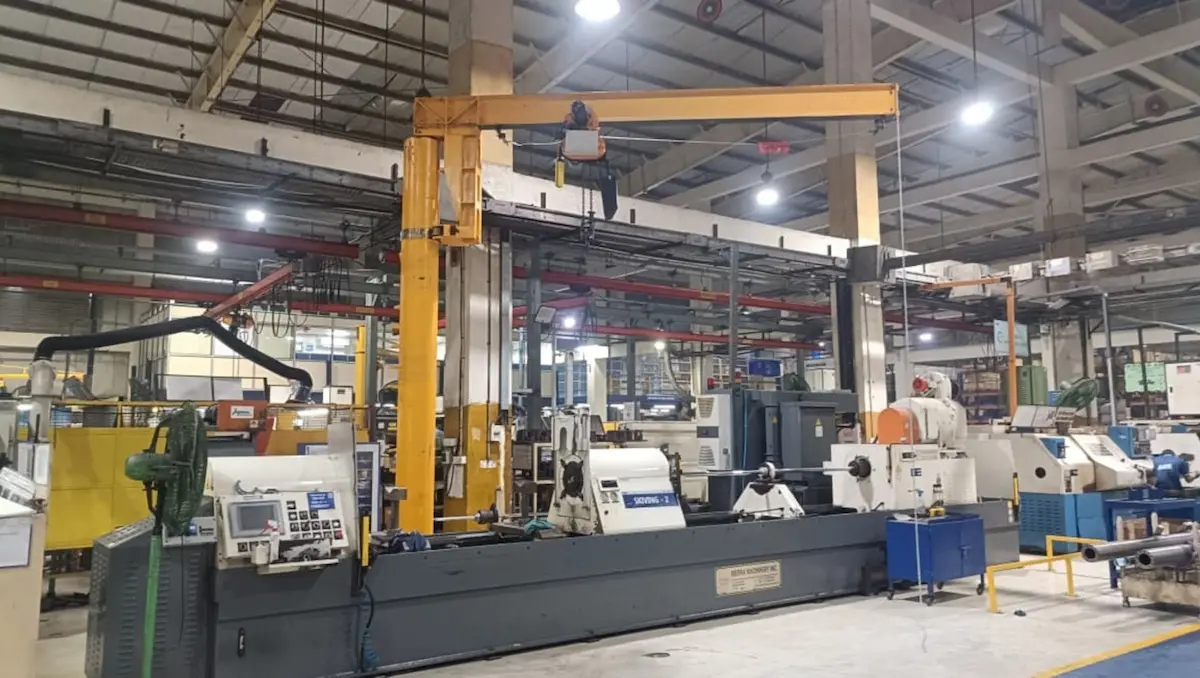
Why Doesn’t a Low Quote Always Mean Low Cost?
Do not celebrate too early when encountering extremely low quotes. Low prices will often trap you in the following areas:
- Hidden Fee Analysis:Some ultra-low quotes only include the bare machine. After signing, you realize freight and installation are excluded. You might pay extra for motors, control boxes, or limit switches.
- Installation Complexity:Poorly designed equipment is extremely troublesome to install. A simple one-day job can easily drag into three days. This sharply increases on-site labor and equipment rental costs.
- Maintenance and Sky-High Parts:Manufacturers might use inferior or non-standard parts to lower initial investment. Failure rates soar immediately after the warranty period ends. You must buy expensive non-standard parts from the original factory. Later maintenance becomes an endless money pit.
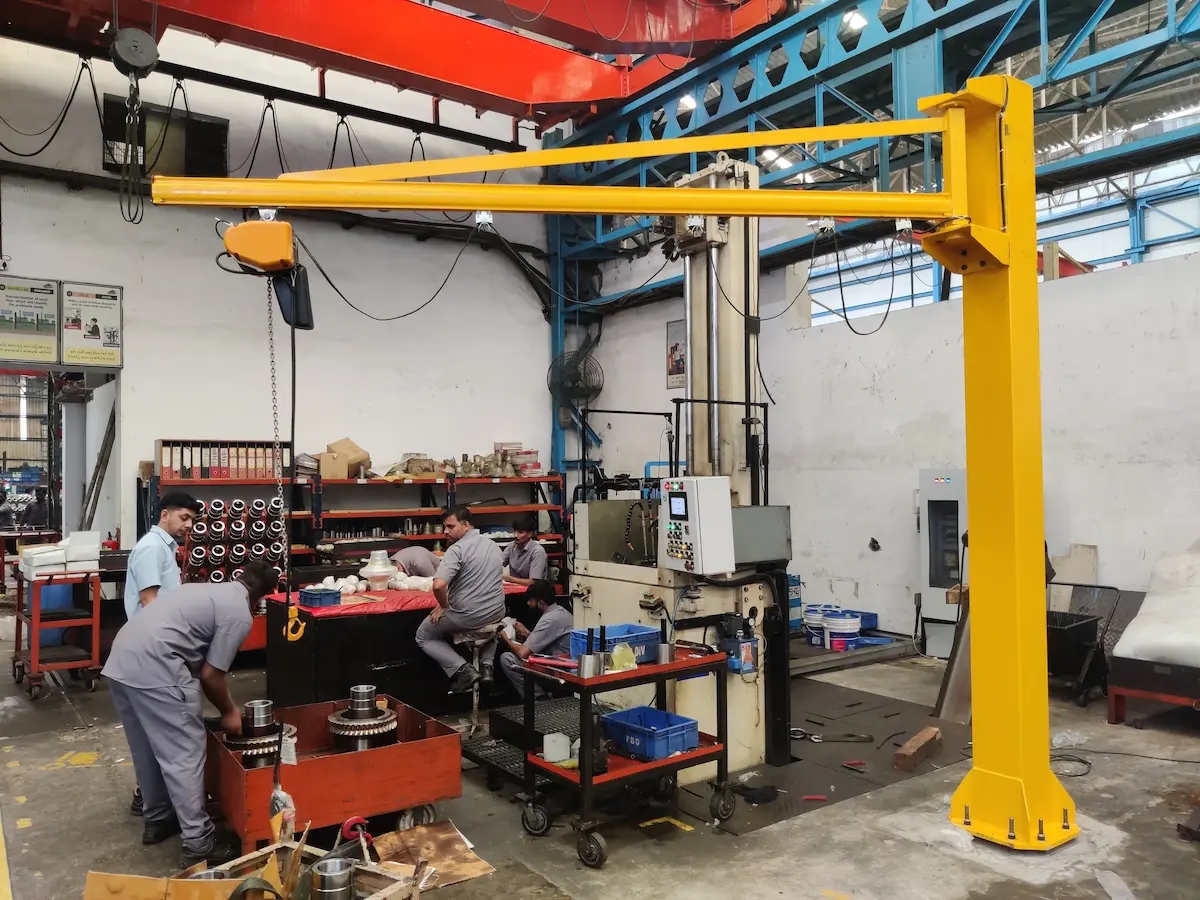
Cost Comparison: Wall-Mounted vs. Pillar Jib Cranes
We want to show you the financial differences more intuitively. Let’s do a direct head-to-head expense comparison for both devices.
|
Cost Dimension
|
Wall-Mounted Jib Crane
|
Pillar Jib Crane
|
Core Difference Analysis
|
|
Equipment Purchase Cost
|
Lower
|
Higher
|
Wall-mounted cranes omit thick steel pillars and use less steel. Their initial cost is cheaper.
|
|
Foundation Construction Cost
|
Extremely low (or 0)
|
Higher
|
Pillar types require solid concrete foundation support. Wall-mounted types directly use existing factory pillars.
|
|
Installation Cost
|
Lower
|
Higher
|
Wall-mounted installation is fast and simple. Pillar types need pillar lifting, vertical alignment, and anchor bolt tightening.
|
|
Daily Maintenance Cost
|
Lower
|
Medium
|
Their maintenance items are quite similar. However, the wall-mounted structure is relatively simpler.
|
|
Future Expansion Cost
|
Higher (limited by structure)
|
Lower
|
Pillar types act as independent stations for easy relocation. Wall-mounted relocation strictly depends on available load-bearing pillars.
|
Purchase Guide to Avoid Pitfalls:
If existing H-beam pillars are strong and work is near walls, choose the wall-mounted type. This will safely save you huge civil and steel costs. But if you need 360-degree coverage or central workshop operations, build a foundation for a pillar type. This is truly the best long-term solution.
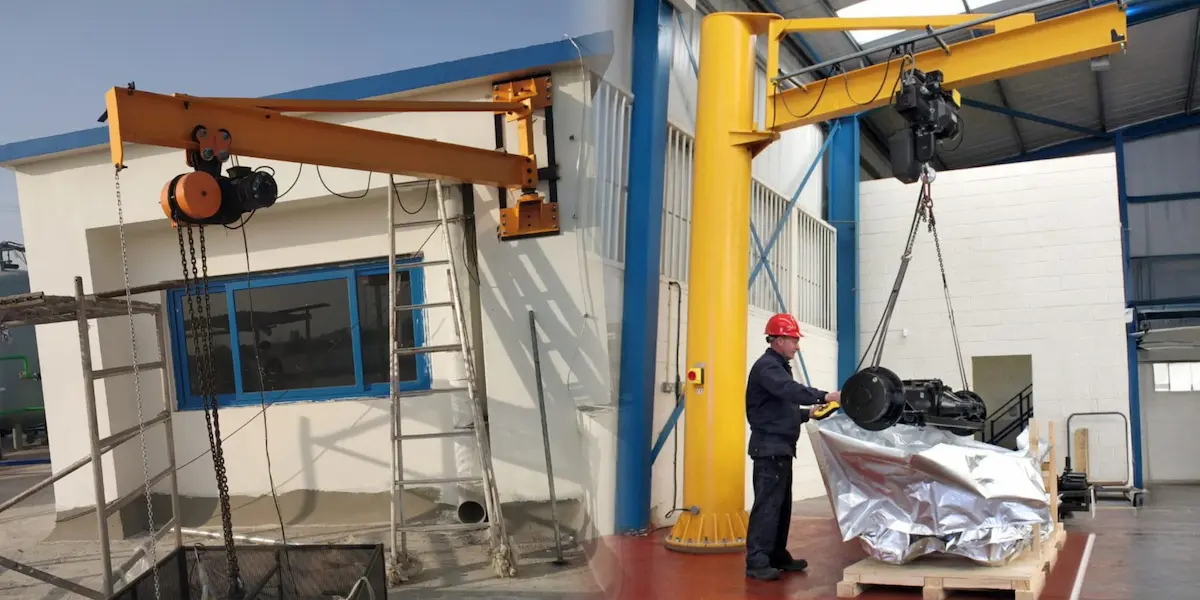
Application Scenario Analysis of Wall-Mounted and Pillar Jib Cranes
Choosing equipment is like buying clothes. There is no absolute good or bad, only suitability. Let’s look at actual workshop conditions. We will see where each jib crane performs best.
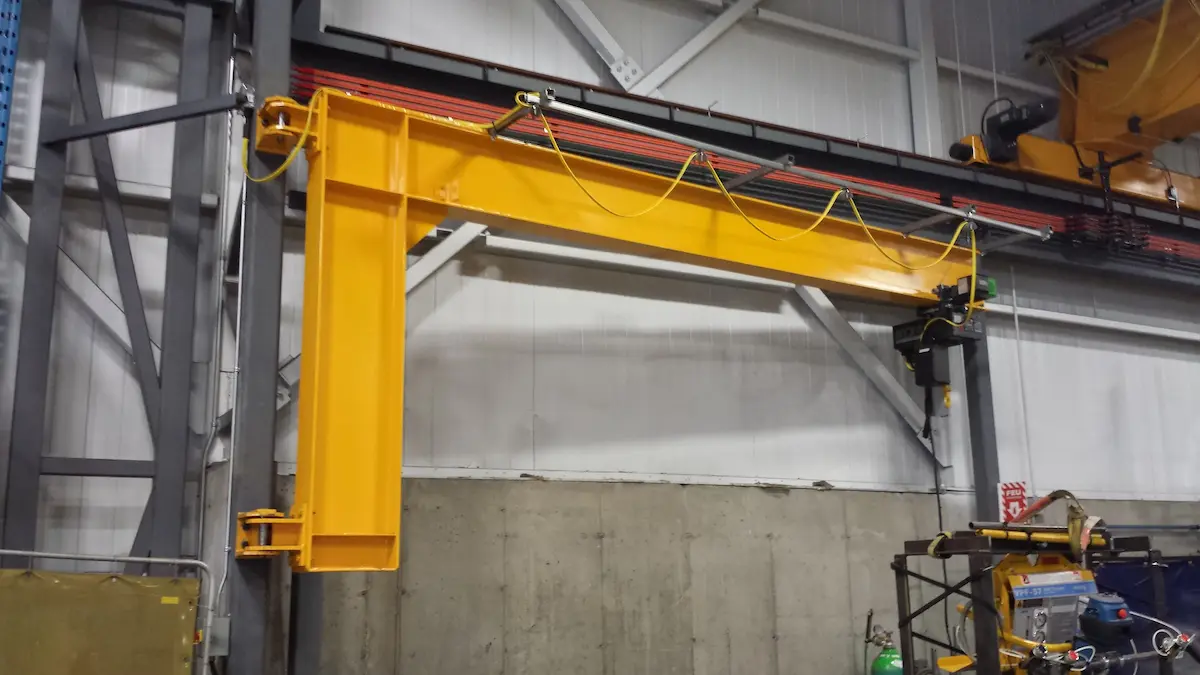
Scenarios Better Suited for Wall-Mounted Types
If you encounter the following situations, do not hesitate. A wall-mounted jib crane is definitely your optimal solution:
- Old factories with load-bearing steel pillars:This is the absolute home ground for wall-mounted types. You can directly use the factory’s existing H-beam pillars. There is no need to dig pits for foundations. You can get the job done effortlessly.
- Tight floor space:Are machines and materials tightly packed in the workshop? Is there not even room to stand? Wall-mounted cranes hang in mid-air. They do not occupy your precious floor space at all.
- Light-to-medium load and high-frequency work:Examples include CNC machine loading or frequent small part handling. The lifting weight is not large here. Using it is the most flexible and convenient choice.
- Limited budget:There are no civil engineering costs. The equipment itself also has a low cost. The overall package can save the boss a lot of money.
Scenarios Better Suited for Pillar Types
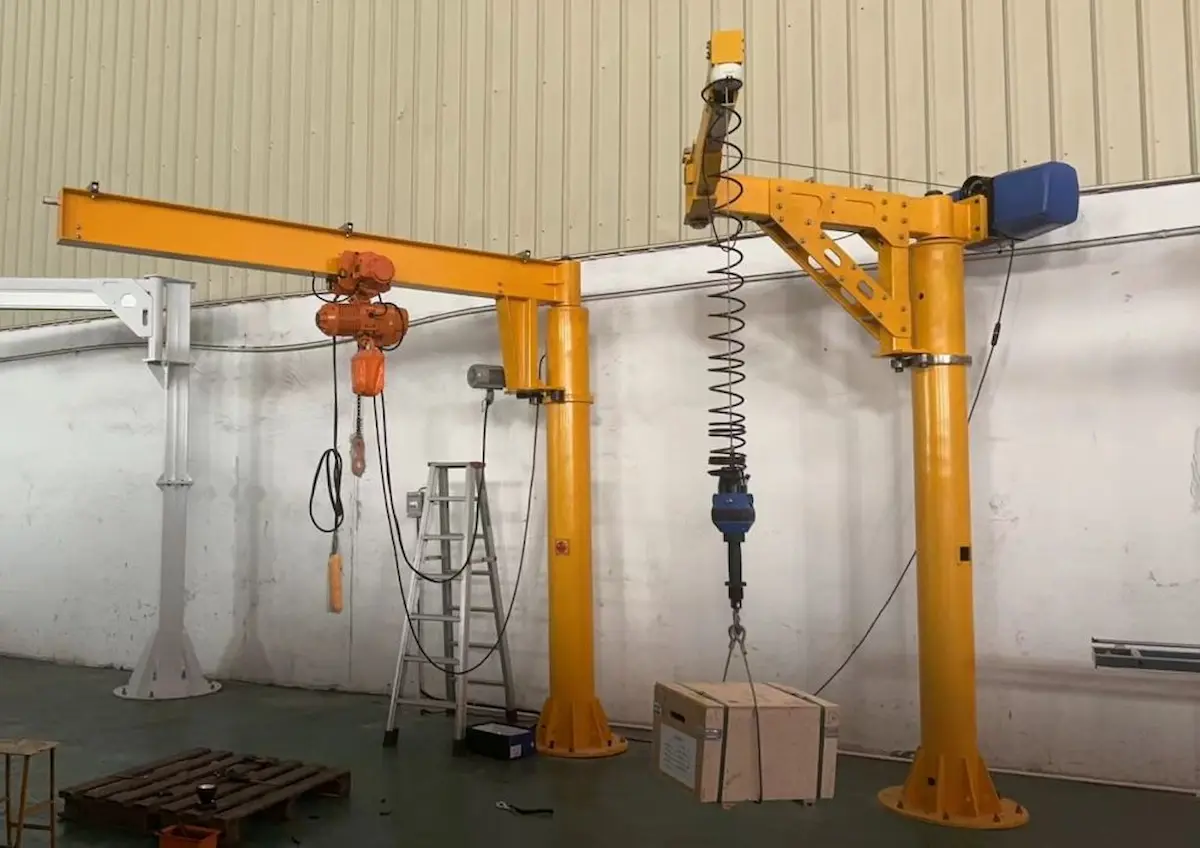
However, if your project fits these conditions, avoid wall-mounted types. Honestly choosing a pillar jib crane is the only way:
- New factories or weak structures:The factory walls might be brick-concrete. Or existing steel pillars fail to meet load-bearing standards. Safety comes first in this situation. You must build an independent foundation to take root.
- Need an independent large workstation:The pillar type is independent and fits anywhere. You can even install it by central workshop aisles. It will stand firmly once the foundation is laid.
- Desire a large rotation range:Wall-mounted types are limited by walls. They usually only rotate 180 or 270 degrees. Does your station need all-around lifting? Only the pillar type’s 360-degree rotation can satisfy you.
- Outdoor open-air use:Examples include open yards and loading docks. There are no nearby walls or pillars to rely on. You have no choice but the pillar type.
How to Choose the Most Economical Jib Crane by Budget?
The budget is often the final hurdle for decisions. You act according to the money you have. Here is some practical selection advice for you.
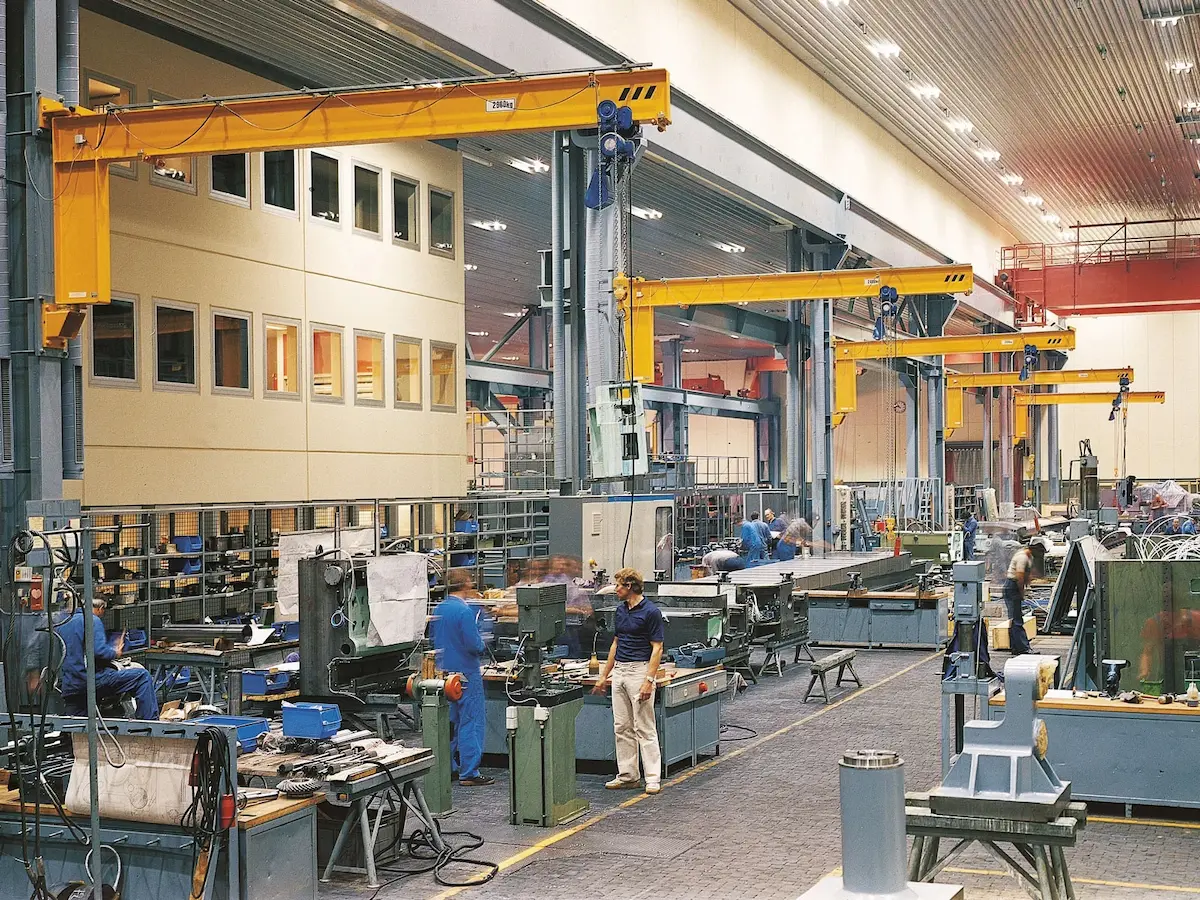
Limited Budget
Recommended Solution: Wall-Mounted Jib Crane Why choose this?
- Low Initial Investment:You directly save material costs for thick steel pillars. The bare machine price is very attractive.
- Lightning-Fast Installation:There is no need to wait for concrete curing. If steel pillar conditions allow, mounting takes a few hours. Wiring and testing finish quickly, cutting site labor in half.
- Huge Comprehensive Cost Advantage:It is the most cost-effective local lifting tool for factories. The payback period is extremely short.
Sufficient Budget with Future Demand Increases
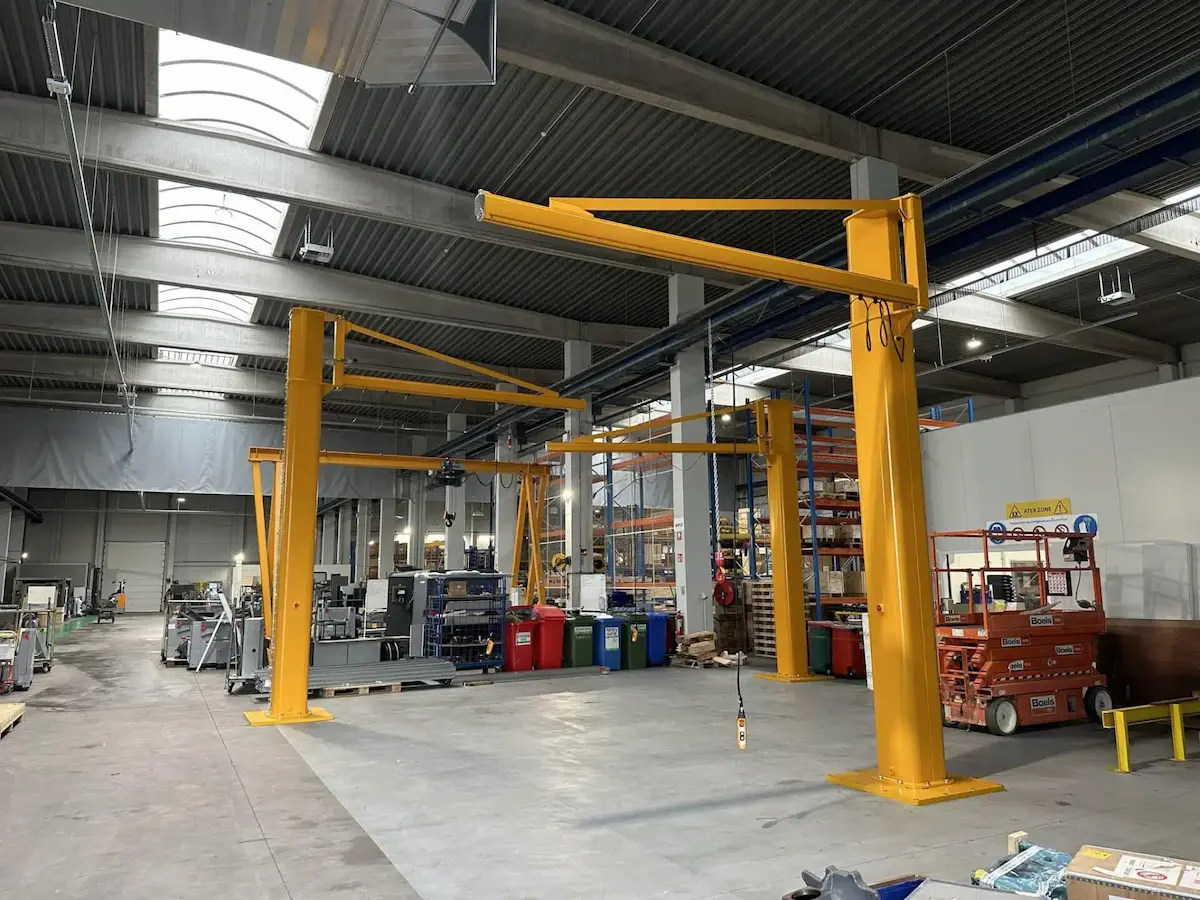
Recommended Solution: Pillar Jib Crane Where is this money spent?
- Wide Coverage:It features an independent pillar and 360-degree rotation. One machine’s working radius covers several surrounding stations. The equipment utilization rate is extremely high.
- Independent Operation:Its force-bearing system is completely independent. It adds no extra burden to original factory structures. You feel more secure when using it.
- Maximum Flexibility:Use it at this station today. Tomorrow, you might face production line reorganization or workshop relocation. Just remove the anchor bolts and build a new foundation. Its asset retention rate is very high in the long run.
Want to Know Which Jib Crane Saves Your Project Money?
Stop struggling between different solutions! The HSCRANE engineering team offers free customized cost analysis. We base this on your factory size and steel structures. We also consider your specific lifting needs. We will provide a detailed TCO comparison for both types. This helps you account for every penny clearly.
[Contact us now] to get your exclusive cost analysis report!
6 Key Factors Affecting Jib Crane Purchase Costs
Before asking suppliers for quotes, many customers ask: “How much is your 2-ton jib crane?” This is actually a very difficult question to answer. Jib cranes are customized equipment. Even small specification differences can lead to huge price variations. The following six core parameters directly affect your final budget:
|
Cost Factor
|
Actual Impact on Purchase Cost
|
|
Lifting Capacity
|
Capacity directly determines steel usage and hoist specifications. Differences between 2-ton and 5-ton cranes go beyond hoists. Pipe wall thickness and bearing sizes also increase significantly.
|
|
Arm Length
|
This is the most easily overlooked cost driver. Longer arms create stronger leverage effects at the end. They require thicker beams. Overturning moments on pillars or walls increase exponentially, driving up costs.
|
|
Lifting Height
|
Height affects overall pillar height and chain or wire rope length. Every additional meter increases pillar material costs and high-altitude installation difficulty.
|
|
Working Class
|
Consider two 5-ton cranes. An A3 class crane used occasionally differs from a heavy-duty A-class crane. Motor and gearbox configurations differ completely, causing clear price differences.
|
|
Hoist Brand
|
The hoist is the core power source. Choosing cost-effective domestic brands versus premium imported brands creates a big gap. Price differences can reach 30% or more of total equipment cost.
|
|
Custom Features
|
Features include electric slewing, outdoor anti-corrosion coatings, explosion-proof designs, and wireless remotes. These optional packages directly add to your final bill.
|
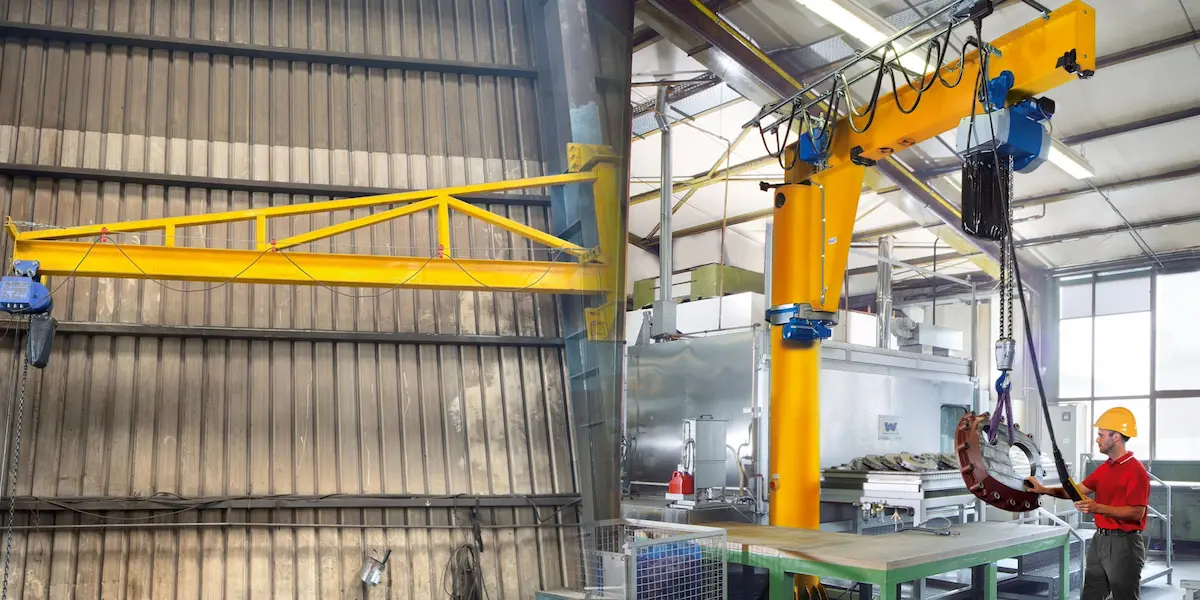
Advantages of HSCRANE Jib Cranes
Why do so many factories choose HSCRANE after comparing options? Lifting equipment directly affects workshop safety. Low prices alone cannot sustain a business long-term. Our core confidence comes from strict compliance and professional service:
- Strict Compliance with International Standards:We never cut prices by arbitrarily reducing steel thickness. All products strictly follow top international standards:
- Structural Stability:We strictly enforce EN 14985 (Jib Cranes Safety Requirements). We apply mandatory calculations from Clause 5 for anti-overturning stability. Cranes remain rock-solid even during extreme full-load slewing.
- Fatigue Life Calculation:Structural stiffness and fatigue life comply with FEM 1.001 requirements. FEM 1.001 covers rules for hoisting appliance design. Our structures are durable and built to last.
- Mechanism Classification:Mechanism working levels strictly follow the ISO 4301-1 Promised working conditions are accurate without false ratings.
- Rich Product Types:We offer light 0.25-ton station cranes up to 16-ton heavy-duty models. Options include wall-mounted, pillar-type, and wall-traveling jib cranes. Our vast drawing library quickly matches your specific needs. You will never be an experimental subject.
- High-Quality Core Components:We refuse cheap assembly. Our slewing bearings, gear motors, and control systems come from top suppliers. They are proven through tens of thousands of cycles. They ensure smooth lifting and lower post-purchase disputes.
- One-Stop Service Loop:We provide comprehensive service from initial site measurements and 3D design to factory testing. We also provide shipping and final on-site installation guidance. You only need to confirm drawings. We handle all the hard work.
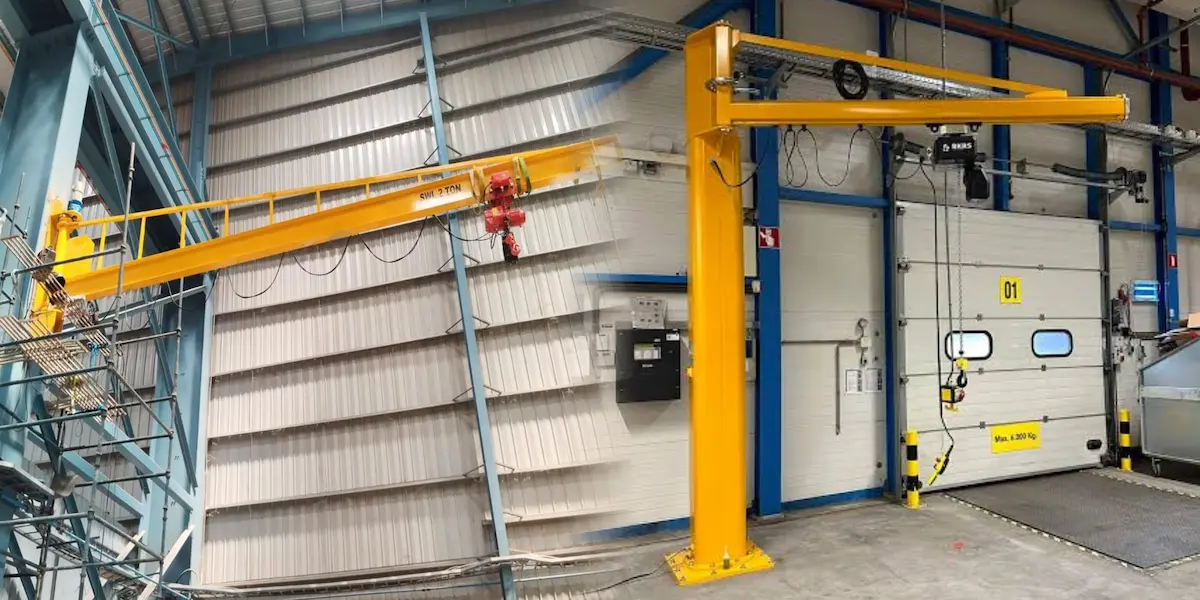
HSCRANE Case Studies
See how peers in different industries solved site challenges and unlocked hidden profits using HSCRANE solutions:
Case 1: Automotive Parts Manufacturing Plant
- Customer Profile:T-Auto Parts Co., Ltd. (Japanese automotive stamping parts supplier in Thailand, Project No.: TH2305-JC).
- Project Type/Quantity:Workstation upgrade, purchasing 12 units of BZ-W wall-mounted jib cranes (2-ton capacity).
- Customer Needs:Faster production lines required frequent lifting. Intensive AGV traffic occupied floor space. Headquarter budgets were strictly limited.
- Solution:HSCRANE engineers inspected the site and rejected pillar designs. They used existing heavy H-beam columns to install 12 wall-mounted jib cranes. This formed a multi-level lifting network with existing overhead cranes.
- Project Results:
- Civil Construction Savings:We avoided excavating and pouring 12 foundation pits. This saved nearly $18,000 in civil engineering costs.
- 40% Shorter Installation Time:There was no concrete curing wait time. Mounting and commissioning finished during a weekend shutdown.
- Improved Workstation Efficiency:Workstations no longer waited for overhead cranes. Workstation operational efficiency nearly doubled.
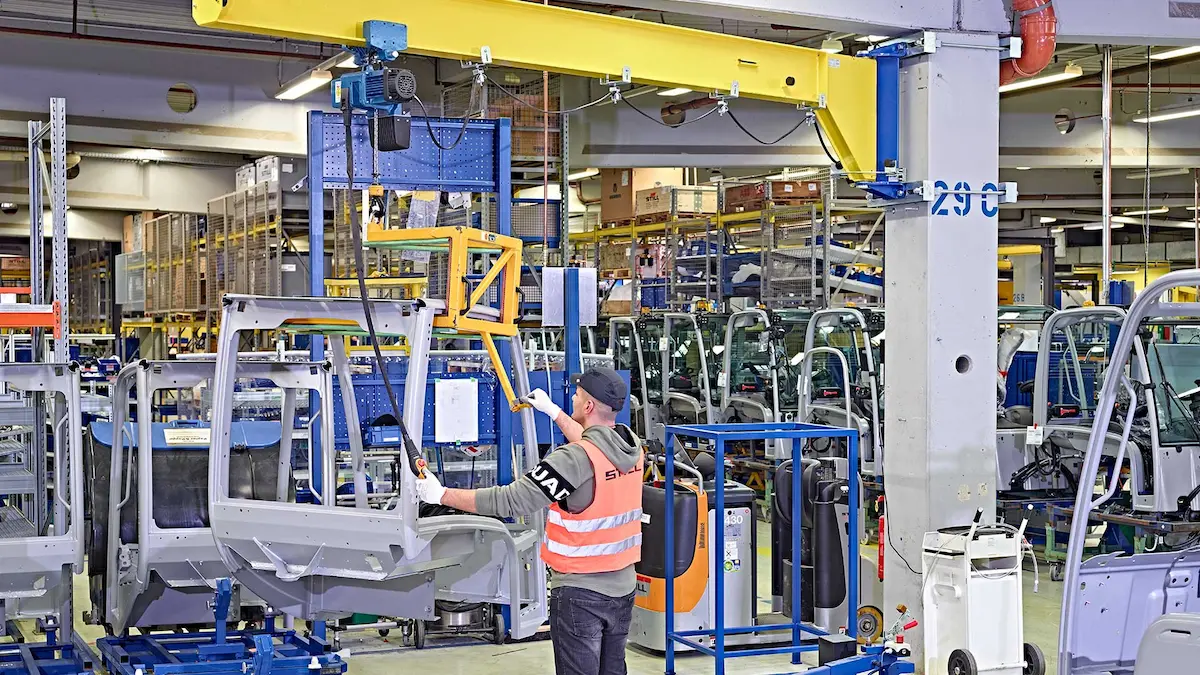
Case 2: Machining Workshop
- Customer Profile:Müller Präzisionstechnik GmbH (Precision gear processing enterprise in Bavaria, Germany).
- Project Type/Quantity:Standalone CNC machining stations, purchasing 6 units of BZ-P pillar jib cranes. Specifications include 5-ton capacity, electric slewing, and 6-meter effective arm length.
- Customer Needs:The client introduced expensive horizontal machining centers. They required precise, all-around loading of heavy gear blanks in open stations. Smooth operation was critical.
- Solution:No load-bearing columns were available nearby. We provided heavy-duty pillar jib cranes with variable-frequency hoists. This enabled millimeter-level precision positioning.
- Project Results:
- 360-Degree Full Coverage:The 6-meter arm achieved full rotation. One crane efficiently served two CNC machine preparation and spindle areas.
- Higher Equipment Utilization:Machines stopped waiting for central cranes. Daily standby time per machine dropped by about 45 minutes.
- Reduced Manual Labor:Workers used wireless remotes for precise heavy workpiece clamping. This reduced labor intensity and eliminated injury risks.
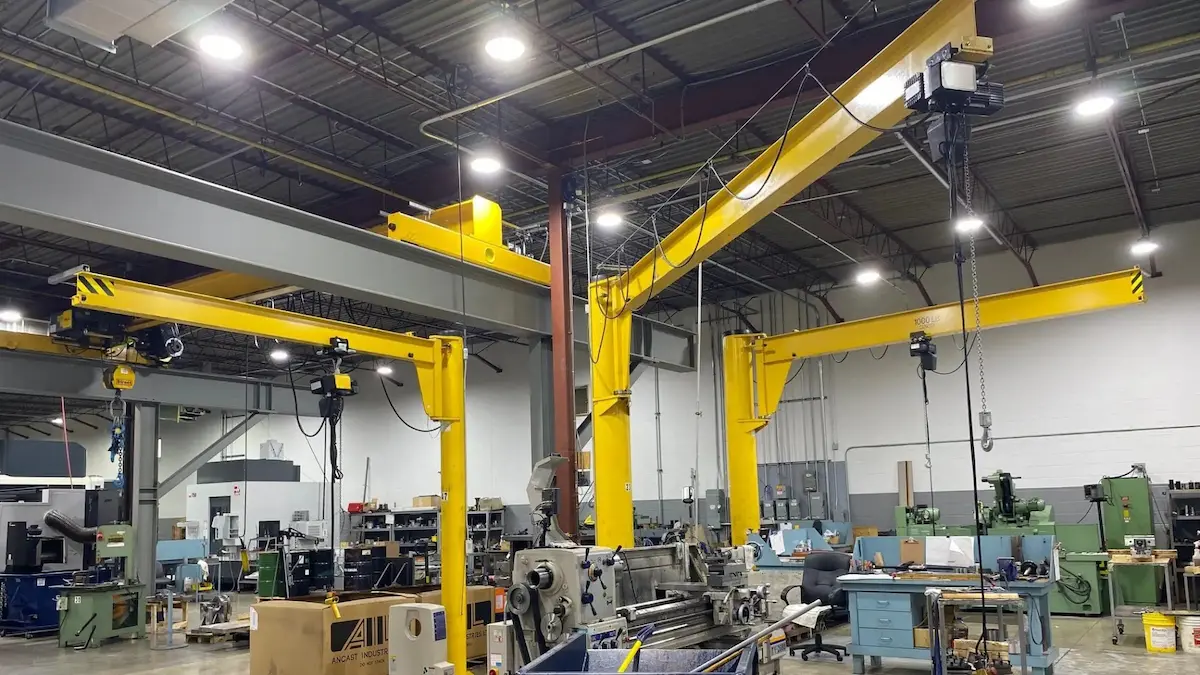
Conclusion
Buying a jib crane for your workshop is a long-term investment. Focusing only on upfront quote differences can cost you far more later. Hidden expenses in foundation work and maintenance quickly add up.
- If your plant has proper structures, tight space, and strict budget limits, choose wall-mounted types. A wall-mounted jib crane helps you maximize every single dollar.
- For independent heavy lifting or future line flexibility, choose a pillar jib crane with a solid foundation. This ensures long-term continuous production without interruptions.
You always get what you pay for when purchasing industrial equipment. Understanding the Total Cost of Ownership (TCO) keeps you well-informed. This prevents you from being misled by various vendor quotes.
Unsure Which Option Saves More Money? Let Us Do the Math!
Unsure if your existing steel pillars can support a wall-mounted crane? Wondering about foundation costs for a pillar jib crane? HSCRANE senior engineers provide free selection guidance and TCO evaluation services. Simply provide your workshop dimensions and lifting requirements. We will issue a detailed 3D solution with precise quotes.
[Click here to contact HSCRANE engineers now for a free proposal]
Quick Reminder: Do Not Rely on Guesswork for Maintenance!
Many factories invest heavily in high-spec jib cranes. However, they neglect basic routine maintenance like regular wire rope lubrication. As a result, equipment develops abnormal noises and jams within two years.
Safety is critical when operating lifting equipment. To avoid major breakdowns, we prepared a simple maintenance checklist for your crew. A quick 3-minute inspection prevents 90% of unexpected downtime risks:
[Further Reading: Jib Crane Maintenance Checklist: Daily, Weekly, and Monthly Inspections]
FAQ
We answered the most frequent customer questions below to help you avoid pitfalls:
Q: Can any wall support a wall-mounted jib crane?
A: Absolutely not. Jib cranes create huge overturning forces during operation. Standard brick walls or light steel frames cannot handle these loads. Forced installation leads to collapse risks. We must evaluate your existing H-beam columns first. Send photos to HSCRANE engineers for free structural assessments.
Q: Can pillar cranes be installed with expansion bolts on standard floors?
A: No, this is extremely dangerous. Standard concrete floors cannot withstand heavy overturning forces. You must dig foundations, embed anchor bolts, and pour concrete. Do not skip civil engineering costs.
Q: Which crane is easier to relocate during factory moves?
A: Pillar jib cranes are much easier to relocate. They are completely independent structures. Simply build a new foundation and bolt the crane down again. Wall-mounted cranes depend heavily on specific building column dimensions.
Q: What cost-saving options exist if I lack steel columns?
A: You can reduce pillar crane costs by optimizing details:
- Shorten Arm Length:Shorter arms reduce steel usage and foundation requirements significantly.
- Lower Duty Class:An A3 hoist costs less than an A5 model for light work.
Share your real working conditions with our team to trim unnecessary costs.
This document is for reference only. Specific operations must strictly comply with local laws and regulations and equipment manuals.