Welcome to visit our factory
Email : info@huasuicrane.com


At the workshop lifting site, we often hear a common confusion. “To improve efficiency, should I install a jib crane, or is an electric hoist enough?”
Many buyers initially think both can do the lifting work. The difference between them seems quite small. But actually, it is like asking a strange question. “Should I buy a complete bicycle, or just buy a wheel?” A jib crane is an independent system with rotation coverage. Meanwhile, an electric hoist is the heart of lifting equipment. It must attach to a bridge, gantry, or track system.
Choosing the wrong equipment causes a mismatch in purchase budgets. Later remedial work due to poor space or slow lifting frequency truly reduces efficiency. To help you avoid these detours, this article ignores boring parameter tables. We will calculate this clearly based on real working conditions. After reading this, you can easily distinguish between the two. You will also know which device is the real efficiency multiplier.
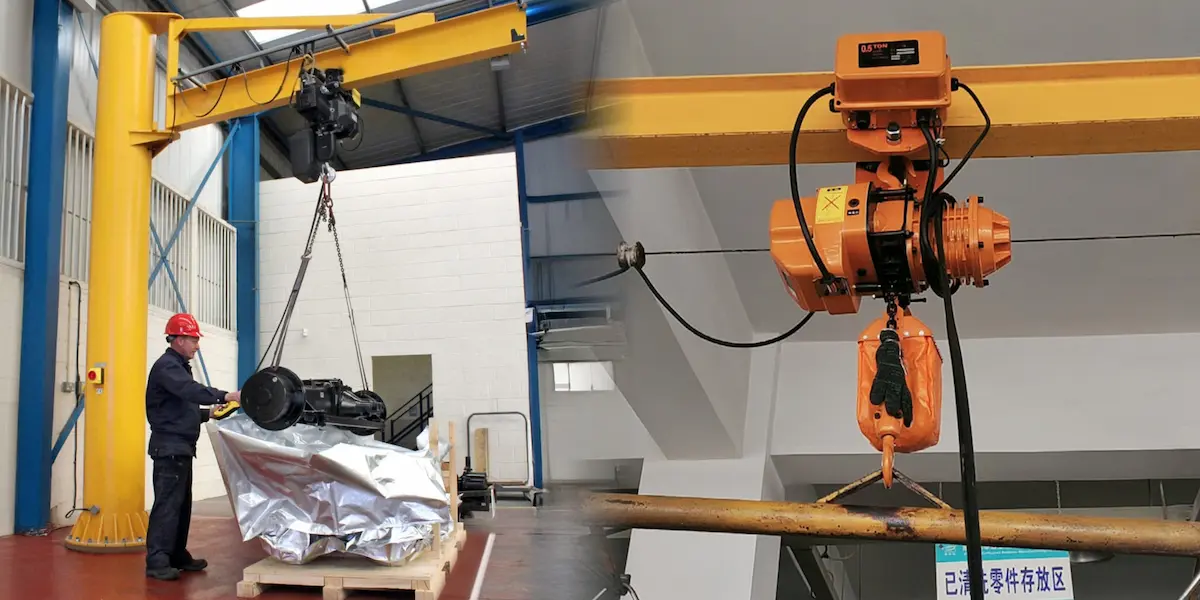
Before comparing parameters deeply, we must correct a common misunderstanding for new buyers. A jib crane and an electric hoist are not the same product. They cannot simply replace each other in the same dimension.
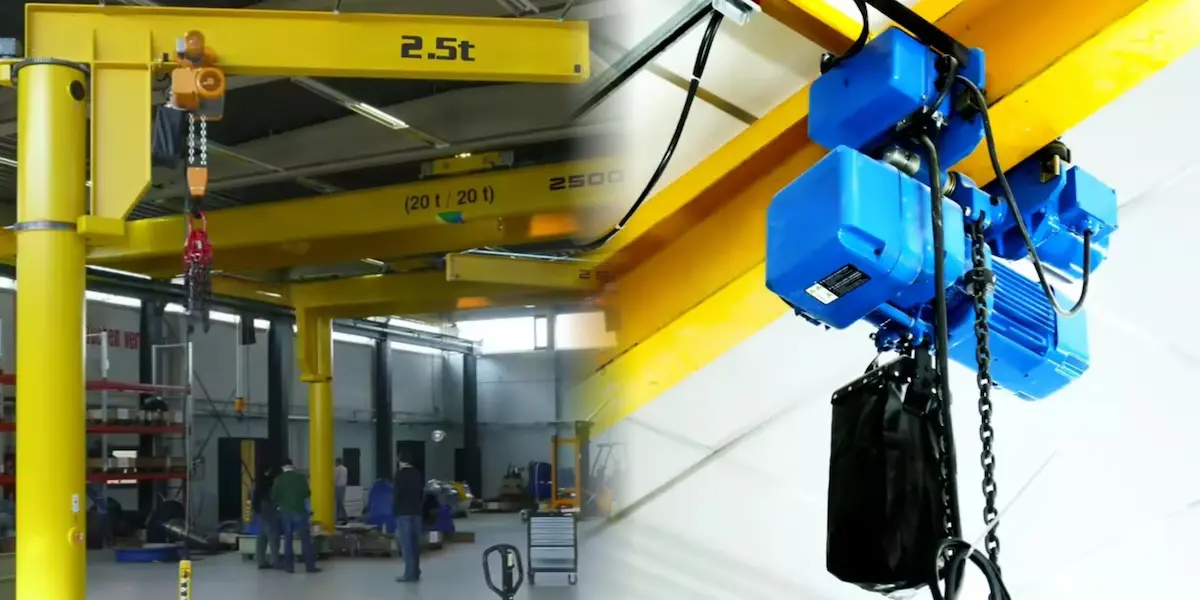
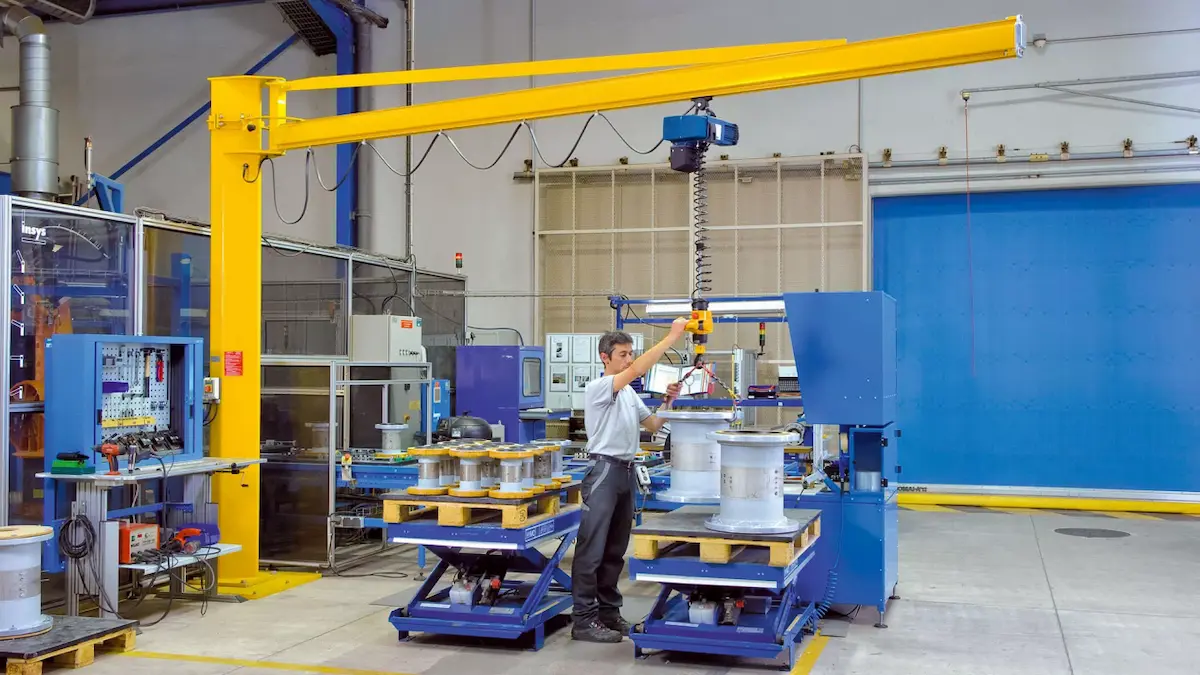
Simply put, an electric hoist is merely a lifting component. It cannot float in the air to work independently. It must hang on an I-beam or a crane beam. However, a jib crane is a complete independent lifting system. It comes with its own support structure and running track. If you compare lifting equipment to a car. An electric hoist is the engine, and a jib crane is the whole car.
Unsure Whether to Choose a Jib Crane or an Electric Hoist?
HSCRANE provides professional lifting solution designs for you. We recommend the best equipment based on your lifting capacity, span, and radius. This helps reduce purchase costs and improves production efficiency.
[Consult HSCRANE now for free selection plans and quotes]
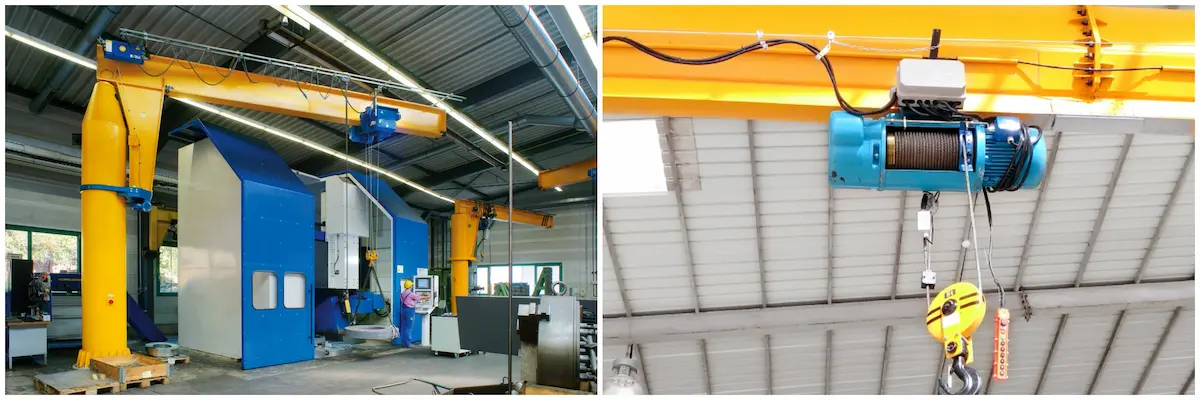
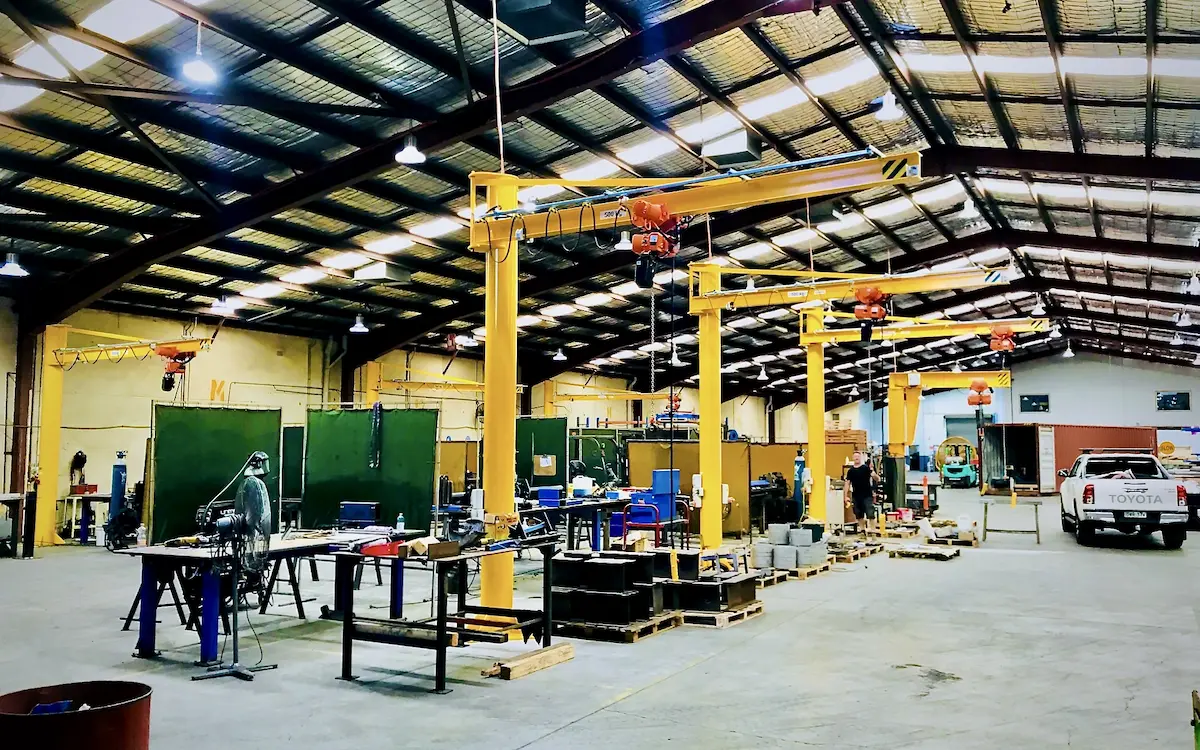
A jib crane is often called a rotary crane by workshop masters. It is like a robotic arm specifically equipped for a specific workstation. It mainly handles materials within a fixed semi-circular or full-circular area.
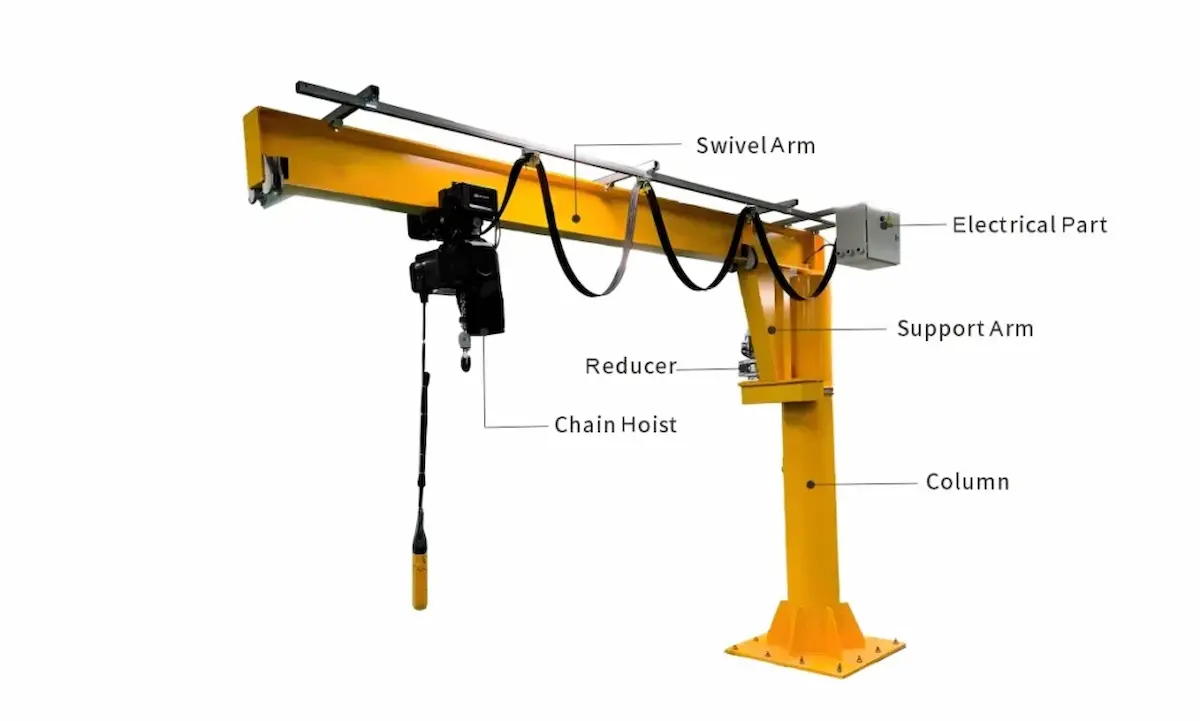
|
Equipment Type |
Structural Features |
Best Application Scenarios |
|
Pillar Jib Crane |
Fixed to concrete foundation via anchor bolts. It can rotate a full 360 degrees. |
Independent workstations. Open workshops lacking wall support. Outdoor loading and unloading areas. |
|
Wall-Mounted Jib Crane |
Installed directly on original load-bearing pillars. It usually has a 180-degree rotation. |
Assembly lines near walls. Workshops that prefer not to damage ground foundations. |
|
Wall-Traveling Jib Crane |
The cantilever is mounted on special wall tracks. It rotates and travels long distances longitudinally. |
Narrow and long production lines. Workshop sides requiring multi-station linkage. |
|
Mobile Jib Crane |
Bottom has counterweights and universal wheels. No foundation needed. Push and use anywhere. |
Temporary maintenance points. Injection molding machine mold replacement. Light operations with frequent workstation changes. |

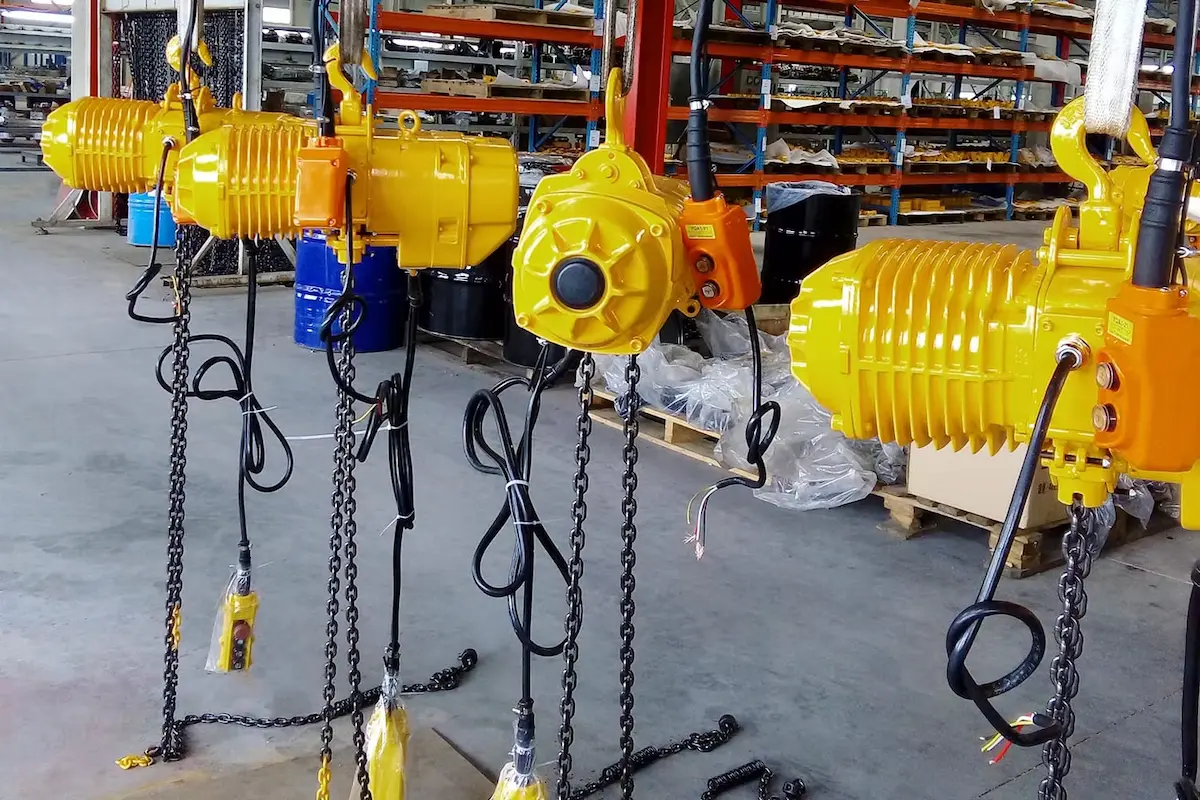
As mentioned earlier, an electric hoist is a core component. It truly does the heavy lifting in the hoisting system. No matter what kind of crane it is. It is this small but powerful device that lifts cargo off the ground.
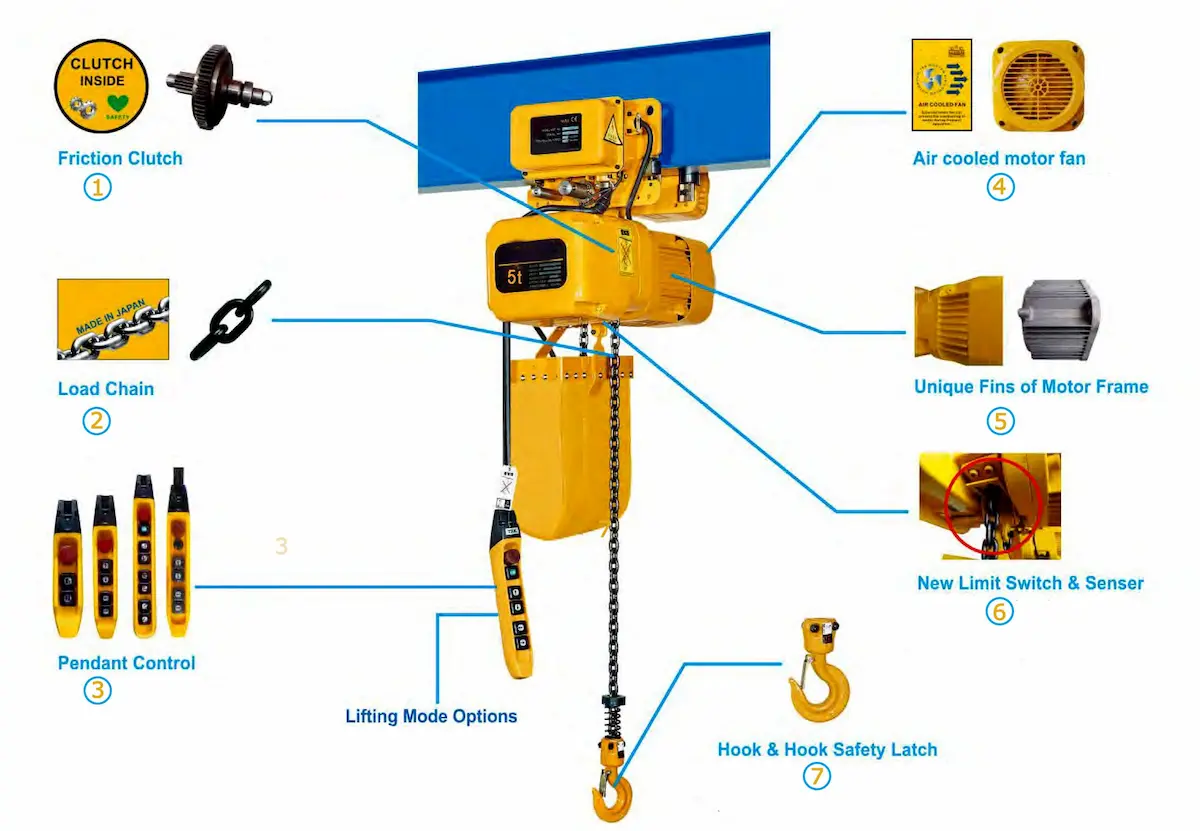
|
Equipment Type |
Core Advantages |
Best Application Scenarios |
|
Wire Rope Electric Hoist |
Large lifting capacity and fast lifting speed. Strong continuous working ability. |
Supporting large overhead or gantry cranes. Handling medium and heavy materials over 5 tons. High-frequency assembly lines. |
|
Electric Chain Hoist |
Compact size and light weight. Not easy to jam the rope. Low maintenance cost. |
Supporting a jib crane. Light lifting under 5 tons. Mold assembly requiring high precision. |
|
Explosion-Proof Electric Hoist |
Motors and electrical components use flameproof treatment. No sparks during operation. |
Chemical plants and paint workshops. Dust-intensive areas. Dangerous environments with flammable and explosive gases. |
|
Low Headroom Electric Hoist |
Extremely compact structure. Minimizes the distance from hook to track. |
Low workshops with limited height. Projects maximizing the use of existing vertical lifting space. |

Many clients ask a common question when requesting quotes. “Should I buy a jib crane or an electric hoist?”
To help you clear your thoughts quickly. We summarized their core differences in actual workshop applications. Just look at the equipment nature and working range. You will basically have a clear idea.
|
Comparison Item |
Jib Crane |
Electric Hoist |
|
Equipment Nature |
A complete lifting equipment set. Includes support, rotation, and lifting. |
A lifting mechanism. It acts as the vertical lifting power. |
|
Independent Use |
Yes. Ready to lift once powered and fixed. |
No. Must hang on existing crane girders or tracks. |
|
Working Range |
3D space coverage. Covers a semi-circular or full-circular area. |
Linear movement. Moves along matched tracks longitudinally or transversely. |
|
Lifting Capacity |
For light and medium loads. Usually 0.25 to 10 tons. |
Wide application. Handles micro operations to heavy lifting. |
|
Installation Method |
Fixed on concrete foundations. Or attached to load-bearing walls. |
Suspended on I-beams. Or mounted on crane trolley frames. |
|
Purchase Cost |
Higher overall budget. A complete fixed asset investment. |
Lower single unit price. Requires existing load-bearing beams. |
|
Applicable Scenarios |
Assembly lines and machine loading. Local warehouse loading. |
Fits overhead or gantry cranes as a lifting unit. |
Unsure Which Equipment Suits Your Factory Best?
Different plant structures and processes lead to different selections. Do not struggle with parameters yourself. Leave these tough tasks to professionals.
HSCRANE engineers provide one-on-one equipment selection advice. We base this on your plant size, lifting frequency, weight, and budget.
[Contact us to get your exclusive lifting solution]
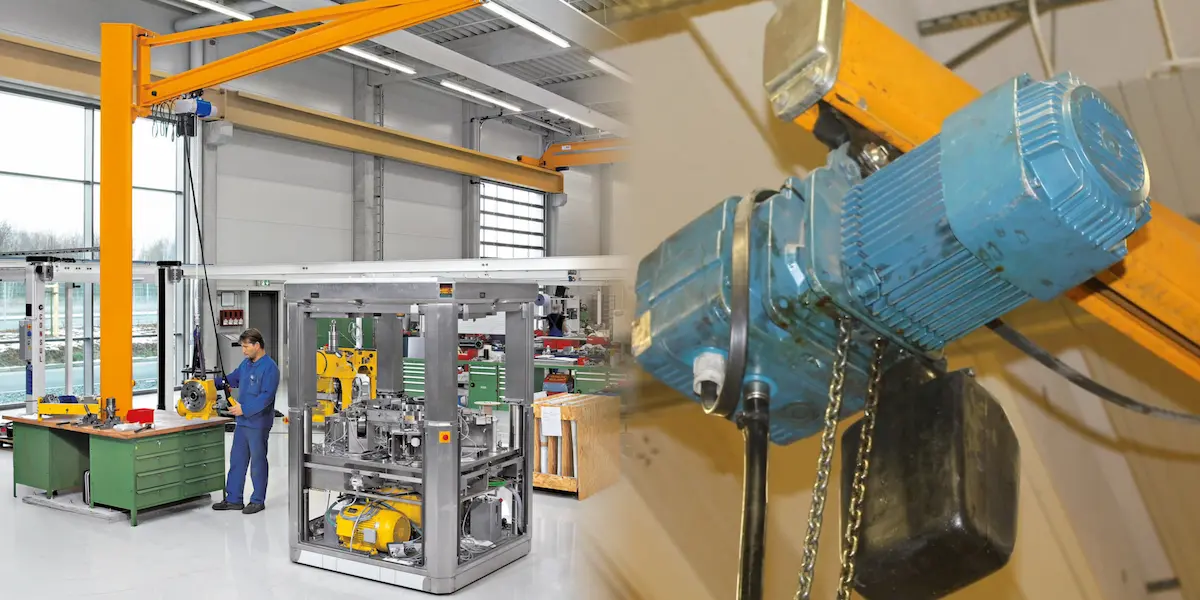
Which one should you buy? Before requesting quotes, check these seven key indicators onsite. The right answer will become clear:
Buying lifting equipment for a workshop is not about buying steel. It is about buying a sense of security for over a decade. As a professional lifting equipment manufacturer, HSCRANE‘s confidence comes from hard-core standards execution. It also stems from strong delivery capabilities:
Empty words are useless, data speaks for itself. Below are some typical projects we recently delivered. Let’s see how we solve real pain points for clients in different industries.
Ultimately, buying workshop lifting equipment is never about buying cold steel and motors. It aims to solve the efficiency bottlenecks of slow material turnover and waiting times.
To summarize the core logic: a jib crane solves local workstation scheduling. It is an independent system allowing workers to lift anytime. Meanwhile, an electric hoist solves the power issue of lifting heavy objects. It is a core component relying on existing tracks or cranes. Knowing this helps you avoid detours during budget planning and technical docking.
Whether your pain point is production line transformation, efficiency upgrade, or new plant planning. It is best to leave professional work to professional people.
Choosing the Right Lifting Equipment Starts With Professional Solutions
Whether you need a jib crane for a single workstation, or a replacement electric hoist. Or perhaps you need a complete workshop material handling system planned out. HSCRANE provides one-stop services from design and manufacturing to installation.
[Contact HSCRANE now for free technical consultation, product selection, and the latest quotes]
Related Reading Recommendations:
What is the next step after knowing the differences? If your work covers a larger workshop span instead of one workstation. You may need to choose between a jib crane and a single girder overhead crane. Click the link below to view the selection guide by HSCRANE engineers:
[Click to view: Small Workshop Crane Selection Guide: Jib Crane vs Single Girder Overhead Crane]
We often get these questions when talking with buyers and workshop directors. We hope to answer some of your doubts in advance:
Q: What hangs on the beam of a jib crane? Can I use my existing hoist?
A: An electric hoist or manual hoist hangs on the beam. You can buy only the steel structure if you have a matching hoist. However, we recommend buying as a set for better compatibility and after-sales service.
Q: If only considering price, which is cheaper between a jib crane and an electric hoist?
A: An electric hoist is cheaper because it is just a component. But it is useless without existing tracks to hang it on. You must evaluate the total budget based on your site conditions.
Q: Can we install a pillar jib crane directly on regular concrete floors with expansion bolts?
A: Absolutely not. The rotation creates a huge overturning moment. Regular floors are too thin and might collapse. You must pour a deep reinforced concrete foundation. If the floor cannot be damaged, consider wall-mounted options instead.
Q: Should I choose a wire rope or chain hoist for a jib crane?
A: For a jib crane under 5 tons, we highly recommend a chain electric hoist. It is compact, lightweight, and prevents rope tangling, requiring less maintenance. Wire rope hoists are only for heavier loads or faster speeds.
This document is for reference only. Specific operations must strictly comply with local laws and regulations and equipment manuals.