Welcome to visit our factory
Email : info@huasuicrane.com


In modern manufacturing, logistics, warehousing, and various heavy industrial sectors, gantry cranes serve as key material handling equipment, undertaking the efficient lifting and transfer of large components, heavy equipment, and bulk materials. With advantages such as a stable structure, high load-bearing capacity, and strong adaptability, gantry cranes play an irreplaceable role in improving production efficiency, ensuring operational safety, and optimizing workflows.
In practical applications, Stationary Gantry Cranes and Rail Mounted Gantry Cranes are the two most common solutions. Each has its own strengths in terms of structural configuration, operating mode, and applicable working conditions, enabling them to meet diverse operating environments and production requirements. A thorough understanding of the characteristics and differences between these two types of gantry cranes helps companies make more scientific and rational decisions during project planning and equipment selection.
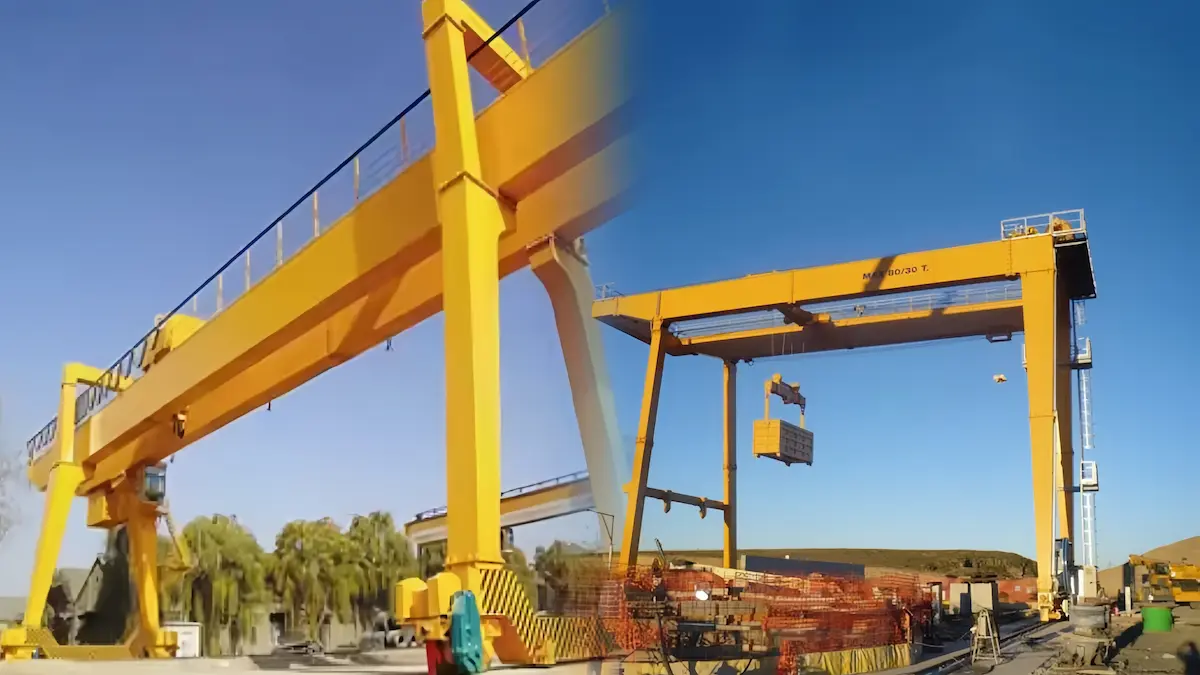
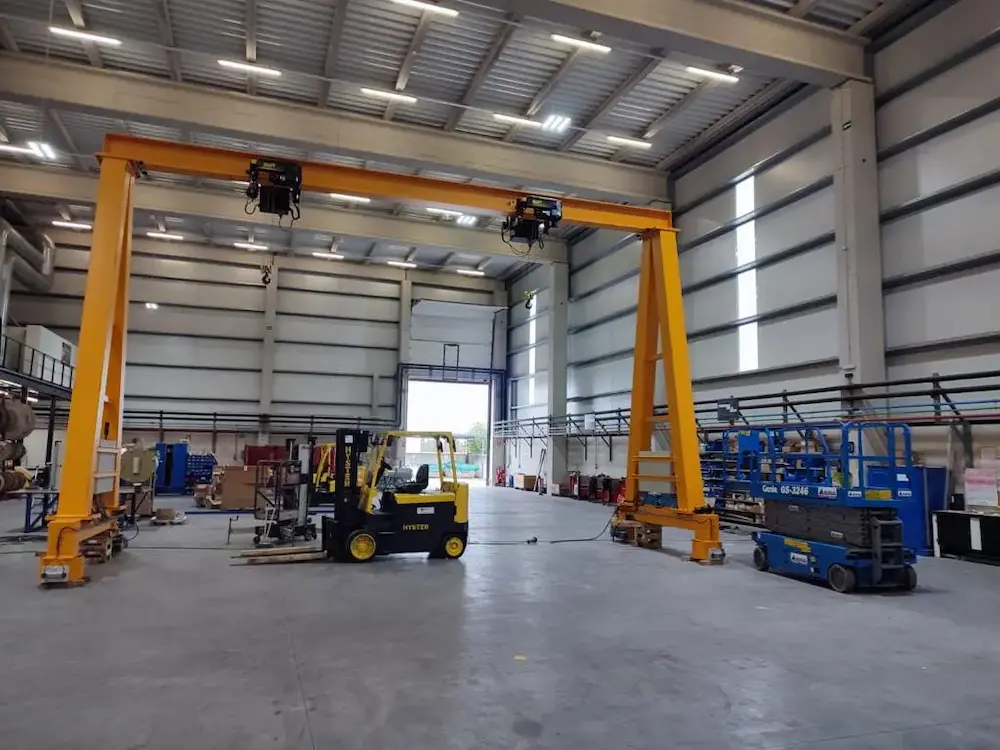
The columns of a Stationary Gantry Crane are firmly fixed to a concrete foundation using anchor bolts or embedded parts, resulting in high overall rigidity and excellent structural stability. Since the supporting structure does not participate in traveling motion, the load distribution is more concentrated and uniform, effectively reducing vibration and deformation during operation. The working coverage of this type of crane is defined at the design stage, making it suitable for long-term lifting tasks at fixed workstations.
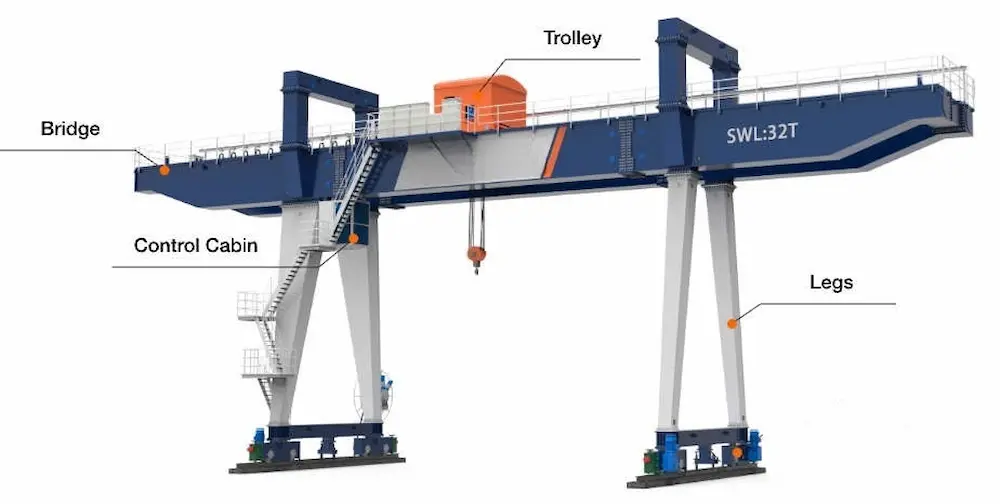
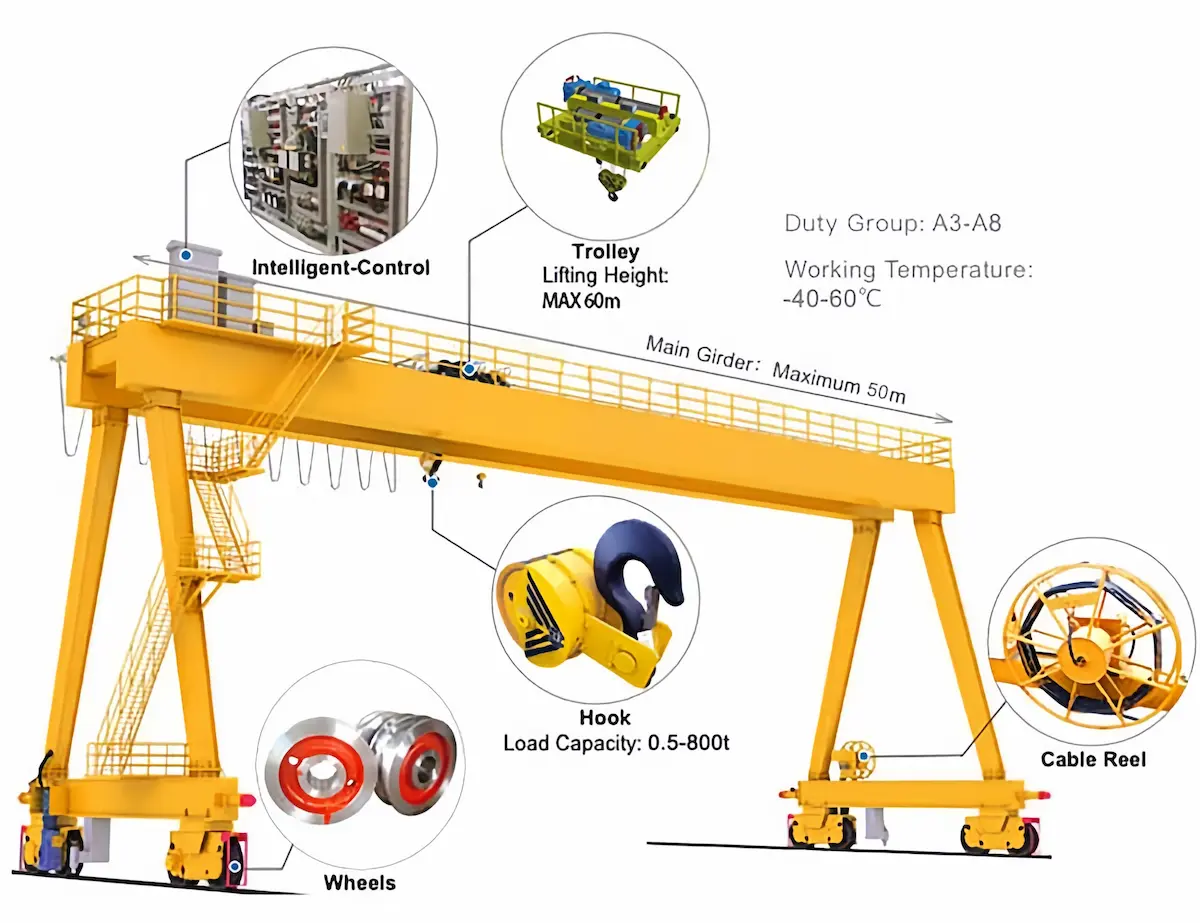
A Rail Mounted Gantry Crane achieves overall movement through traveling rails installed on the ground. Traveling mechanisms are fitted to both legs of the crane, allowing it to run smoothly along the rail direction. Its span and traveling distance can be flexibly designed according to operational requirements, effectively covering a large working area. This makes it well suited for multi-station and multi-route material handling scenarios. Compared with stationary structures, Rail Mounted Gantry Cranes offer clear advantages in space utilization and operating coverage.
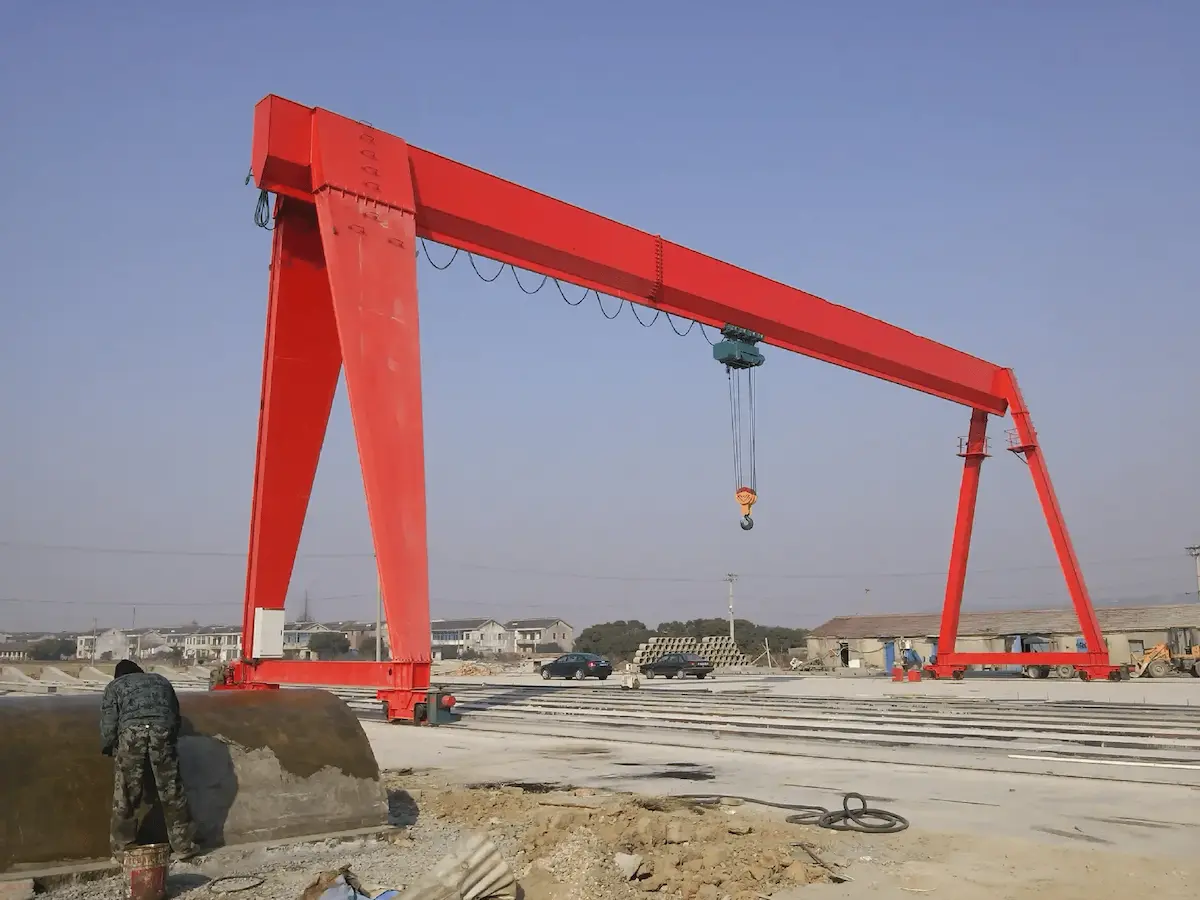
|
Comparison Dimension |
Stationary Gantry Crane |
Rail Mounted Gantry Crane |
|
Structural configuration |
Columns are fixed to a concrete foundation with a stationary support structure, offering high rigidity and stability |
Travels along ground-installed rails via traveling mechanisms; more flexible structure enabling overall movement |
|
Operating range |
Fixed working area, mainly for point lifting or small-range operations |
Large operating range; can cover multiple workstations or wide areas along the rail |
|
Installation requirements |
High foundation strength required; no traveling rails needed, relatively simpler installation |
Requires high-precision rail installation; higher demands on foundation construction and installation accuracy |
|
Investment & maintenance cost |
Lower initial investment; simple structure with relatively low maintenance cost |
Higher initial investment (rails and traveling systems); more maintenance items |
|
Applicable working conditions |
Fixed workstations, heavy-duty operations, space-limited environments |
Long transport distances, frequent operations, and scenarios requiring coverage of multiple work points |
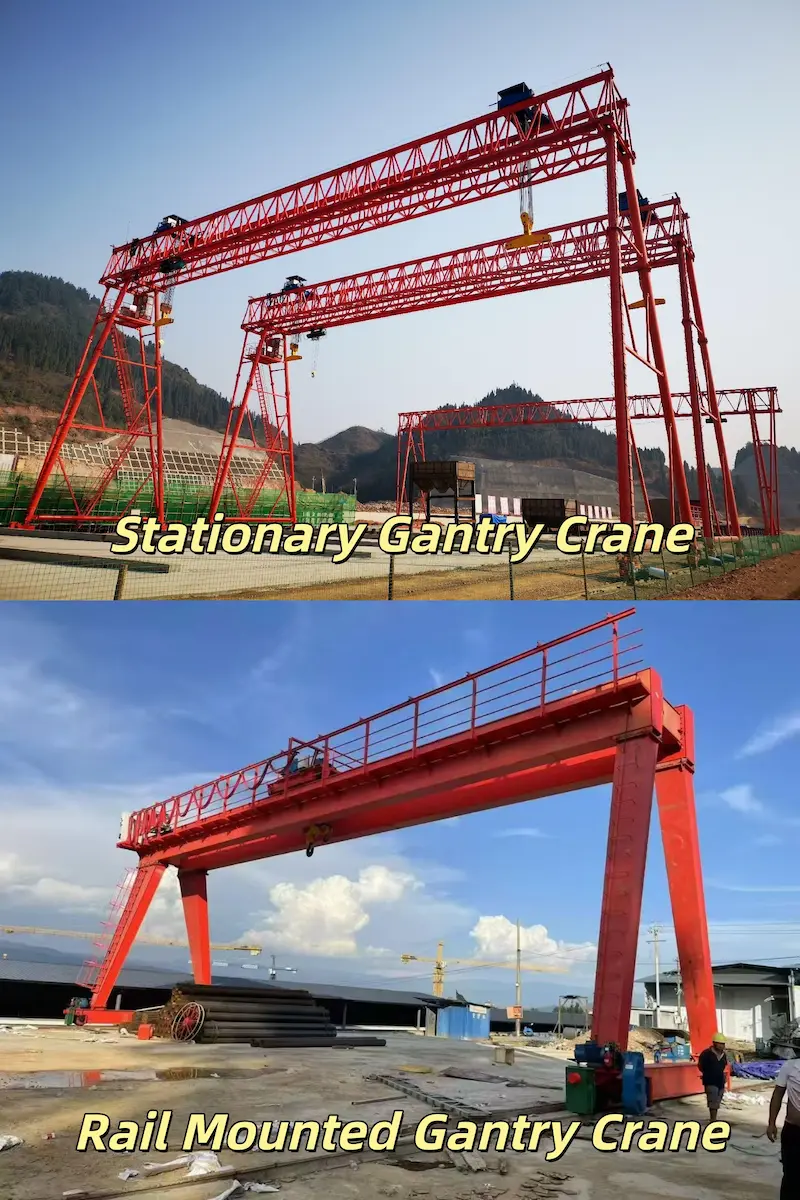
When selecting a gantry crane, simply comparing equipment types is not sufficient. A systematic evaluation should be carried out across multiple dimensions, including working conditions, technical parameters, service life, and total cost of ownership. The following are the key factors to focus on during selection:
Lifting capacity is the primary factor in gantry crane selection. It should meet the maximum lifting requirement with an appropriate safety margin. At the same time, duty class, operating frequency, and load variations should be considered to ensure long-term safety and reliability.
Clearly define whether the crane needs to cover multiple workstations or support long-distance material handling.
Available space, ground bearing capacity, and construction conditions directly affect equipment selection.
Based on actual production takt time, assess the required operating frequency and continuous working capability. For high-frequency and continuous material handling, solutions with higher operating efficiency and potential for automation should be prioritized to reduce manual intervention and improve overall productivity.
Beyond initial purchase and installation costs, total lifecycle costs—including energy consumption, maintenance, spare parts replacement, and downtime risk—should be evaluated. Solutions with mature structures and easy maintenance often prove more economical over long-term operation.
Companies should consider future development plans and whether expansion or upgrades may be required. For special working conditions or non-standard operations, selecting suppliers with strong customization and engineering capabilities ensures optimal alignment with production processes.
Gantry cranes are long-term critical assets. The supplier’s technical expertise, project experience, quality control, and after-sales service are equally important. Reliable technical support is essential for ensuring long-term, safe, and efficient crane operation.
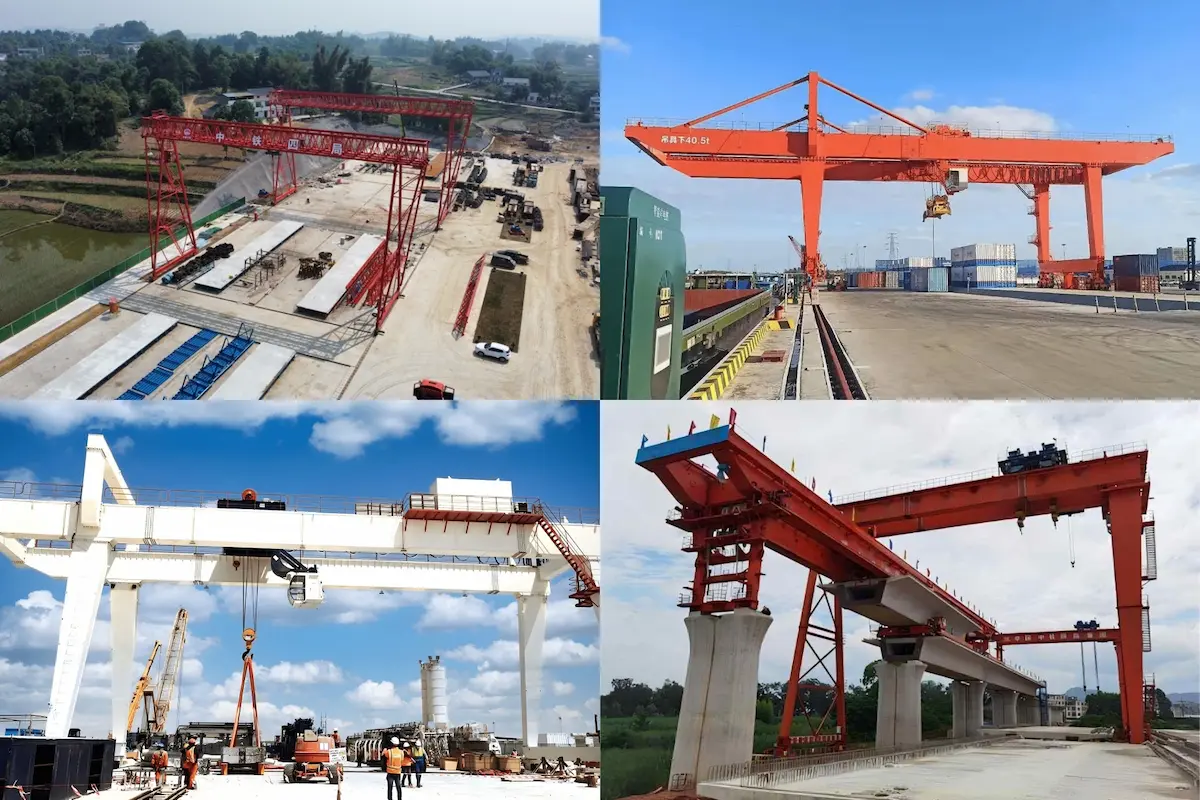
In practical projects, gantry crane selection should comprehensively consider the operating environment, process requirements, and future development plans. Under different working conditions, Stationary Gantry Cranes and Rail Mounted Gantry Cranes each have their own advantages. Proper selection can significantly improve operating efficiency while reducing overall operating costs.
|
Main Working Condition |
Typical Application |
Recommended Solution |
Explanation |
|
Limited space, heavy-duty operation |
Fixed workstations, heavy lifting |
Stationary Gantry Crane |
Columns are fixed to the foundation, providing high structural rigidity and stability, ideal for heavy lifting in confined spaces |
|
Long operating routes, frequent handling |
Multiple workstations, long-distance transport |
Rail Mounted Gantry Crane |
Travels along rails, covering large areas and enabling continuous, efficient material handling |
|
Need for future expansion capability |
Future capacity increase or process adjustment |
Rail Mounted Gantry Crane preferred |
Working range can be expanded by extending rails or adding workstations, flexibly adapting to production growth |
|
Need for non-standard customized solutions |
Special spans, ultra-heavy loads, special environments |
Customized Stationary or Rail Mounted Gantry Crane |
Tailored design based on actual conditions to ensure safety, reliability, and extended service life |
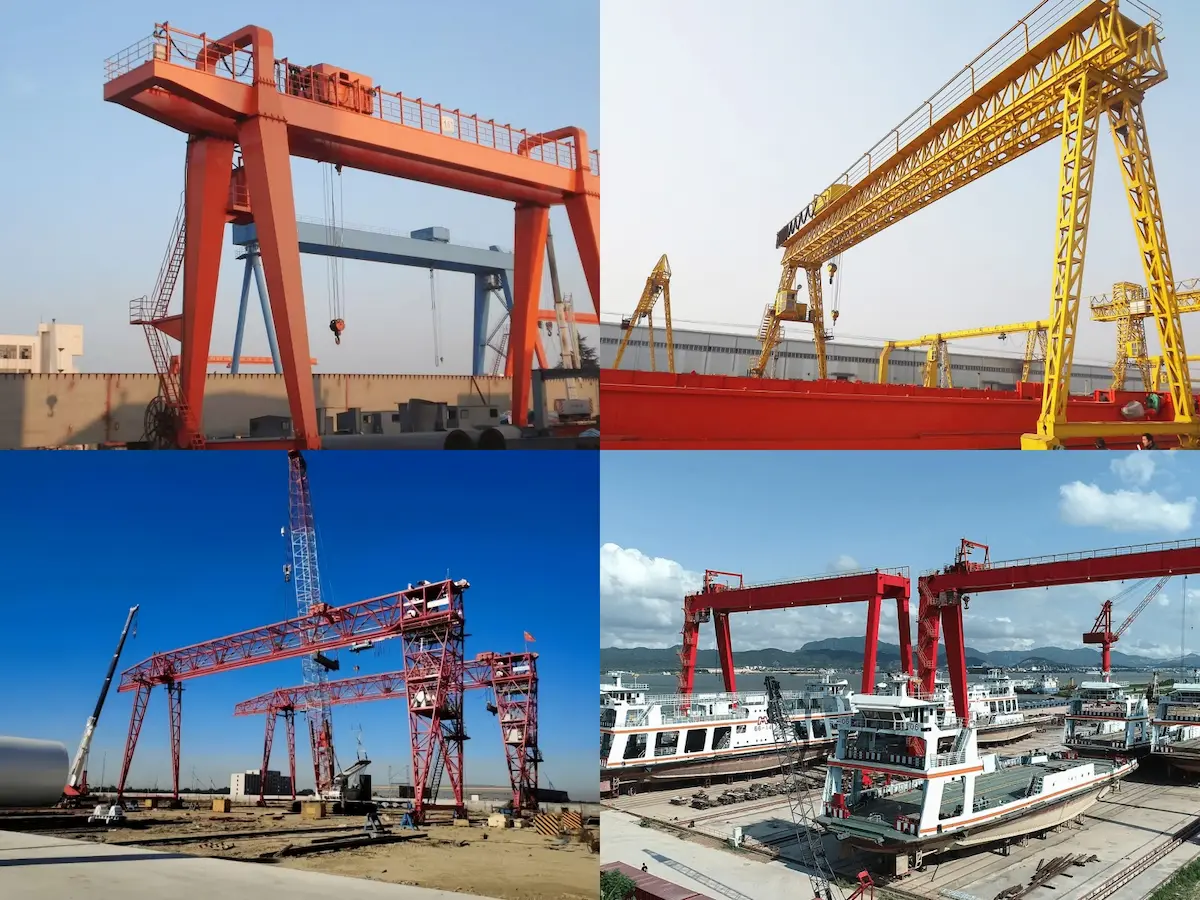
HSCRANE provides tailored solutions for both Stationary Gantry Cranes and Rail Mounted Gantry Cranes, customizing key parameters such as span, lifting capacity, and traveling speed. These solutions flexibly adapt to complex plant layouts and outdoor operating environments, ensuring a high degree of compatibility with on-site conditions.
Equipment is equipped with variable frequency drives (VFD), PLC control, positioning detection, and anti-sway technology, enabling smoother, safer, and more precise operation. Remote control and future automation upgrades are also supported, leaving ample room for smart factory development.
HSCRANE applies high-grade anti-corrosion coatings, high IP-rated electrical protection, and designs resistant to rain, dust, and salt spray. These features allow the equipment to perform reliably in harsh environments such as coastal areas, chemical plants, and high-humidity conditions. Weather-resistant structures ensure low maintenance and long service life.
HSCRANE gantry cranes have been delivered to numerous countries and regions. Product design and manufacturing comply with international and domestic standards such as FEM, ISO, and GB, and are widely used in manufacturing, logistics, energy, and other industries—providing customers with safe, reliable, and sustainable lifting solutions.
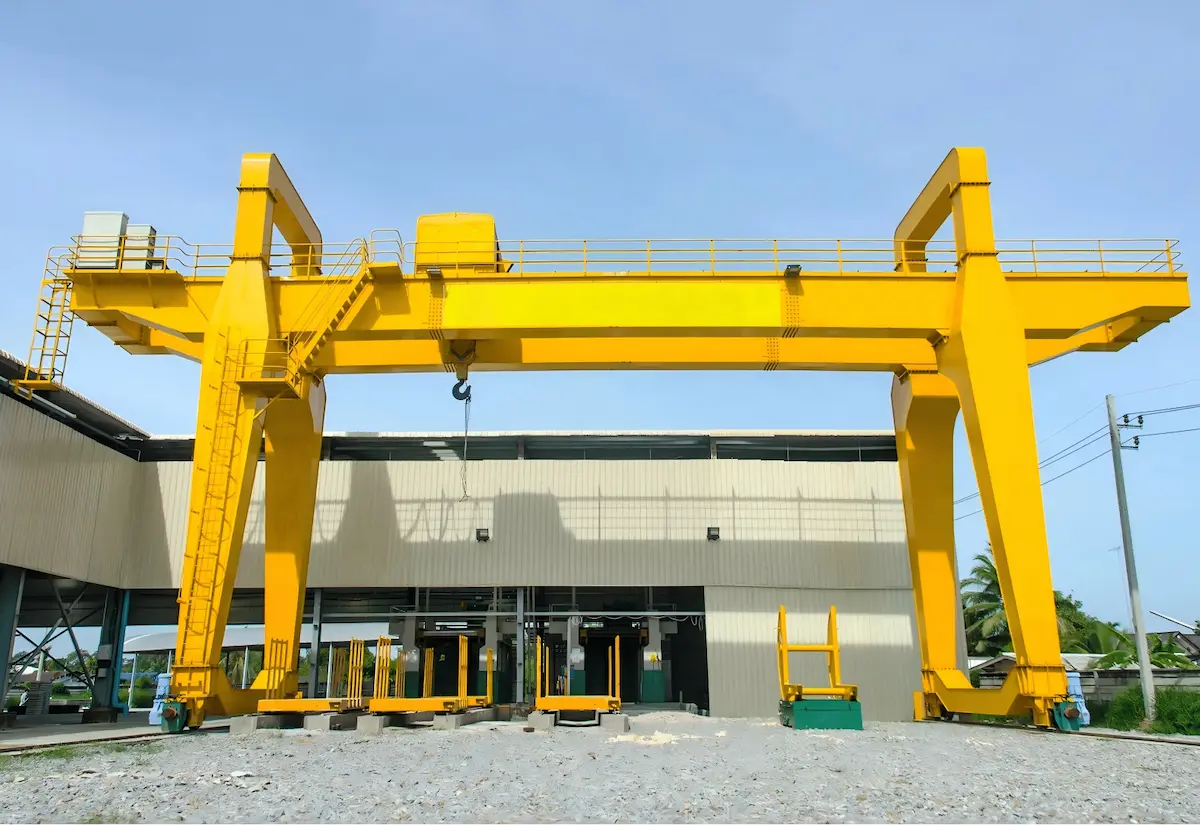
Stationary Gantry Cranes and Rail Mounted Gantry Cranes each offer distinct advantages in terms of structural configuration, operating mode, and applicable working conditions:
Only by fully considering site conditions, load characteristics, operating frequency, and future development needs—and by making a scientific, well-reasoned selection—can equipment performance be maximized. This approach significantly improves operating efficiency and safety while reducing total lifecycle costs for use and maintenance.
In real-world projects, gantry cranes often face complex working conditions and changing environments, which place higher demands on design capability, structural reliability, and manufacturing quality. Choosing an experienced and technologically mature crane manufacturer not only ensures stable equipment operation but also provides strong support for the long-term, sustainable operation of the project.
HSCRANE can provide one-stop gantry crane solutions—from technical consultation and customized design to manufacturing and delivery—based on your specific working conditions. Contact us for professional advice and reliable equipment solutions.
To learn more about the structural differences and toggle between applications of single girder and double girder gantry cranes, click to read “Single Girder vs Double Girder Gantry Cranes: Which One Fits Your Project Better?” to help you make a faster and more suitable equipment selection.