Welcome to visit our factory
Email : info@huasuicrane.com


You specify an equipment model, the workshop gets built, and then six months later your maintenance team reports deformation in the runway beam. The root cause? Improper overhead crane selection where wheel loads fail to match the building structure. Retrofitting the building — adding stiffeners, upgrading column bases, or even replacing corbels — can cost $150,000 to $250,000 and bring your production line to a halt for weeks.
This guide bridges the gap between crane mechanics and structural engineering. Whether you are outfitting a new steel structure workshop or preparing a concrete factory for heavy-duty lifting, you’ll learn exactly how to master overhead crane selection to protect both your building and your budget.
The factory structure is the physical foundation for overhead crane operation. It determines the capacity limit, precision, and service life of the equipment. Steel structures are mainstream in light industry due to high turnover rates. Conversely, concrete structures dominate heavy metallurgy and ultra-heavy processing sectors.
Companies often prioritize equipment over structure, ignoring dynamic wheel load impacts on factory longevity. Errors in headroom calculation also lead to wasted space. This article analyzes overhead crane selection logic for both structures to balance cost and efficiency.
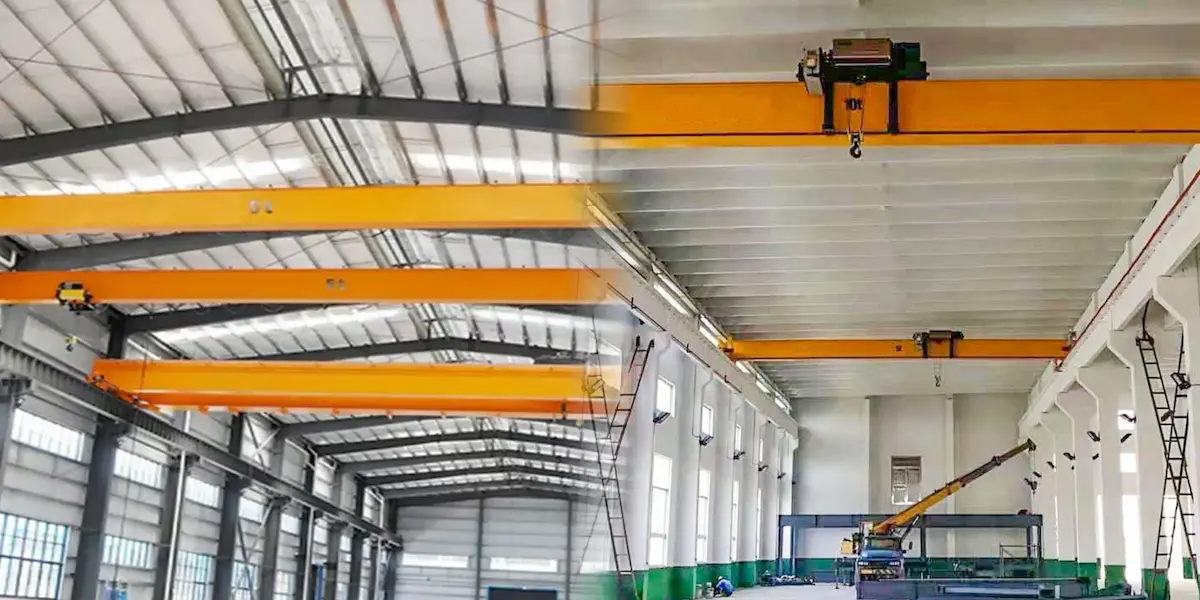
Your workshop structure is not just a shell — it is the primary load path for every vertical and horizontal force the crane generates. Understanding these differences upfront will save you from expensive foundation work or premature fatigue failures.
|
Characteristic |
Steel Structure Workshop |
Concrete Structure Workshop |
|
Typical column material |
H-shaped steel (Q355B or S355JR) |
Reinforced concrete (C30/C40 grade) |
|
Crane runway support |
Bolted or welded runway beam attached to column flanges |
Cast-in-situ corbel (concrete bracket) |
|
Span range |
18 m–36 m (can exceed 40 m with trusses) |
15 m–30 m (beyond 30 m requires heavy beams) |
|
Occupied floor space |
Slimmer columns (approx. 400–600 mm wide) |
Bulkier columns (800–1200 mm square) |
|
Construction speed |
12–16 weeks for a 5,000 m² building |
20–28 weeks (curing time dominates) |
|
Cost per m² (superstructure only) |
$80–$120 |
$110–$160 |
|
Seismic / vibration damping |
Low inherent damping (< 2% of critical) |
Higher damping (3–5%) — better for high-speed crane operations |
|
Future modification ease |
High — columns can be reinforced, runway beams upgraded |
Low — corbel capacity is fixed after pouring |
The fundamental insight: In steel structures, you design the crane to minimize load effects on a flexible system. In concrete structures, you design the crane to exploit the structure’s rigidity for heavy, constant-duty cycles.
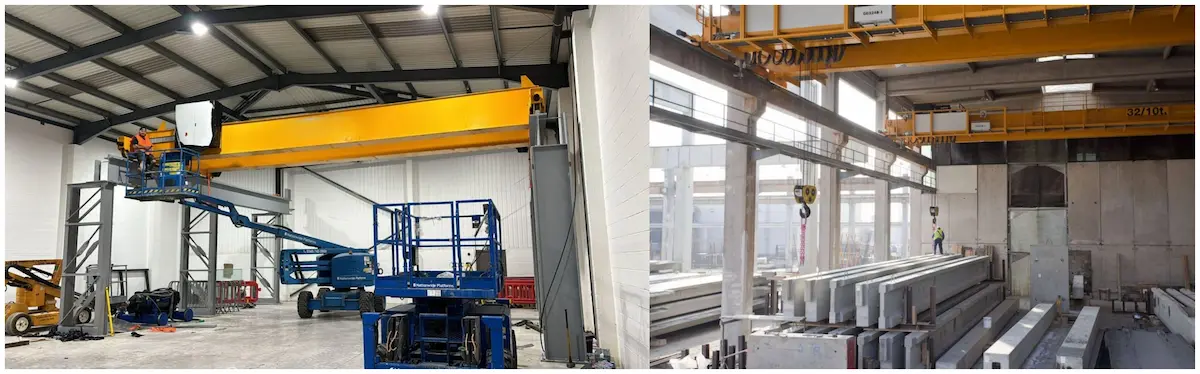
The structural strength of the factory sets the baseline for overhead crane selection. The maximum lifting capacity must match the load design of the building.
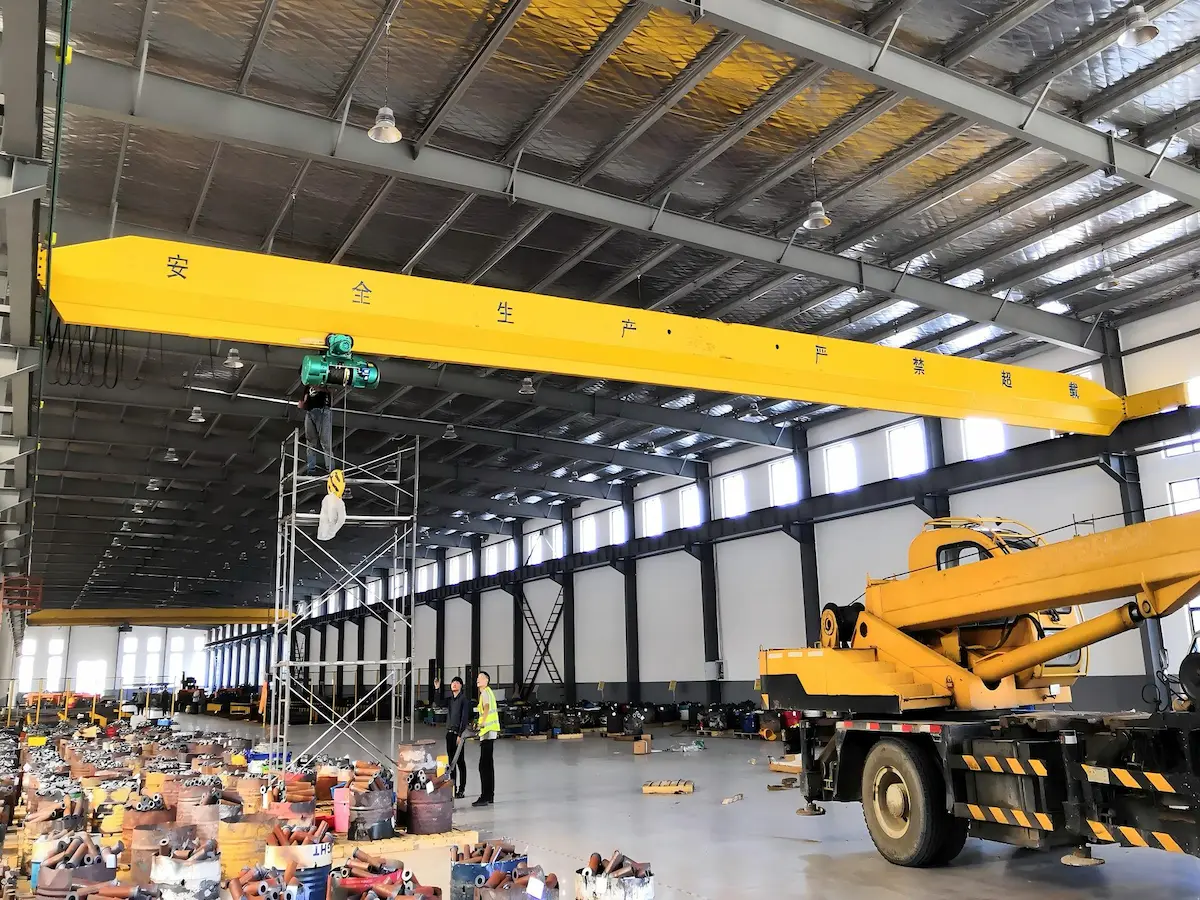
The crane span is typically 1 to 2 meters shorter than the factory span. This distance depends on the center-to-center runway rail measurements.
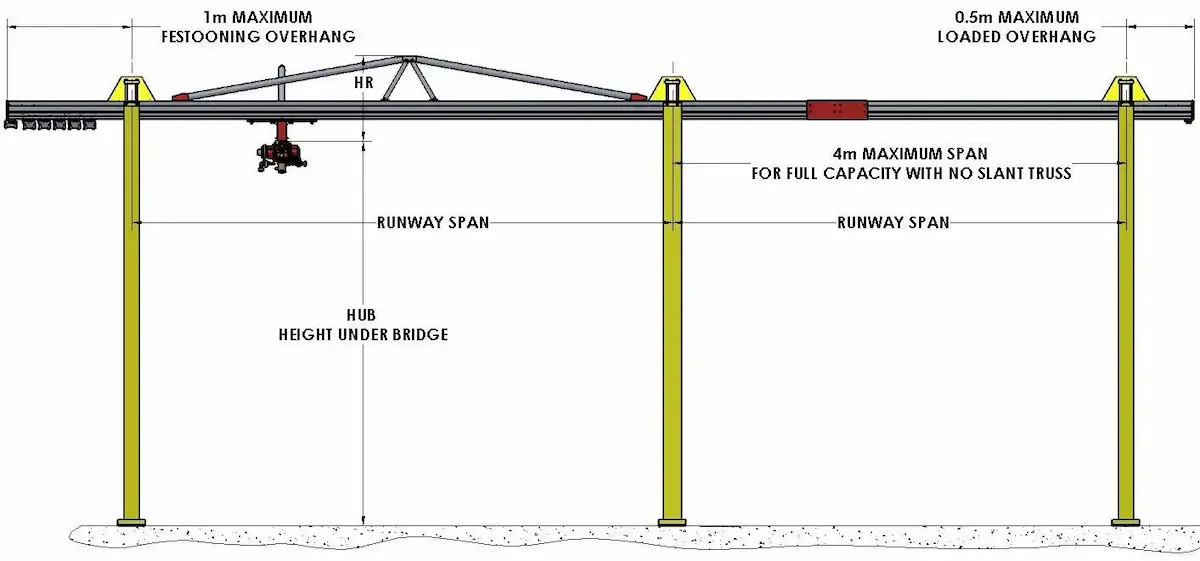
Headroom is the distance between the lowest building component and the top of the rail.
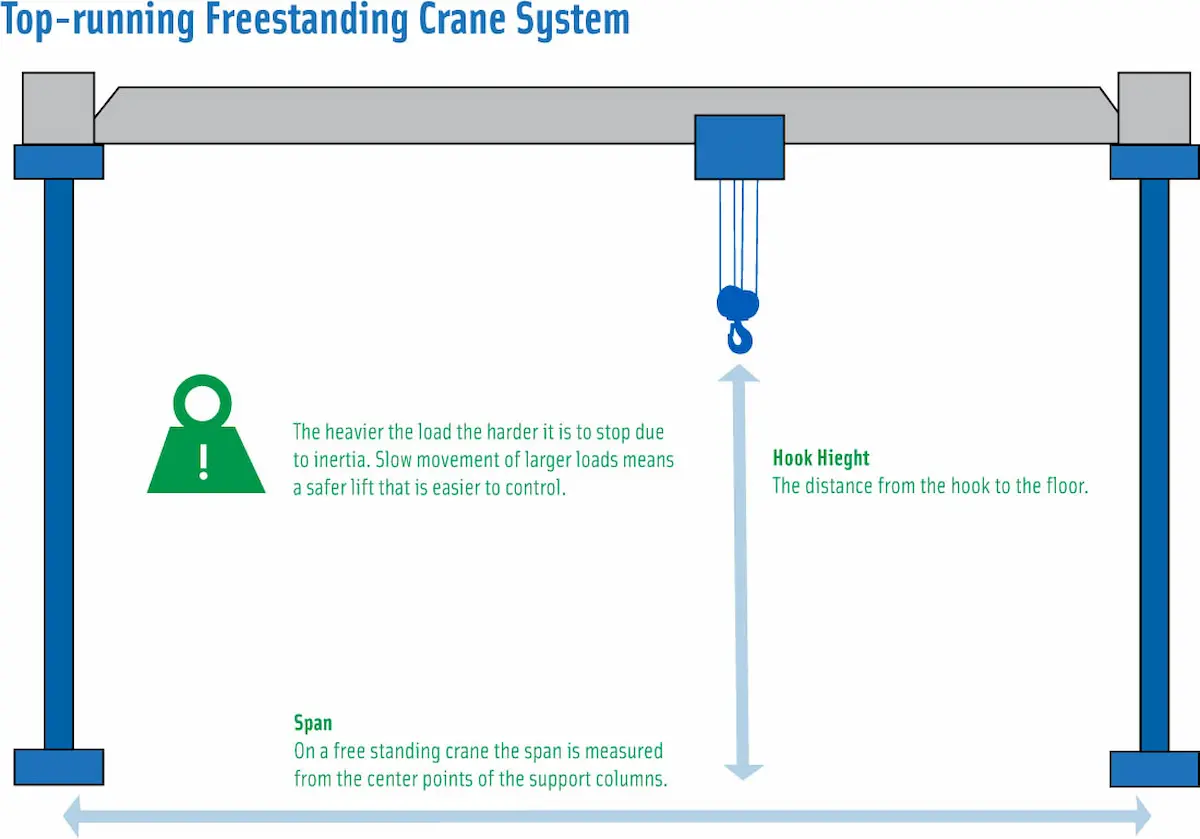
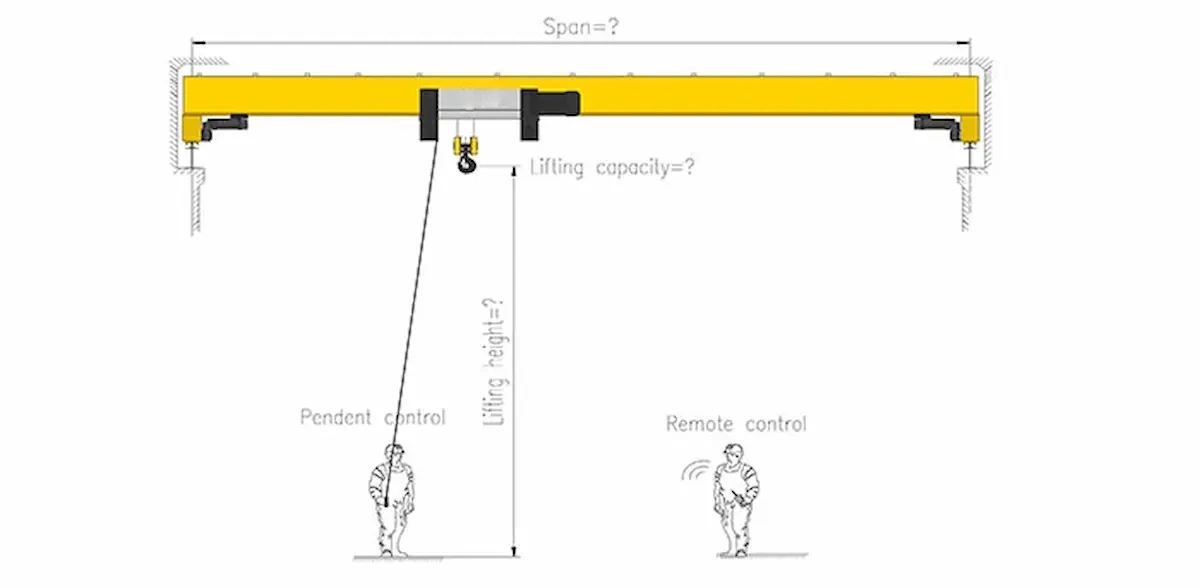
Core Conclusion: Overhead crane selection is not an isolated mechanical purchase. It is an integrated structural calculation involving the machine, rails, beams, and columns. Ignoring factory characteristics risks high reinforcement costs or low operational efficiency.
For steel structure factories, which feature low self-weight and flexible rigidity, selection should prioritize lightweight designs to reduce the load on column heads.
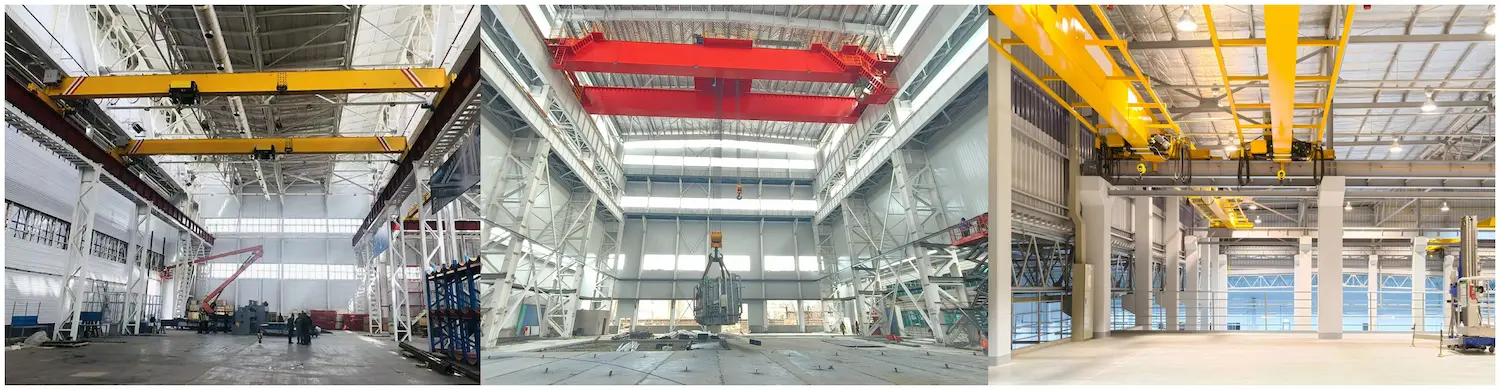
The load-bearing capacity of a steel factory depends on the steel columns and the runway beam support system.
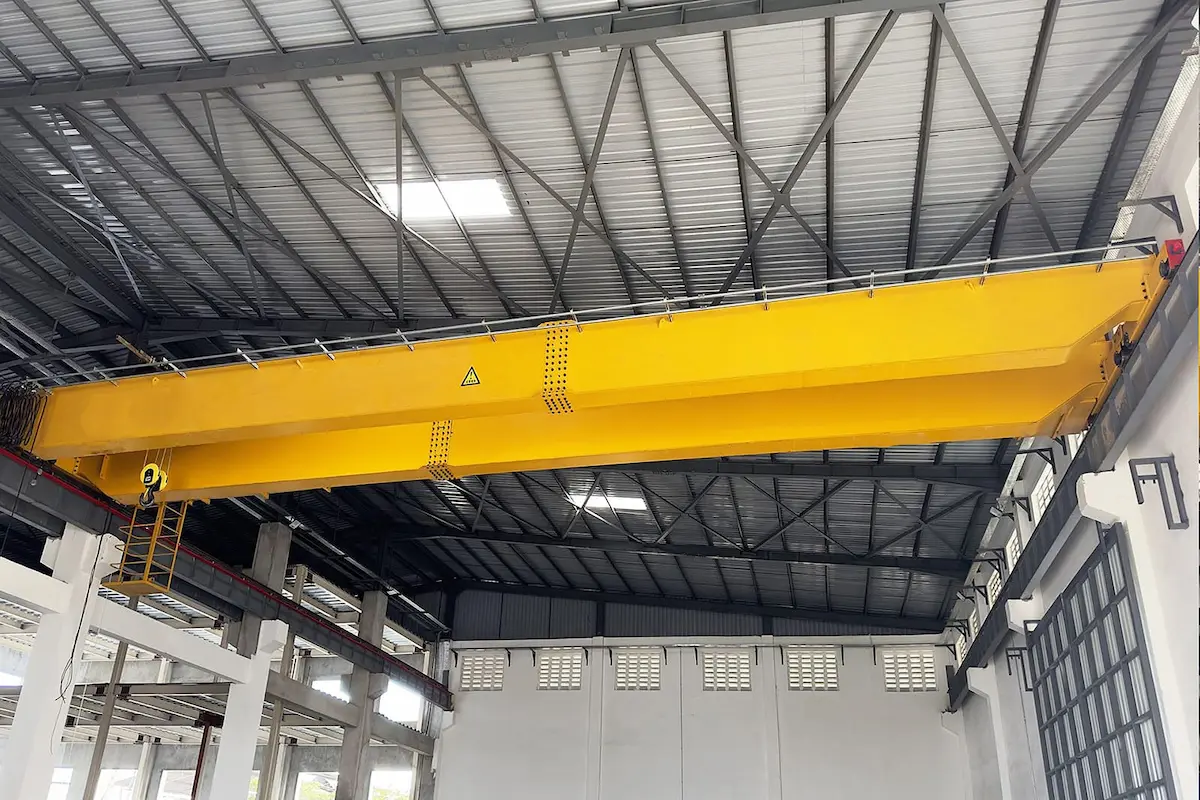
Steel structure factories offer fast construction and modularity, making these cranes ideal for:
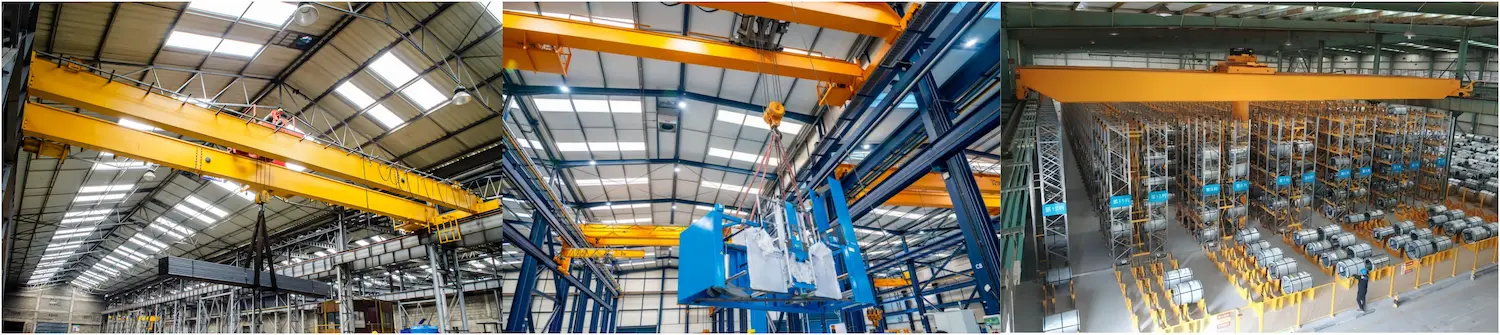
Selection Tip: Steel structures are sensitive to operational impacts. It is highly recommended to equip both the crane bridge and trolley with Variable Frequency Drives (VFD). Smooth acceleration and deceleration reduce lateral swaying and prevent fatigue damage to steel connections.
Concrete factories are the preferred choice for heavy industry due to their extreme structural rigidity and thermal stability.
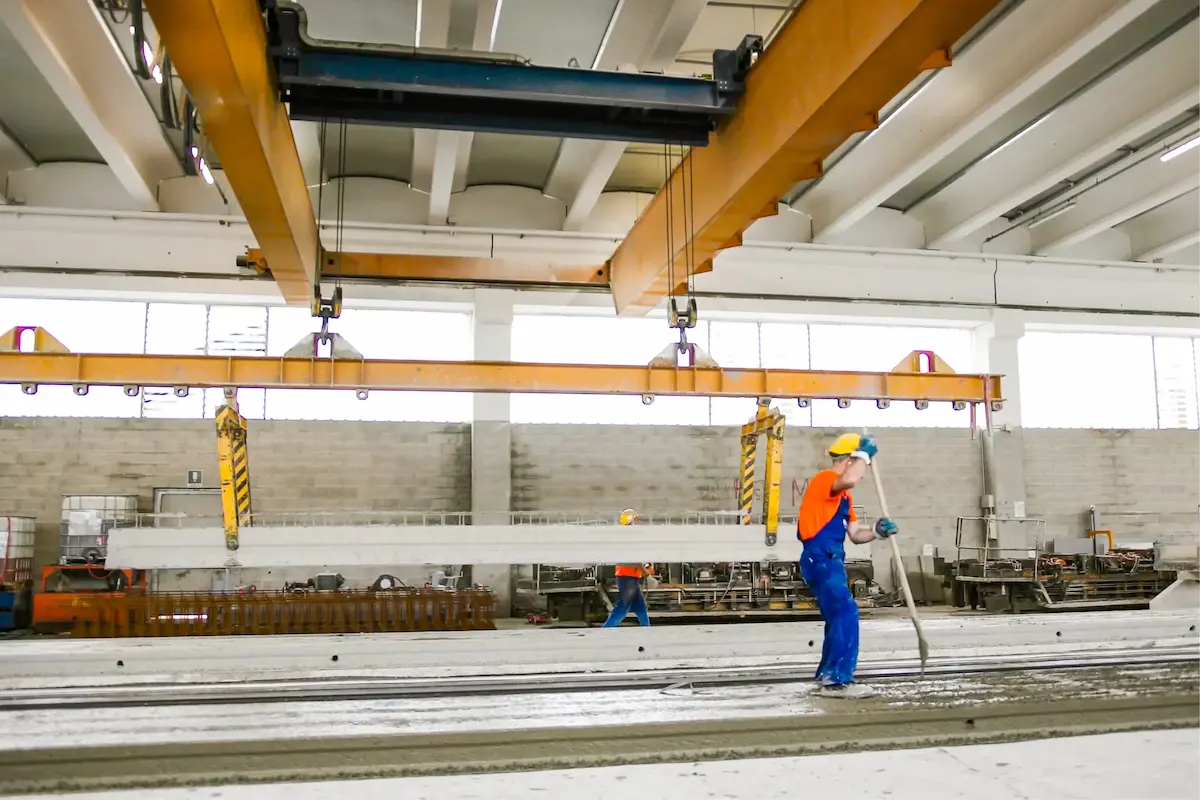
Crane installation in concrete factories relies heavily on the precision of early-stage civil engineering. This is a typical “irreversible” design process.
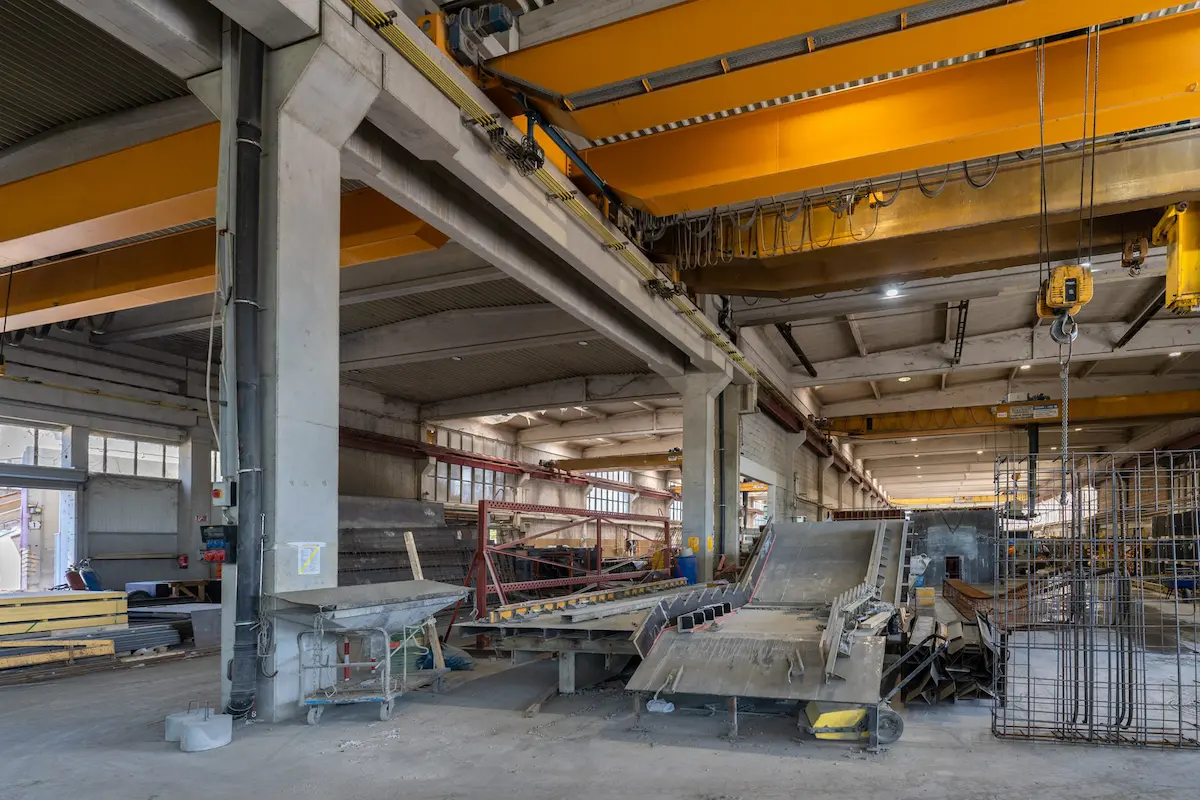
The high fire resistance and rigidity of concrete factories make them excel in harsh conditions:
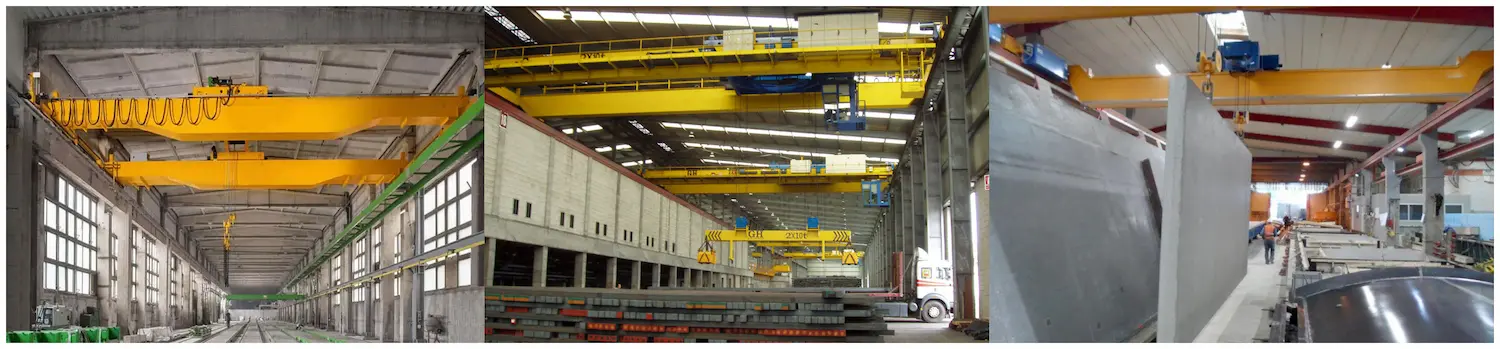
Core Logic: Overhead crane selection for concrete factories must be “design-first.” Because post-construction modifications are extremely expensive, you must reserve sufficient capacity redundancy and headroom dimensions initially. Focus heavily on the distribution precision of embedded parts.
The following table evaluates how factory structure impacts overhead crane selection and total lifecycle costs:
|
Comparison Dimension |
Steel Structure Factory |
Concrete Structure Factory |
|
Load Capacity |
High strength-to-weight ratio; ideal for light-to-medium loads and large spans. |
Exceptional compressive strength; ideal for ultra-heavy loads and impact forces. |
|
Installation Cost |
Lower; high prefabrication leads to less on-site labor. |
Higher; involves large-scale pouring and complex embedded parts. |
|
Construction Period |
Very short; typically 40% faster than concrete structures. |
Longer; restricted by formwork assembly and concrete curing cycles. |
|
Maintenance |
Requires regular inspection of anti-corrosion coatings and bolt tightness. |
Minimal structural maintenance; focus is on rail leveling and alignment. |
|
Expansion Flexibility |
Very high; columns can be reinforced or spans adjusted via welding/bolting. |
Very low; structural modifications are difficult and extremely costly. |
|
Typical Crane Tonnage |
Generally 1t–50t; loads over 100t require massive column sections. |
50t–500t+; ideal for large capacity and heavy-duty (A6-A8) cranes. |
|
Operational Stability |
Prone to elastic swaying; highly dependent on VFD anti-sway systems. |
Excellent damping; smooth operation ideal for precision and high-frequency tasks. |
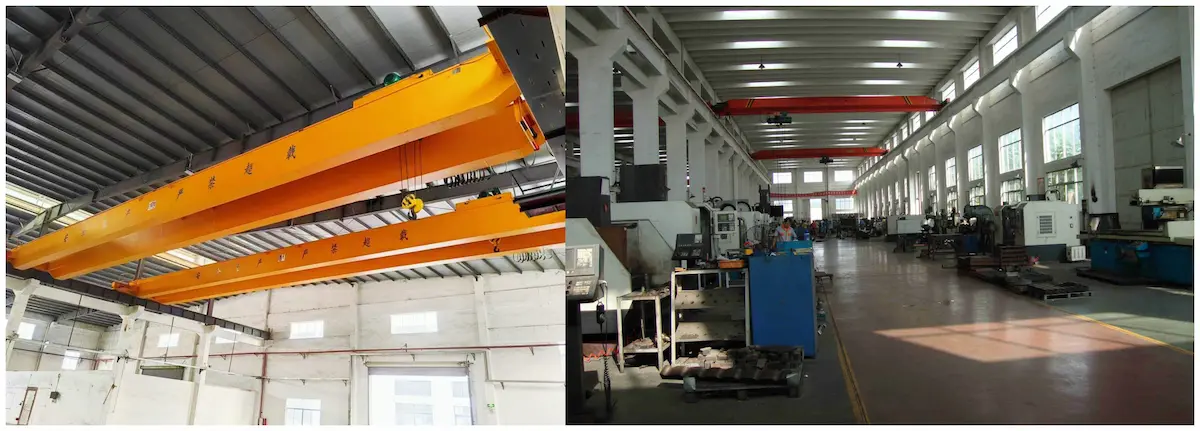
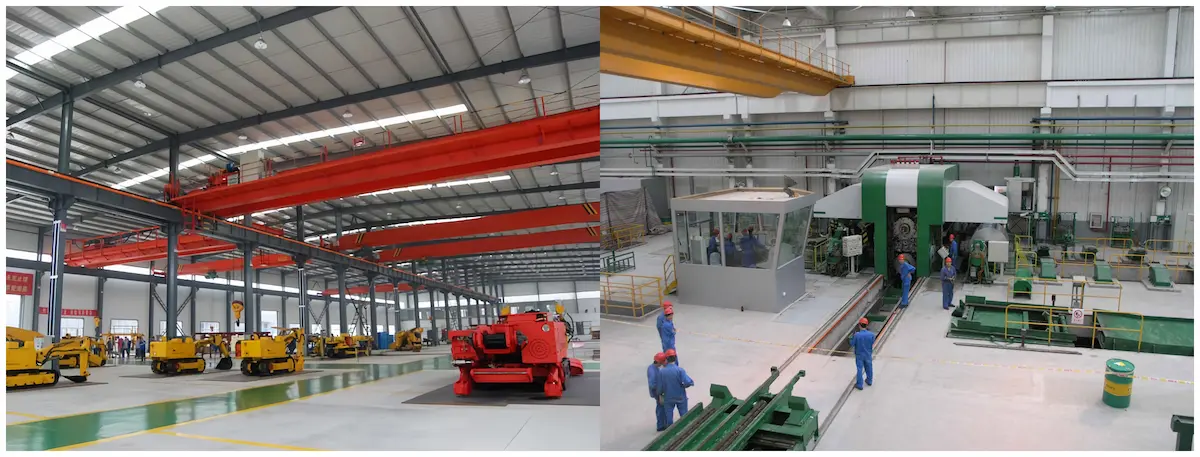
Overhead crane selection is not a simple purchase; it is the deep integration of mechanical performance and structural mechanics.
In the face of complex engineering requirements, blind selection can lead to soaring reinforcement costs or low efficiency. Choose HSCRANE, and our engineering team will provide a one-stop solution—from load calculations to equipment customization—based on your plant blueprints.
[Contact HSCRANE Technical Experts] — Get your customized overhead crane selection plan and quote today.
A selection error can lead to millions in structural reinforcement costs!
Whether you are retrofitting an existing facility or planning new construction, structural compatibility is the core of safe operation. Click to view [January 2026 Practice: Key Selection Points for Overhead Cranes in New and Existing Plants] to avoid common civil engineering pitfalls and save on unnecessary structural expenses.
Q1: Can a steel structure support a 100-ton overhead crane?
A1: Yes, with reinforced columns and beams. HSCRANE’s lightweight designs reduce wheel loads by 18%, allowing capacities up to 150 tons. Detailed finite element analysis is required to manage skewing forces.
Q2: What is the biggest mistake in concrete workshop crane selection?
A2: Underestimating future capacity. Concrete corbels are nearly impossible to modify later. Always reserve 20% extra load capacity and use adjustable rail fasteners to handle potential building settlement.
Q3: How can I reduce installation costs in a new steel building?
A3: Use European-style low-headroom cranes to lower building height by 1–1.5m. This reduces steel tonnage and costs. Standardizing with VFD drives also eliminates heavy impact forces, protecting the structure.
Q4: What technical standards are required for concrete factories?
A4: Cranes must meet FEM/CMAA standards for classification and ISO 12488-1 for deflection. For heavy-duty use, runway beam deflection should stay within L/1000 to prevent fatigue at the corbel connections.
Q5: Can I upgrade a crane in an existing concrete building?
A5: Only if the original corbels have a safety margin. Retrofitting with steel supports or carbon fiber is possible but expensive ($30k–$80k). Designing with a 20%–25% load reserve from the start is highly recommended.
This document is for reference only. Specific operations must strictly comply with local laws and regulations and equipment manuals.