Welcome to visit our factory
Email : info@huasuicrane.com


This article focuses on the key role of gantry cranes in precast component production. It analyzes applications such as mold handling, component lifting, steam curing transfer, and finished product loading. Gantry cranes significantly improve material handling efficiency, optimize production workflows, and enhance operational safety. They are essential equipment for large-scale and automated precast plants. The article also outlines key selection factors to help companies choose suitable equipment for specific working conditions. It highlights HSCRANE gantry cranes, featuring customized design, structural stability, intelligent control, and low maintenance cost. With the development of prefabricated construction, gantry cranes continue evolving toward greater intelligence and efficiency.
With the rapid development of prefabricated construction, the precast industry is advancing toward large-scale and industrialized production, creating higher demands for efficiency and logistics. Lifting equipment has become essential for ensuring smooth operations during manufacturing, transfer, and storage processes. As core equipment, gantry cranes provide flexible coverage and strong lifting capacity, playing an irreplaceable role in precast component production.
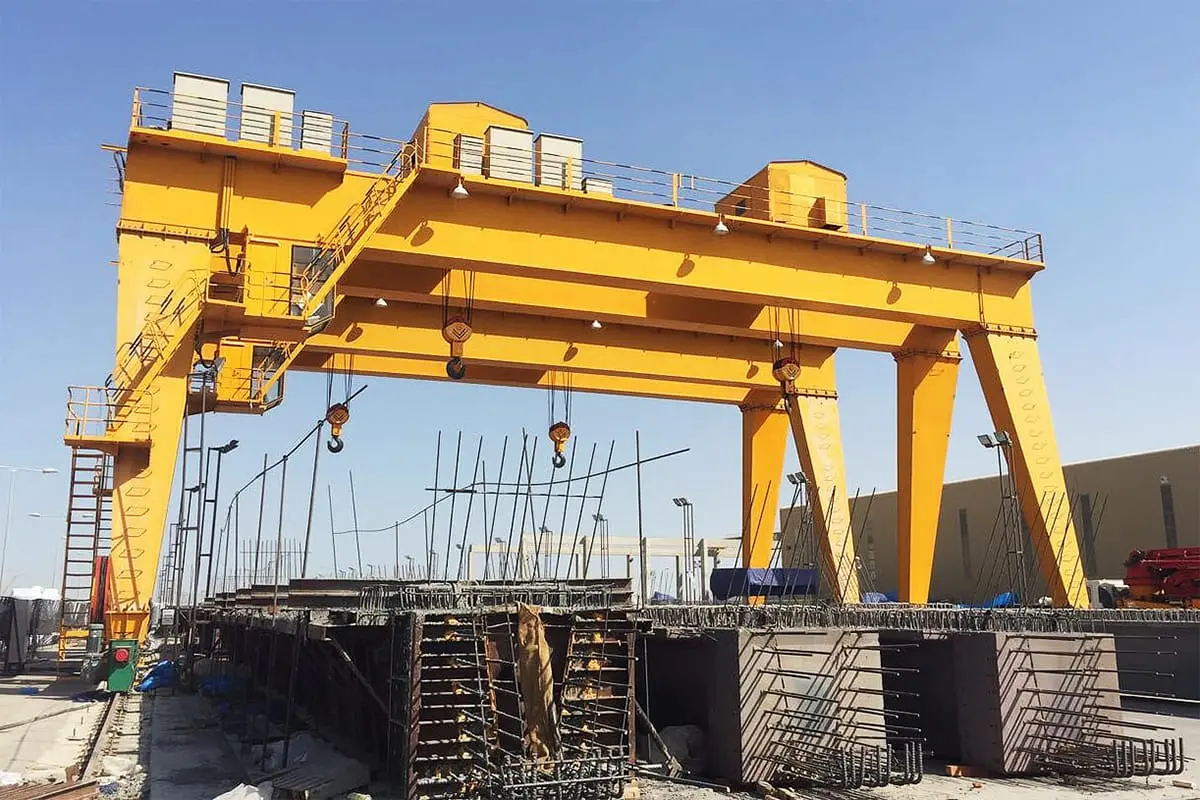
In modern prefabricated construction, precast concrete components feature highly standardized and heavy production processes. Gantry cranes serve as core logistics hubs on production lines. They are not just lifting tools but key foundations for improving plant capacity and safety.
Production rhythm in precast plants largely depends on material turnover speed. Gantry cranes enable efficient flow across the entire production chain due to their large span and wide coverage.
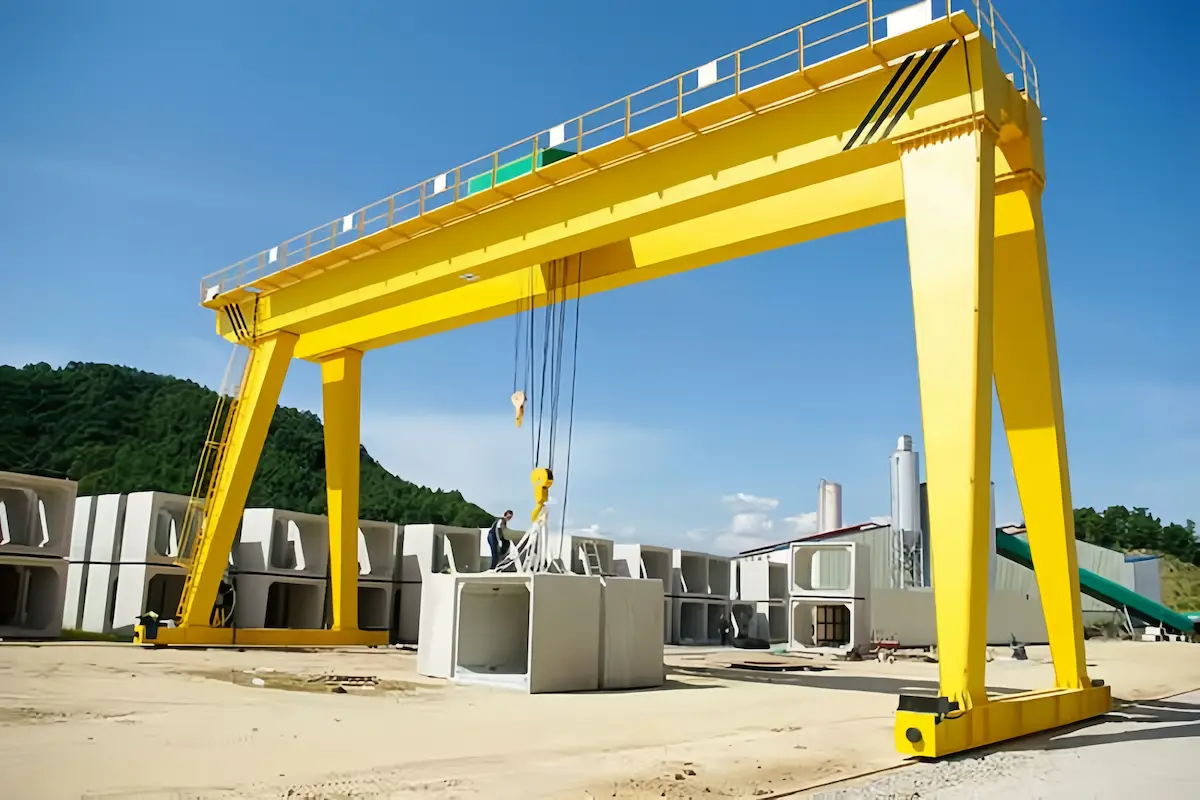
Safety is the lifeline of precast plants handling multi-ton components. Gantry cranes provide higher safety margins than traditional handling methods.
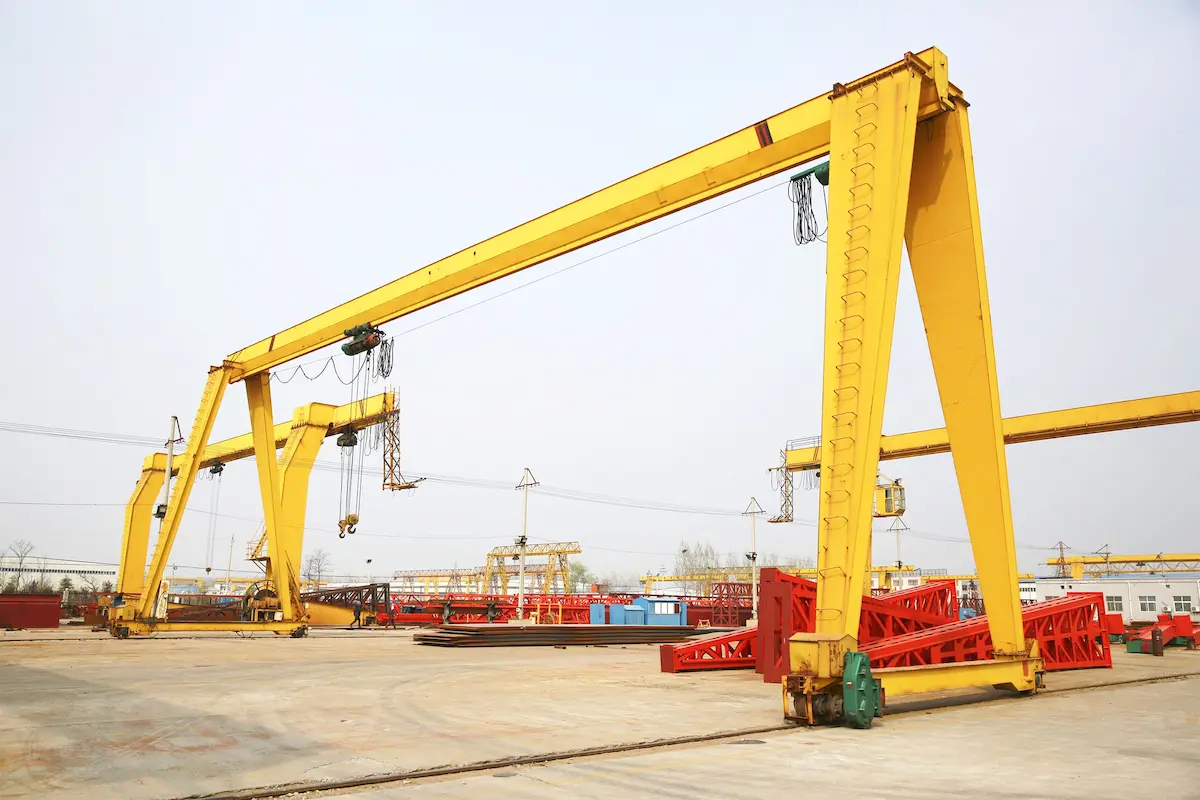
Efficient precast production relies on compact assembly-line operations. Gantry cranes act as industrial connectors throughout the workflow.
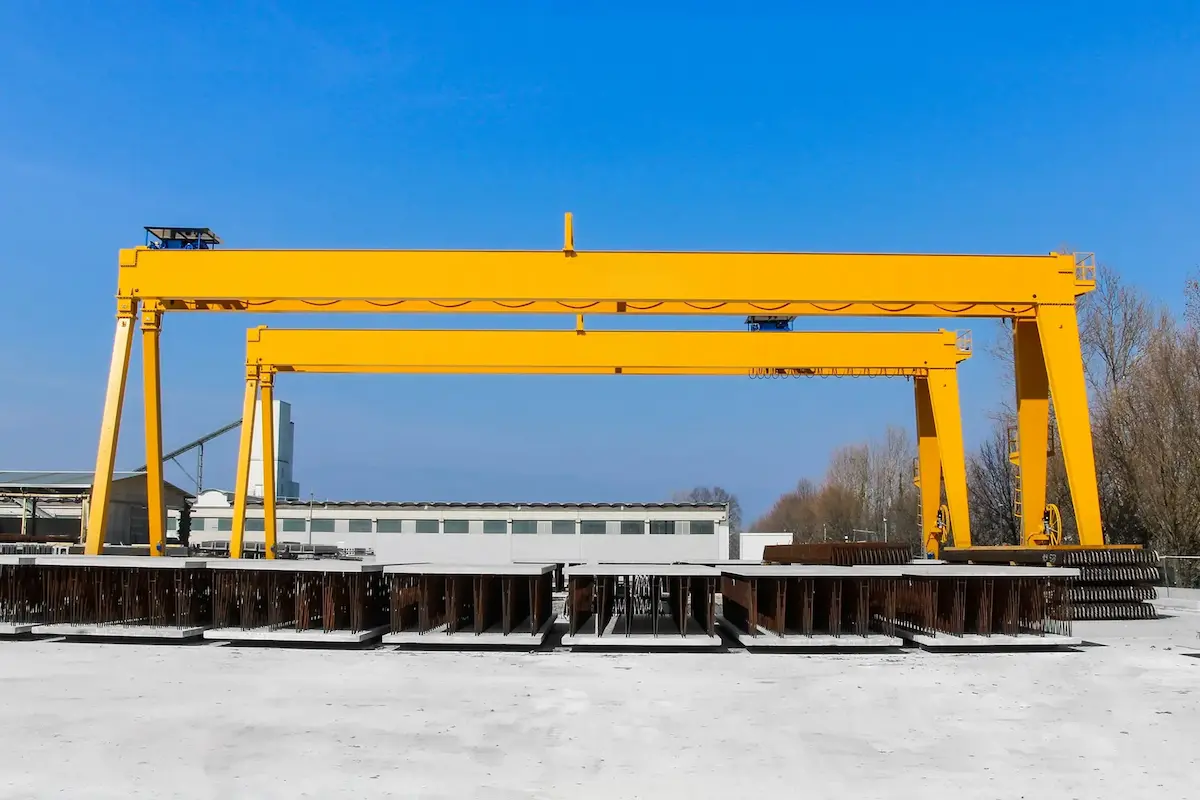
Over the long term, high-performance gantry cranes are key to cost reduction and efficiency improvement in precast plants.
By implementing a wide-span RMG (Rail-Mounted Gantry), precast yards can often replace 2-3 heavy-duty forklifts. This not only reduces diesel emissions and maintenance costs by up to 40%, but also minimizes product damage caused by forklift handling.
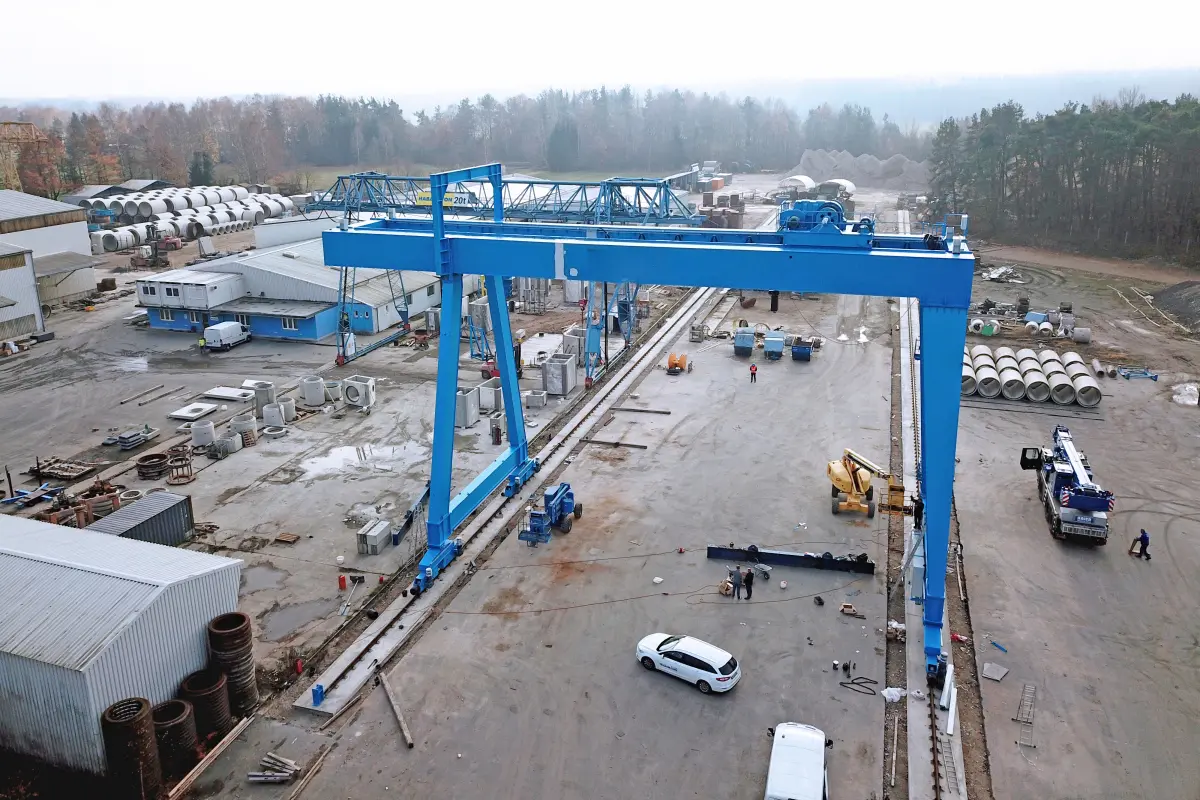
In modern PC factories, gantry cranes act as versatile material handlers throughout operations. From raw material entry to finished product delivery, they serve five core applications.
Precast quality begins with molds, making crane support essential during preparation stages.
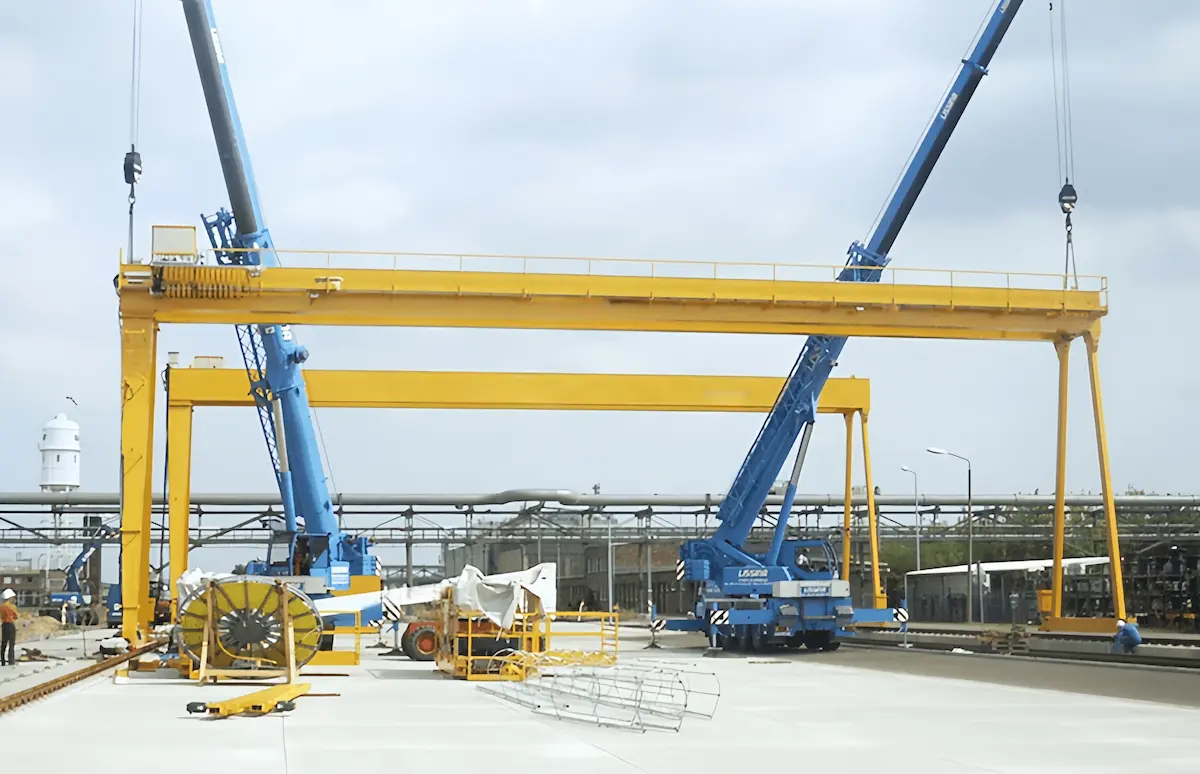
This is the most frequent and highest-load operation in precast plants.
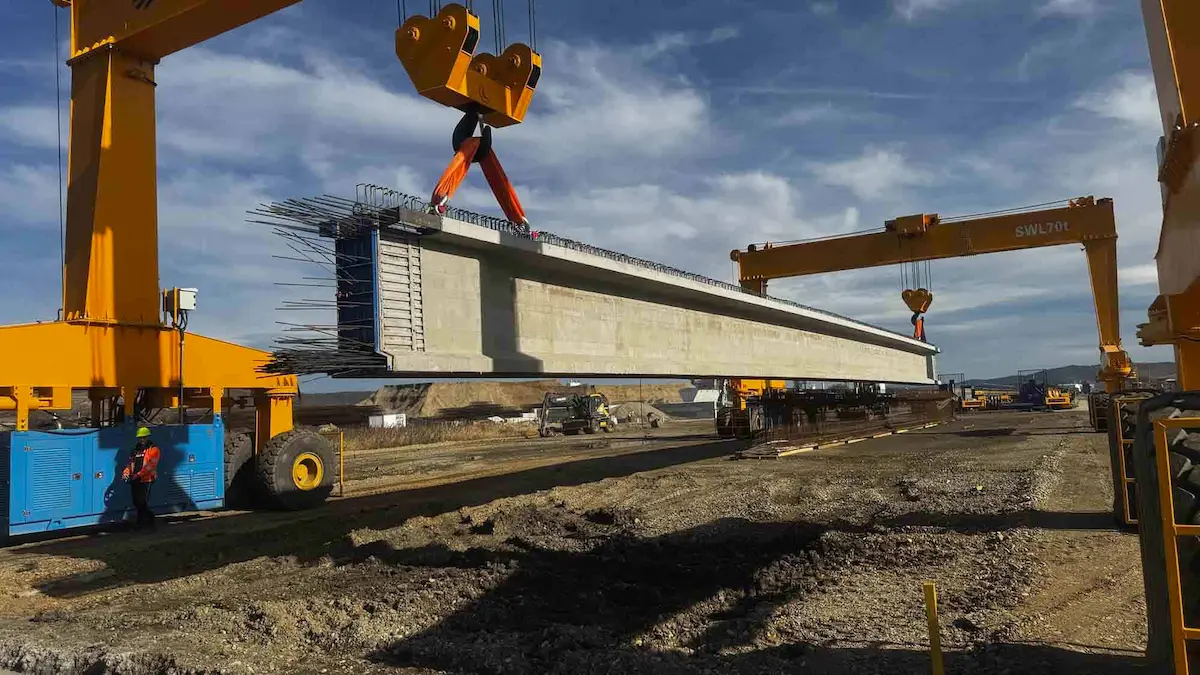
PC components often enter steam curing chambers to shorten production cycles.
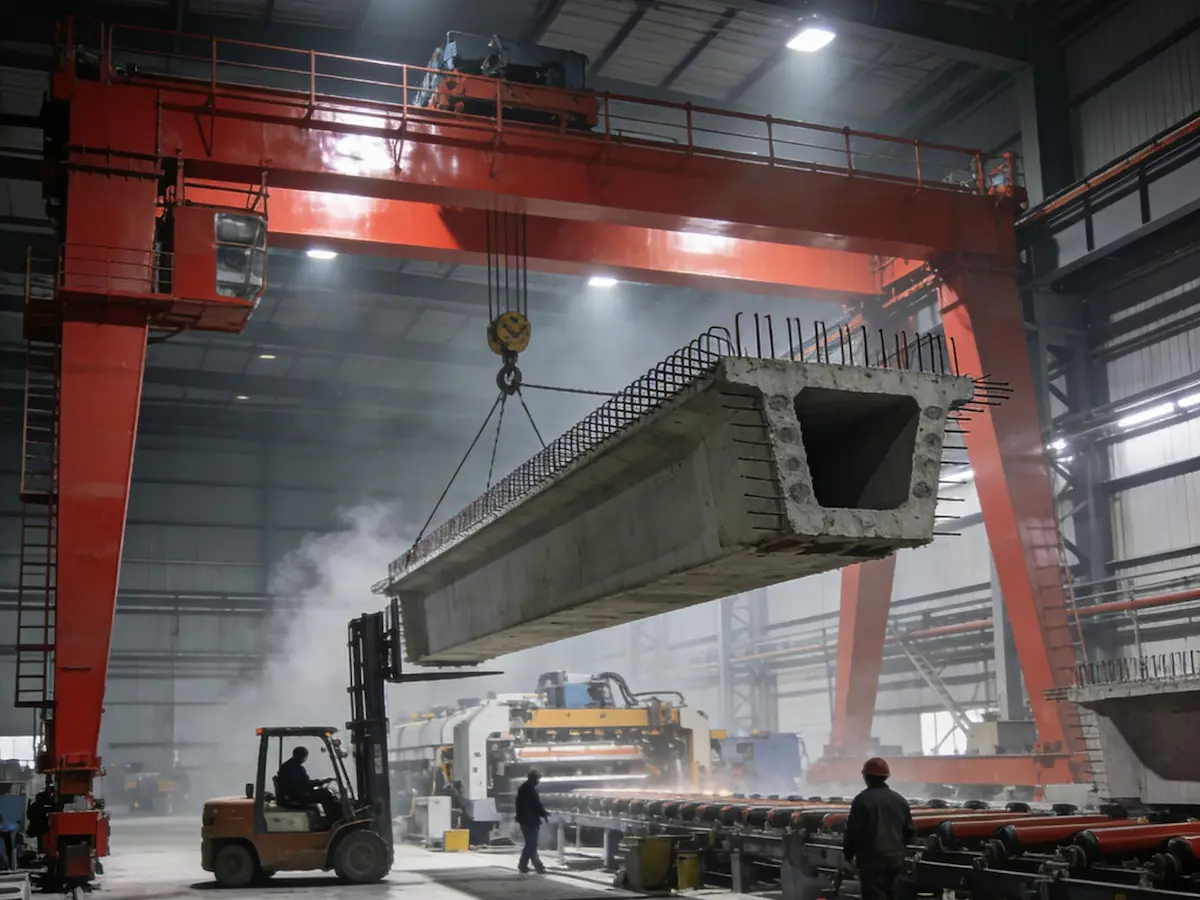
The storage yard functions as the factory warehouse, requiring efficient crane scheduling.
For high-density, fixed-route storage, Rail-Mounted Gantry Cranes (RMG) offer optimal stability. For sprawling precast yards requiring cross-zone transport without rail investments, Rubber-Tyred Gantry Cranes (RTG) provide unmatched maneuverability.
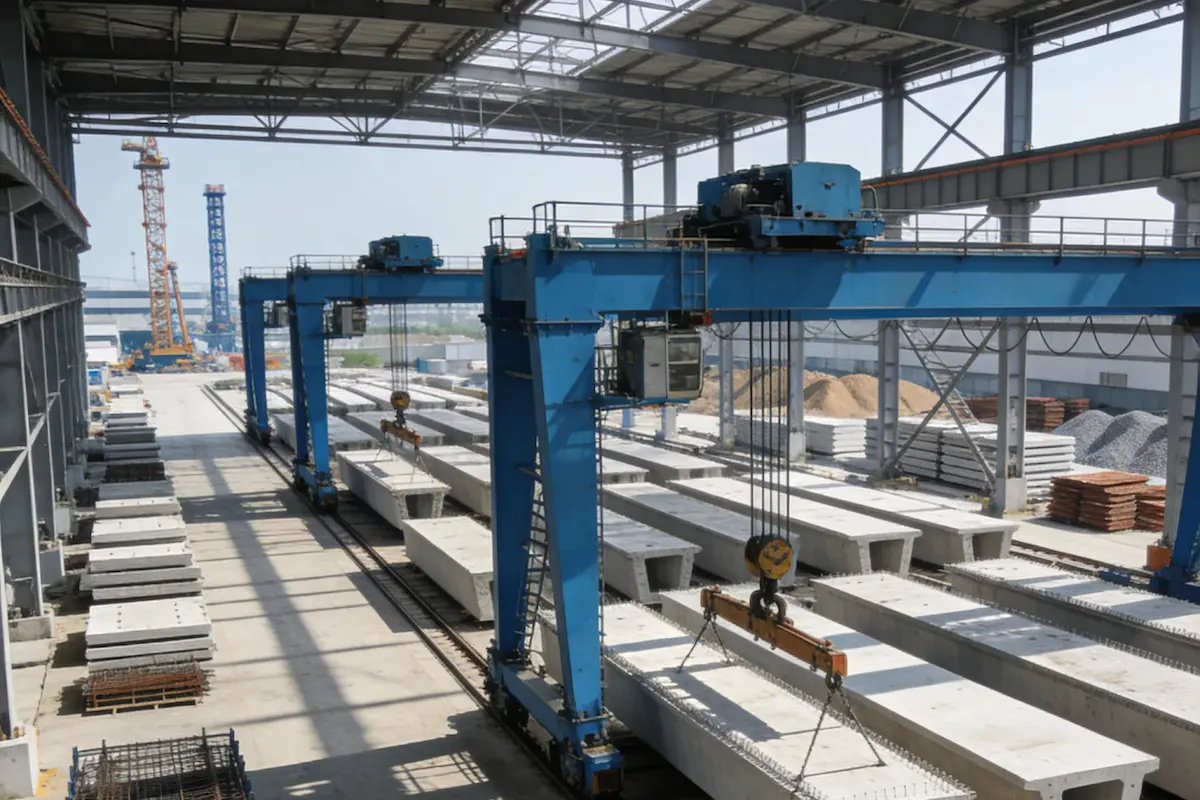
This is the final step before product delivery and demands high precision.
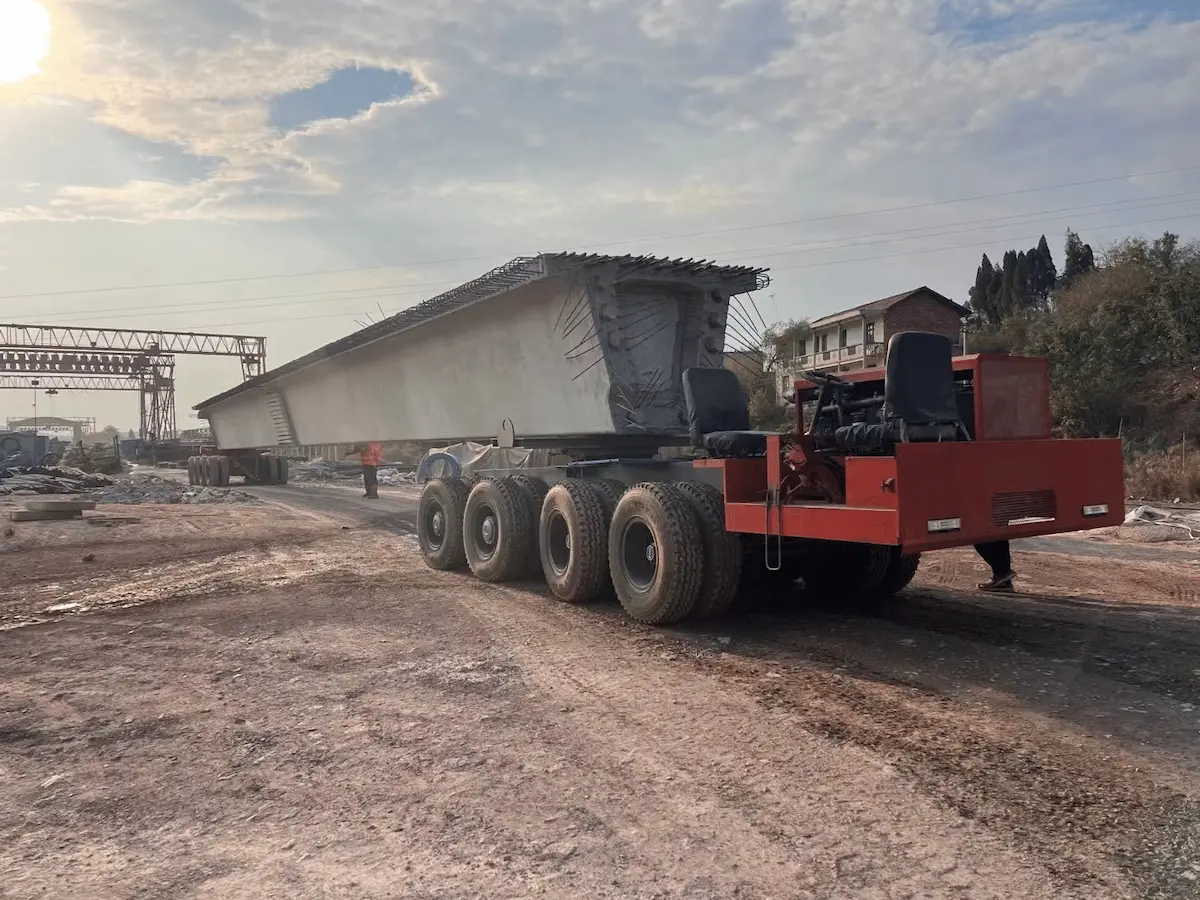
Choosing the right gantry crane affects long-term efficiency and maintenance costs. Selection must consider multiple technical dimensions.
|
Selection Dimension |
Core Technical Parameters |
Precast Production Requirements |
Recommended Configuration / Notes |
|
Lifting Capacity |
Rated load |
Must cover the heaviest precast components and lifting devices |
Keep 10%–15% safety margin; common range 10t–100t |
|
Coverage Range |
Span and lifting height |
Depends on line width, yard layout, and stacking layers (typically 3–5) |
Consider effective cantilever for direct vehicle access |
|
Duty Intensity |
Working class |
High-frequency operations such as demolding and loading |
Minimum A5 or A6 duty to prevent overheating |
|
Operating Precision |
Speed control performance |
Mold installation and demolding require high stability |
Use VFD for millimeter-level micro-motion and slow lifting |
|
Environmental Adaptation |
Protection rating |
Outdoor yards face weather; curing zones face humidity |
Outdoor models need rail clamps and anchors; IP55+ recommended |
|
Safety Assurance |
Safety monitoring system |
Monitor overload, uneven load, and tandem lifting status |
Include load limiter, height limiter, and alarm system |
|
Intelligence |
Automation interface |
Must support smart factory integration and diagnostics |
Optional anti-sway system and multi-crane synchronization |
|
Lifecycle Cost |
Maintenance convenience |
Reduce downtime and ensure continuous production |
Prefer maintenance-free brakes and self-diagnostic displays |
In practical selection, HSCRANE recommends prioritizing high duty rating, precise control, and sufficient safety margin. Precast plants operate continuously in dusty environments. Higher specifications slightly increase initial cost but greatly reduce long-term risks of motor and gearbox replacement.
Safe tandem lifting requires precise synchronized control. Get a free Lifting Capacity & Cantilever Calculation from HSCRANE engineers today.
[Request Engineering Support ->]
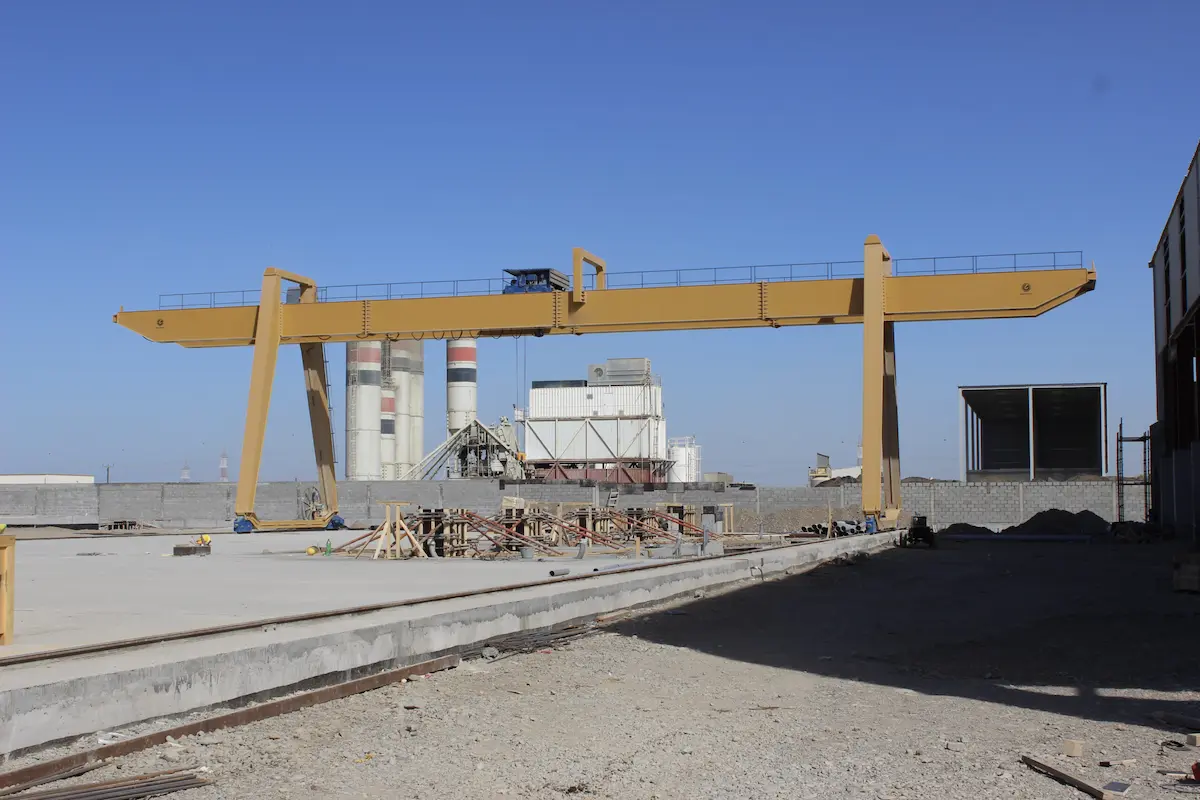
HSCRANE is committed to providing advanced material handling solutions for precast manufacturers worldwide. Our gantry cranes are preferred by industry leaders due to the following strengths.
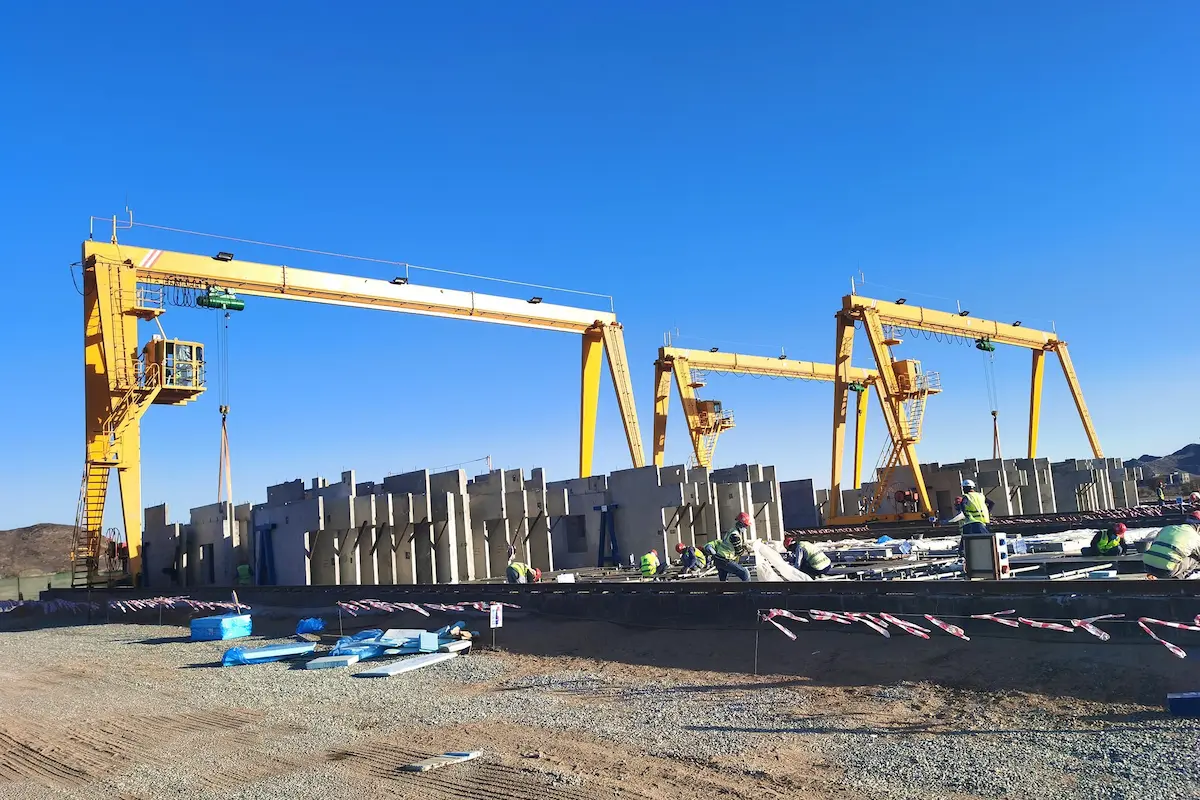
With Industry 4.0 and green building initiatives, gantry cranes are evolving from lifting tools into intelligent machines. Three major trends are shaping the future.
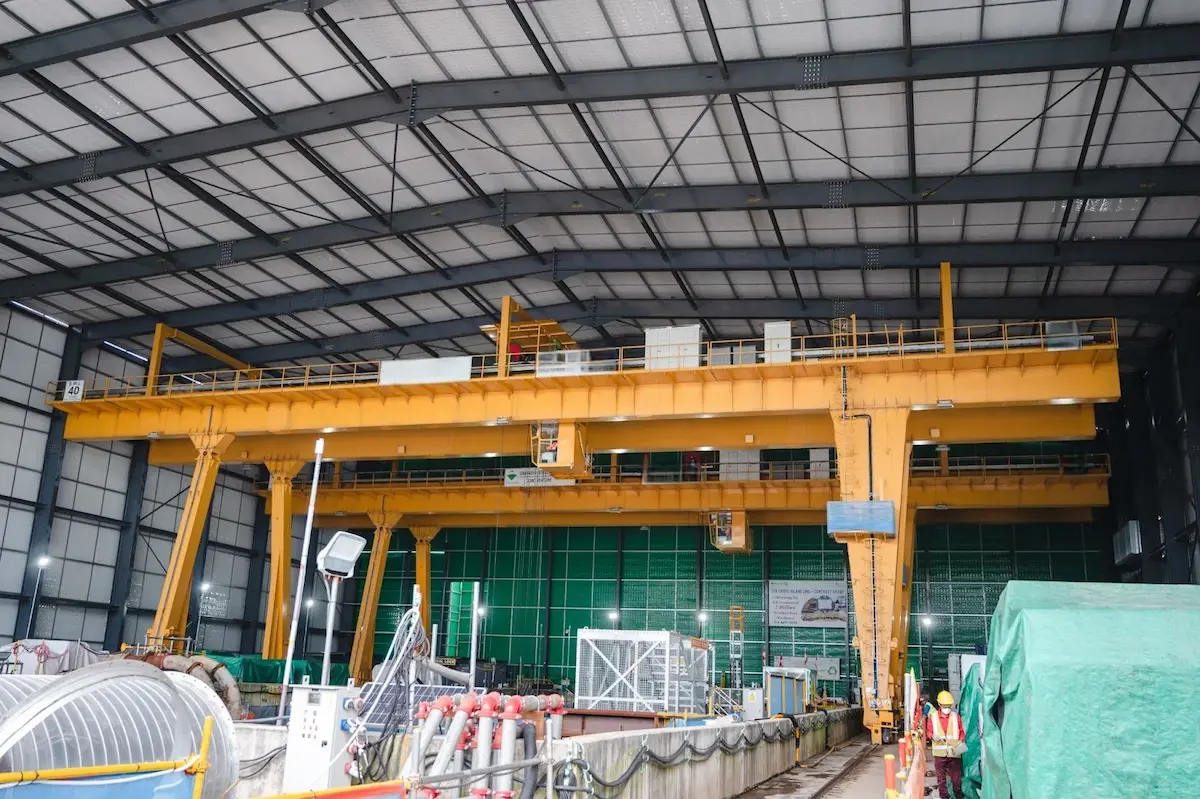
Future cranes will rely less on operator experience.
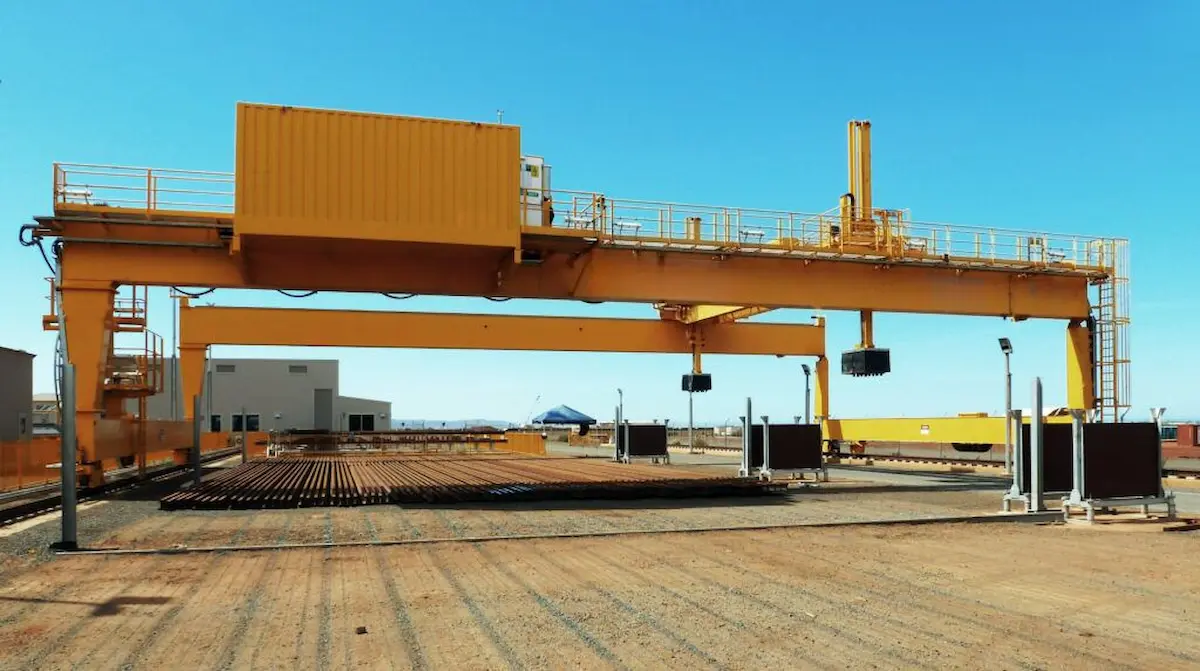
Cranes will become integral parts of manufacturing execution systems.
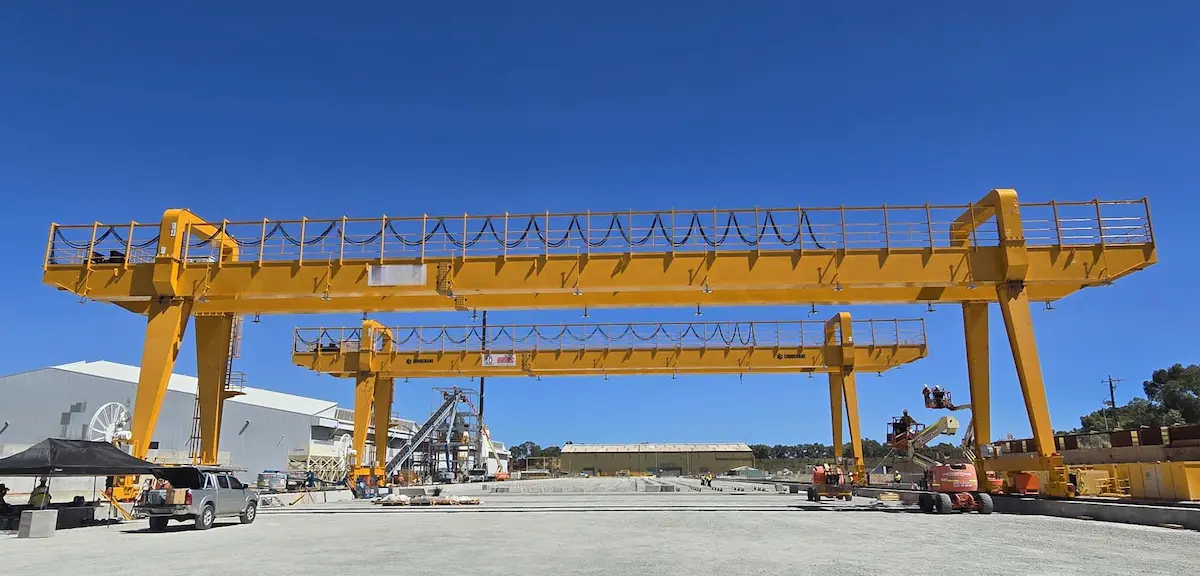
Energy optimization is becoming a key competitive factor.
In summary, gantry cranes are indispensable core equipment in precast production. They play critical roles in efficiency improvement, safety assurance, process optimization, and cost reduction. As prefabricated construction and intelligent manufacturing advance, cranes will become more automated, intelligent, and efficient. For precast plants, selecting equipment scientifically based on actual conditions is essential for long-term reliability and maximum investment return.
Get Your Customized Lifting Solution Now
Facing complex production environments and strict process requirements, HSCRANE provides full lifecycle support from design to installation. Our experts tailor the most efficient gantry crane solution based on your plant layout and capacity goals.
Contact HSCRANE and upgrade your precast production line today!
Learn More: How to Choose the Right Rail Solution
Site flexibility determines equipment selection in precast production. If you want to compare stationary gantry cranes and rail-mounted gantry cranes in structure, installation cost, and working radius, read:
[Stationary Gantry Crane vs Rail Mounted Gantry Crane: Differences and Application Analysis]
Q1: What duty class is recommended for precast plant gantry cranes?
A1: Due to high frequency and heavy loads, A5 or A6 duty class is recommended. A3 or A4 cranes may overheat or fatigue under continuous heavy use.
Q2: How to maintain balance when lifting ultra-long precast beams?
A2: Use double-trolley cranes or synchronized tandem lifting by two cranes. HSCRANE systems keep hook height and speed perfectly matched to prevent deformation.
Q3: How is safety ensured for outdoor cranes in strong wind conditions?
A3: All outdoor HSCRANE models include rail clamps, wind anchors, and wind speed alarms. When wind exceeds limits, the system automatically locks and stops operation.
Q4: What benefits does VFD control provide in precast production?
A4: VFD enables fast lifting without load and slow lifting under heavy load. Micro-motion control allows millimeter-level positioning during demolding and stacking, reducing damage risk.
Q5: Does HSCRANE provide remote fault diagnosis support?
A5: Yes. Optional IoT monitoring modules allow real-time cloud access to operating data. The system sends maintenance alerts before failures, enabling preventive maintenance and avoiding unplanned downtime.
This document is for reference only. Specific operations must strictly comply with local laws and regulations and equipment manuals.