Welcome to visit our factory
Email : info@huasuicrane.com


Logistics efficiency in steel structure workshops depends 80% on ground equipment. The remaining 20% depends on overhead crane layout. It is often the most fatal bottleneck. From raw material CNC cutting to final painting, every move of steel components needs precise crane cooperation. If lifting routes are poorly planned, workshops easily fall into a dead loop. Trucks wait for cranes and vice versa. This article explains how to scientifically design an overhead crane layout. Reasonable span and workstation designs help avoid repeated lifting. This maximizes the output value of every square meter.
Planning a steel structure production workshop?
HSCRANE has rich overhead crane design experience in the steel industry. We offer free layout plans and equipment selection advice. This is based on span, process, tonnage, and logistics routes.
[Contact us now to get your exclusive overhead crane layout plan]
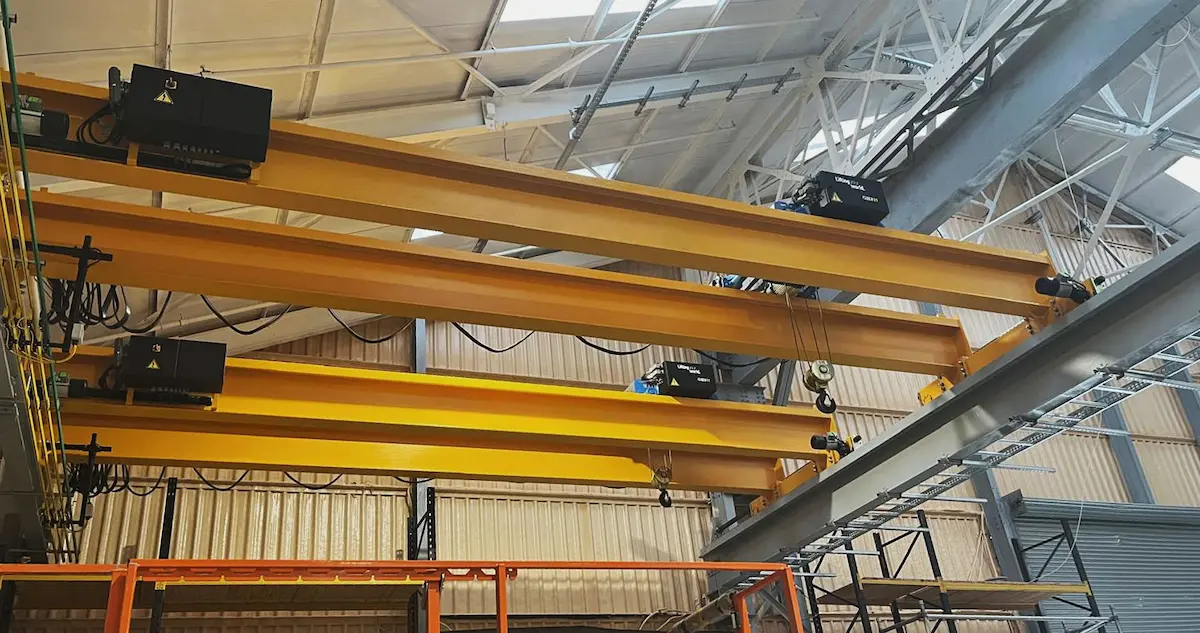
The essence of a steel structure workshop is a huge heavy logistics center. The smooth flow of components between workstations determines factory capacity limits. It also directly decides the final delivery cycle.
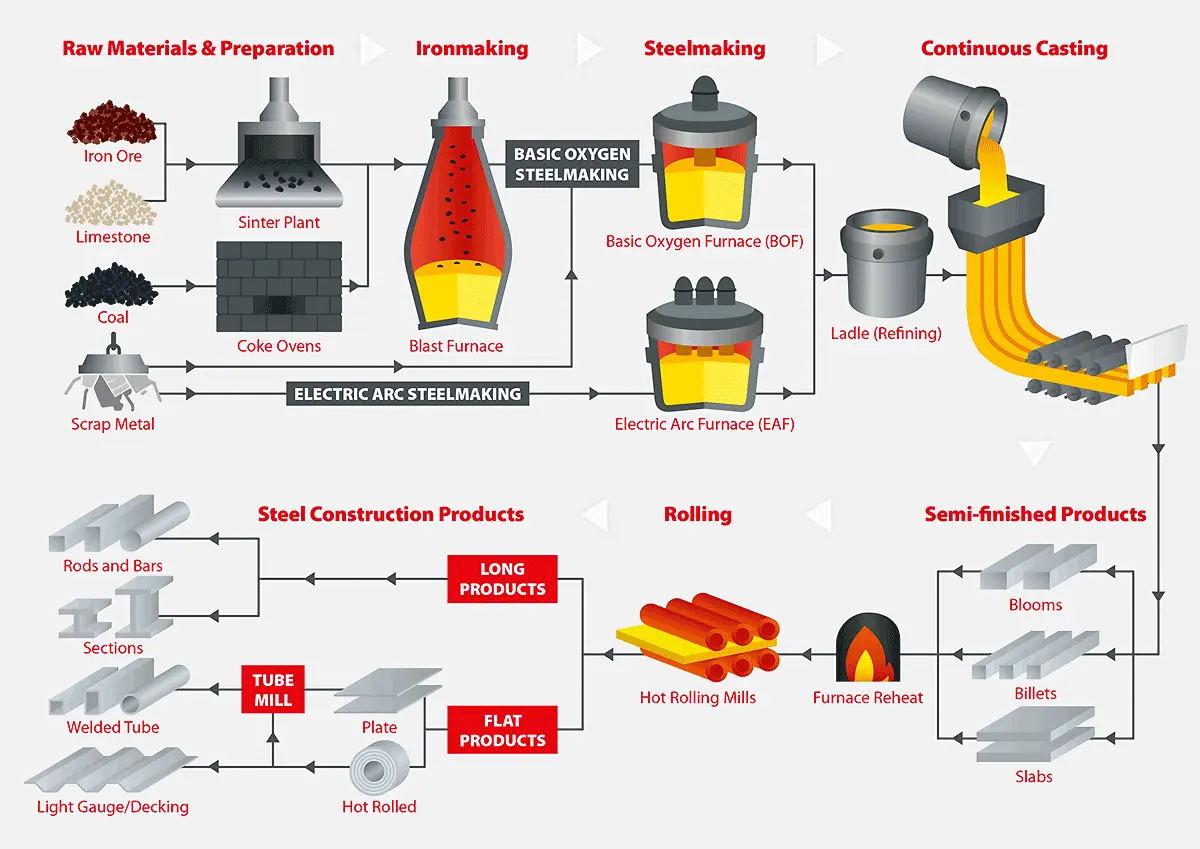
From ordinary steel plates to final structural parts, the entire production line is closely linked. A typical steel structure part usually goes through:
Raw material storage → CNC cutting → Assembly → Welding → Correction → Shot blasting → Painting → Finished product stacking
Steel components are bulky, varied in shape, and weigh many tons. They cannot rely on conveyors or manpower like light industry products. Physical movement between each process must rely on the precise intervention of the overhead crane. It can be said that the production flow direction is the crane’s running track.
To many laymen, an overhead crane is just lifting equipment. In steel workshops, it is the core hub controlling the entire production rhythm:
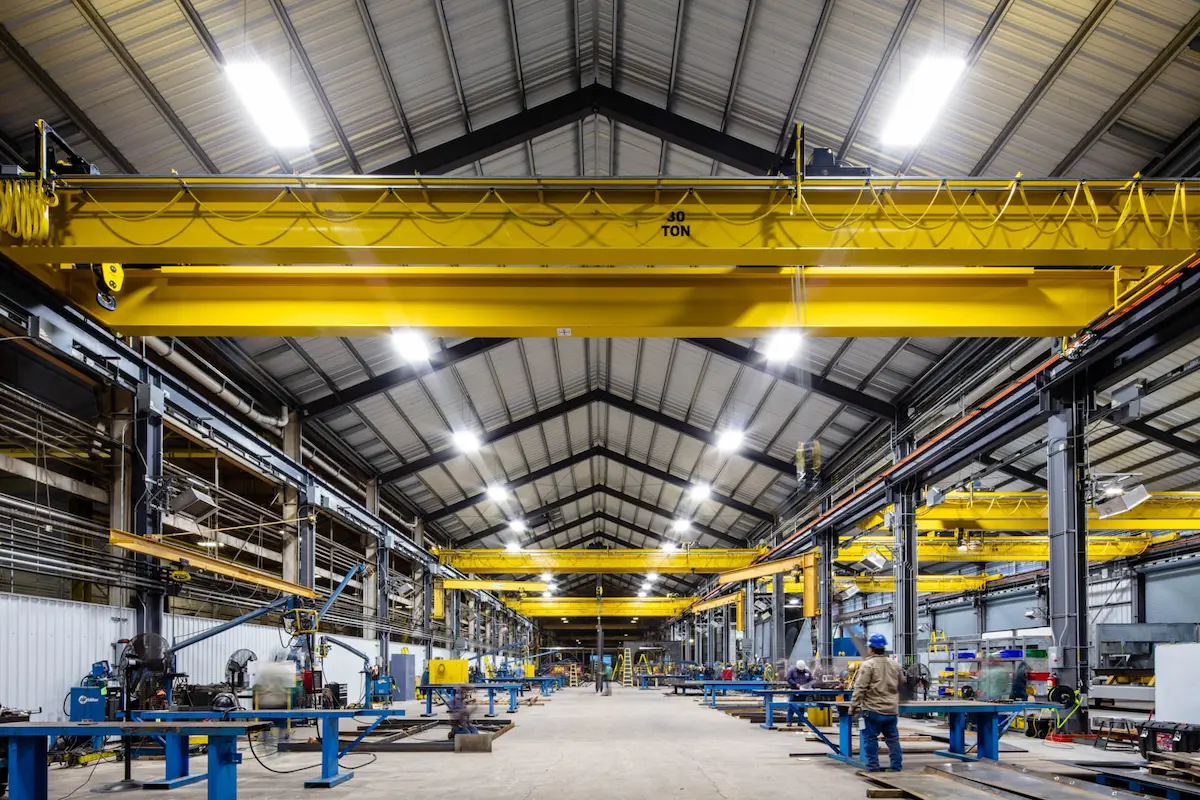
Without a reasonable overhead crane layout for actual processes during early construction, problems arise. A series of vicious cycles will quickly appear after production begins:
Therefore, you must arrange the overhead lifting network in advance. Perfectly matching workshop space and production rhythm is essential. This is the only way for steel enterprises to reduce costs and boost efficiency.
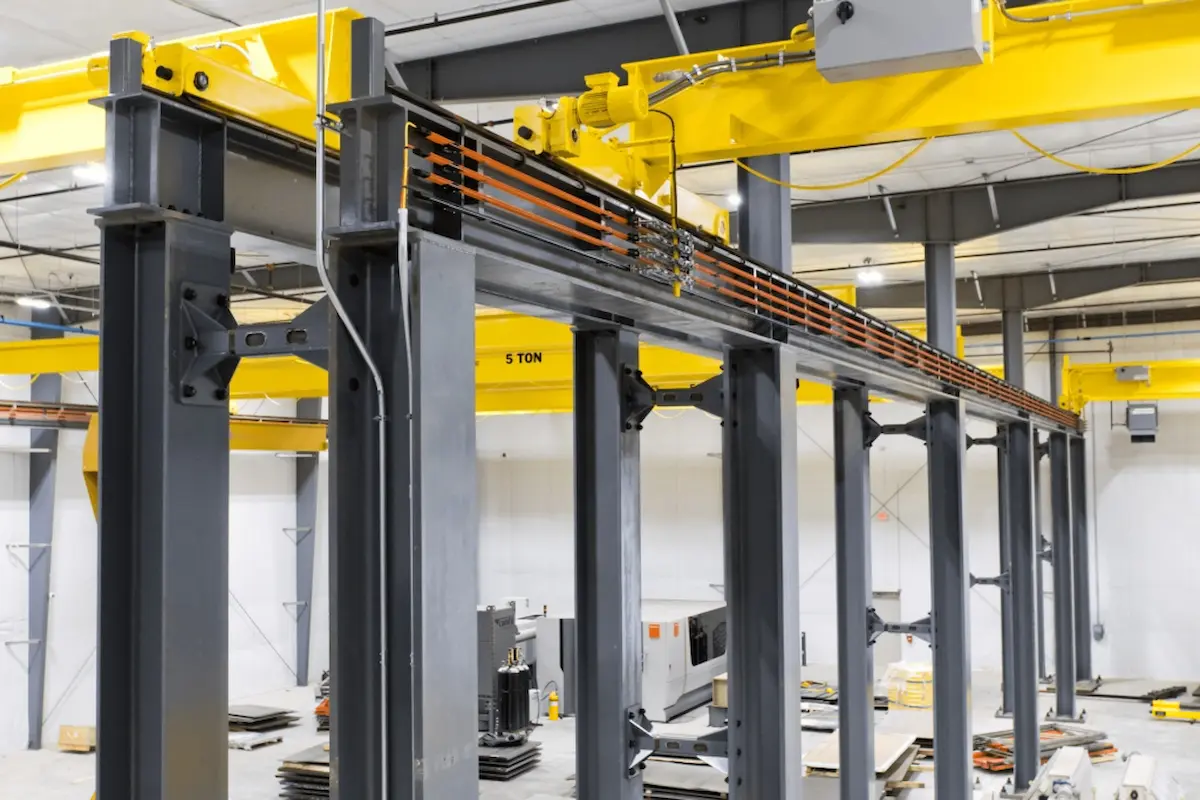
Planning cannot rely on guesswork. A good lifting network must keep these five bottom lines:
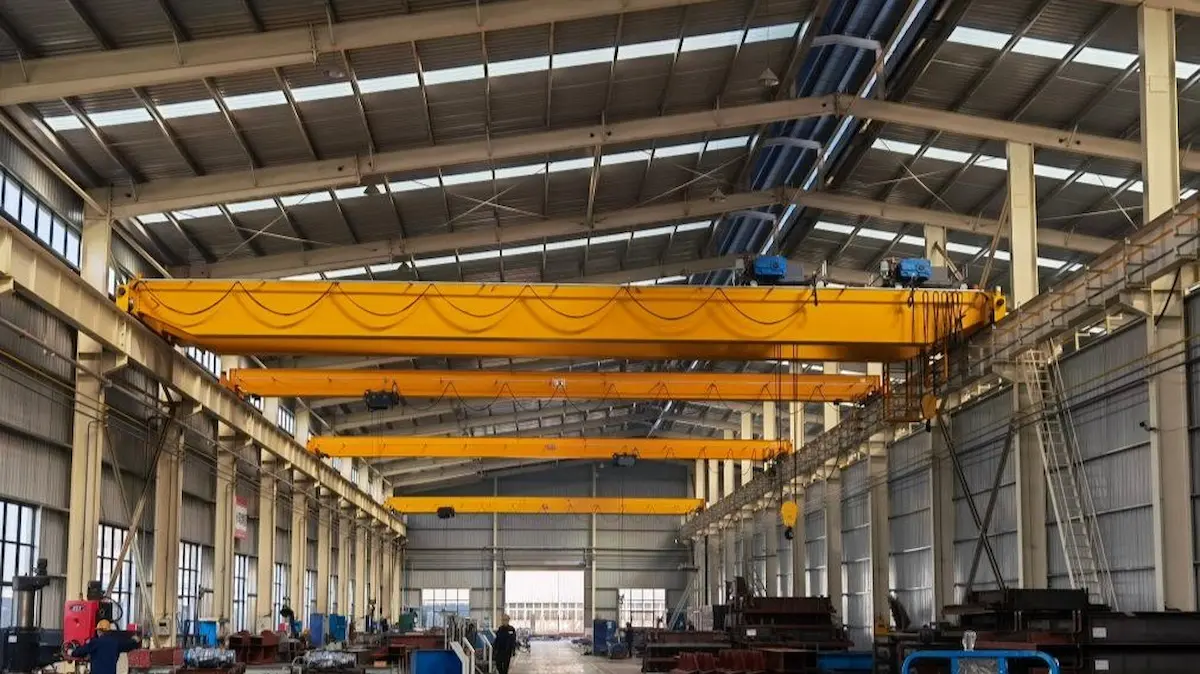
|
Solution Type |
Applicable Scenarios |
Core Features and Advantages |
|
Single Span Workshop Layout |
Small and medium steel enterprises, single primary production line. |
One double girder overhead crane covers the whole workshop. The biggest advantage is very low initial investment cost. The structure is simple. It suits start-ups or enterprises with limited space. |
|
Double Span Independent Operation Layout |
Medium to large steel factories, workshops with clear assembly zones. |
Raw material, core processing, and finished product areas are separated. Each area is equipped with an exclusive overhead crane. Non-interfering design greatly reduces equipment waiting time between processes. |
|
Multi-span Linkage Layout |
Large/super-large steel manufacturing bases, high-capacity linked operation lines. |
A true workshop logistics network. Multiple devices cooperate across different spans. This achieves seamless continuous logistics relay transport factory-wide. It directly maximizes the overall capacity limit. |
|
Overhead Crane + Jib Crane Combination |
Intensive welding stations, refined assembly and processing areas. |
A classic high-low combination. Large-span, large-tonnage long-line movements use the top overhead crane. The jib crane handles high-frequency small part precise positioning. Both perform their duties well. Workstation efficiency increases exponentially. |
Having trouble with selection, unsure which solution is better?
Theory is never enough. Equipment installation depends on specific workshop sizes and process rhythms. Leave the complex data to us. HSCRANE’s senior engineers will evaluate for free. We will customize overhead crane layout drawings and equipment lists. These will perfectly match your production capacity goals.
[Contact us now to get your exclusive workshop lifting plan]

A perfect overhead crane layout needs proper route planning and matching equipment. For steel structure workshops, deciding these four core parameters affects long-term use:
|
Core Selection Parameters |
Recommended Standards |
Core Decisions |
Pitfall Avoidance Guide |
|
Lifting Capacity (Tonnage) |
5t, 10t, 16t, 20t, 32t, 50t+ |
Cover the heaviest component plus future expansion needs. |
Leave a safety margin: If the heaviest part is 18t, choose 20t or 32t. Avoid long-term full load or overload. |
|
Span (Coverage Area) |
Customized to workshop width. |
Consider workshop width, rail positions, and safety clearance. |
Measure correctly: Span is the distance between two rail centerlines, not wall-to-wall. Leave gap between end beams and corbels. |
|
Lifting Height (Vertical Space) |
Customized to workshop clearance. |
Based on corbel height, roof truss elevation, and component flipping needs. |
Calculate flipping room: Large components need massive vertical space to rotate. Account for the hook’s upper limit blind zone. |
|
Working Duty (Frequency) |
Strongly Recommended: A5, A6, A7 |
Match the high-frequency, heavy-load environment of steel manufacturing. |
Do not choose A3/A4 to save money: Low-duty cranes overheat under continuous work. Use heavy-duty equipment to prevent motor burnout. |
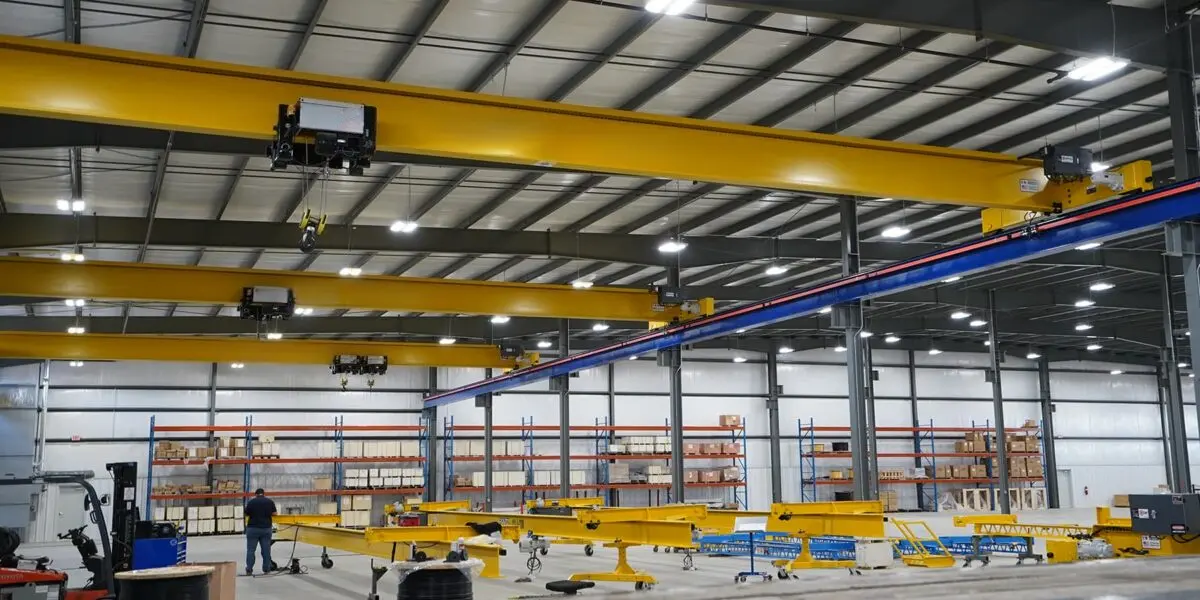
A practical overhead crane layout plan is never just drawing lines. True experts must perfect these six hard indicators:
① Workshop Size: This determines the physical boundaries of equipment. Look at length and width. Pay close attention to clearance height and corbel bearing capacity. Track clearance from the roof limits crane parameters.
② Production Rhythm: The overhead crane must match the assembly line speed. Assembly zones may need flipping every 10 minutes. Crane running speed must keep up. Workers must never wait for the crane.
③ Component Size: Do not just look at component weight. You must also consider its length. Single hooks often cannot handle super-long H-beams or trusses. You must plan double-trolley or double-crane collaborative lifting routes.
④ Lifting Frequency: Welding areas lift hundreds of times daily. Finished product warehouses load a few trucks. Equipment requirements are vastly different. High-frequency areas must increase crane layout density. They must also use heavy-duty equipment.
⑤ Ground Logistics Routes: Overhead operations cannot conflict with ground operations. Lifting tracks must match ground flatbed transfer channels. Heavy objects must not cross crowded work areas frequently. This keeps the safety bottom line.
⑥ Future Expansion Needs: Have a long-term vision when planning. Are track ends convenient for outward extension? Can existing steel columns support another large-tonnage overhead crane later? Leave enough room at the start. You will not panic during future expansion.
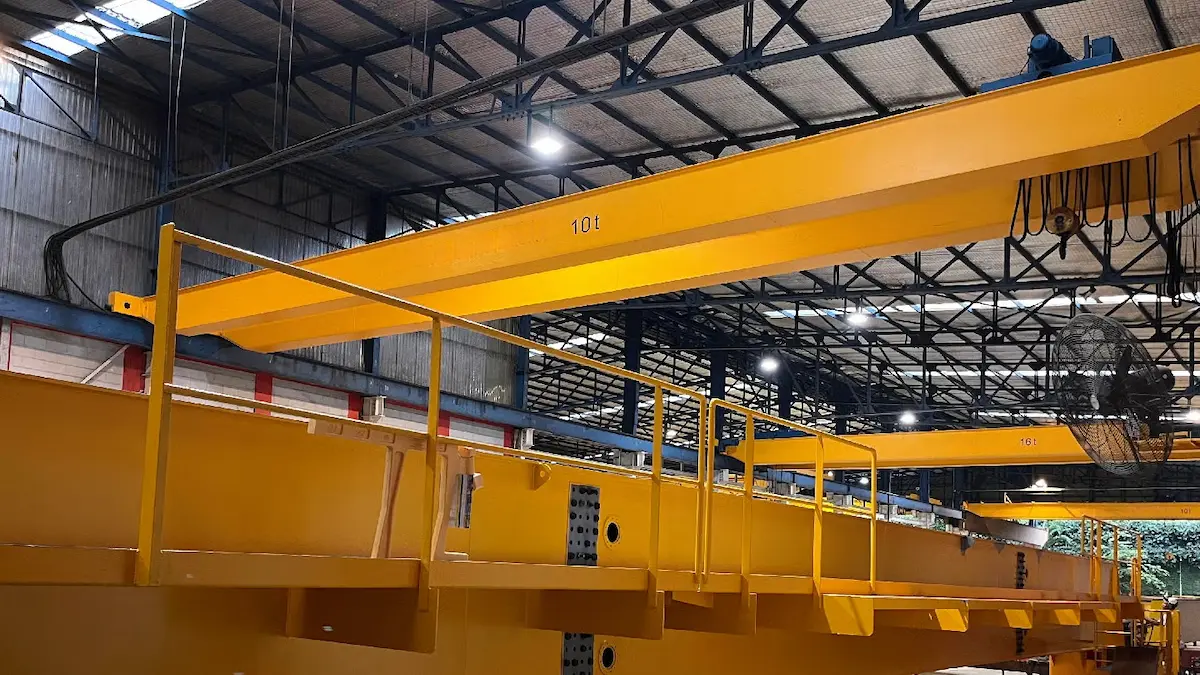
Why do many steel enterprises trust us when finalizing their overhead crane layout? Because HSCRANE is not just a manufacturer. We are logistics planning partners who understand your workshop processes:
① Deep Industry Experience: We deal with H-beams and box girders daily. We know the difficulties of double-crane lifting. We also understand the strict continuous rotation in welding areas. Our designs come from countless real workshop experiences.
② One-Stop Turnkey Solution: From early workshop mapping and lifting simulation to mid-term equipment manufacturing. Then to late-stage on-site installation and heavy-load testing. We handle the entire process alone. This helps you avoid multi-party communication troubles.
③ Hardcore Customization Ability: We customize on demand regardless of clearance limits. Designs strictly meet top international standards. Machine working levels comply with ISO 4301-1. Fatigue stress calculation follows FEM 1.001 strictly. Safety protection completely implements EN 15011:2011. They are compliant, safe, and verifiable.
④ High-Quality Core Components: Steel workshops have heavy dust and loads. Our lifting motors and reducers use top configurations. Inverter control systems are also top-tier. High standards ensure extremely low failure rates. They run stably even in three shifts.
⑤ Global Delivery Capability: Whether your factory is domestic or overseas, we can help. Our international logistics system is very mature. We also have experienced overseas installation teams. They ensure equipment is installed and operates on time.
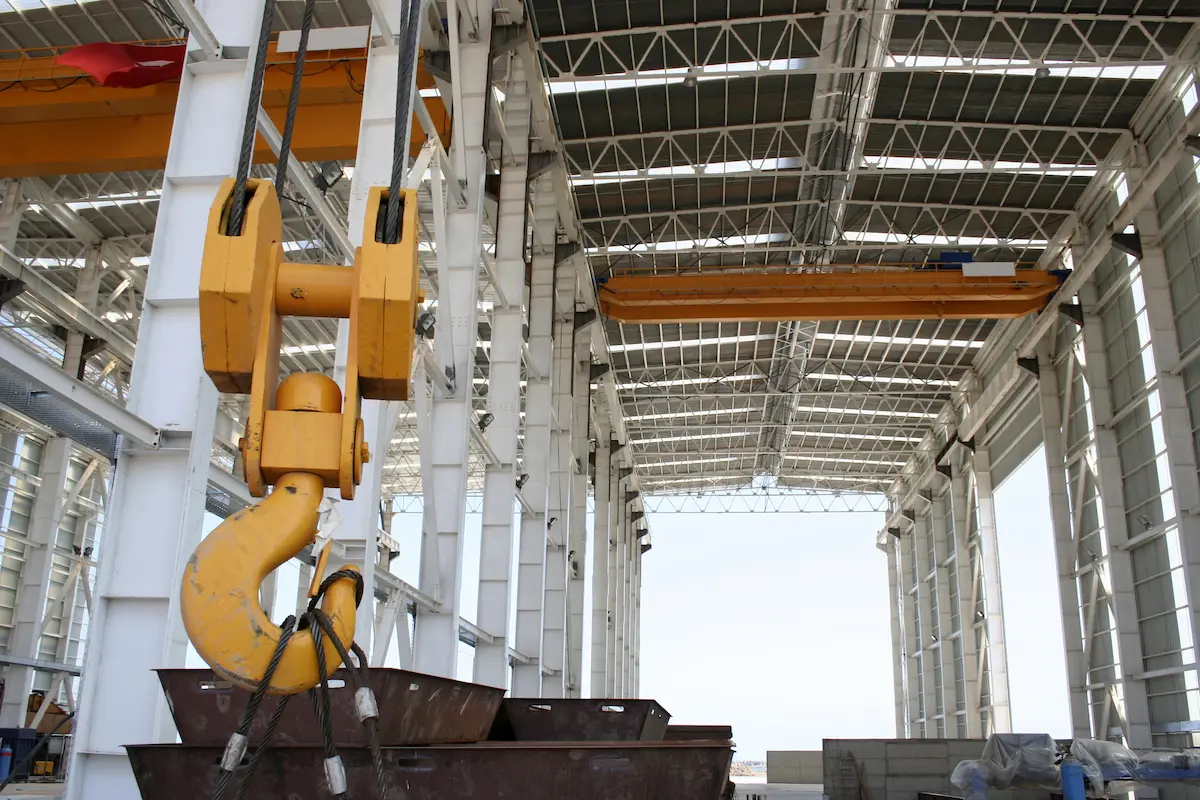
Empty theories are worse than seeing real results. Below are two highly representative cases we delivered recently. See how customized solutions turn into real productivity on site.
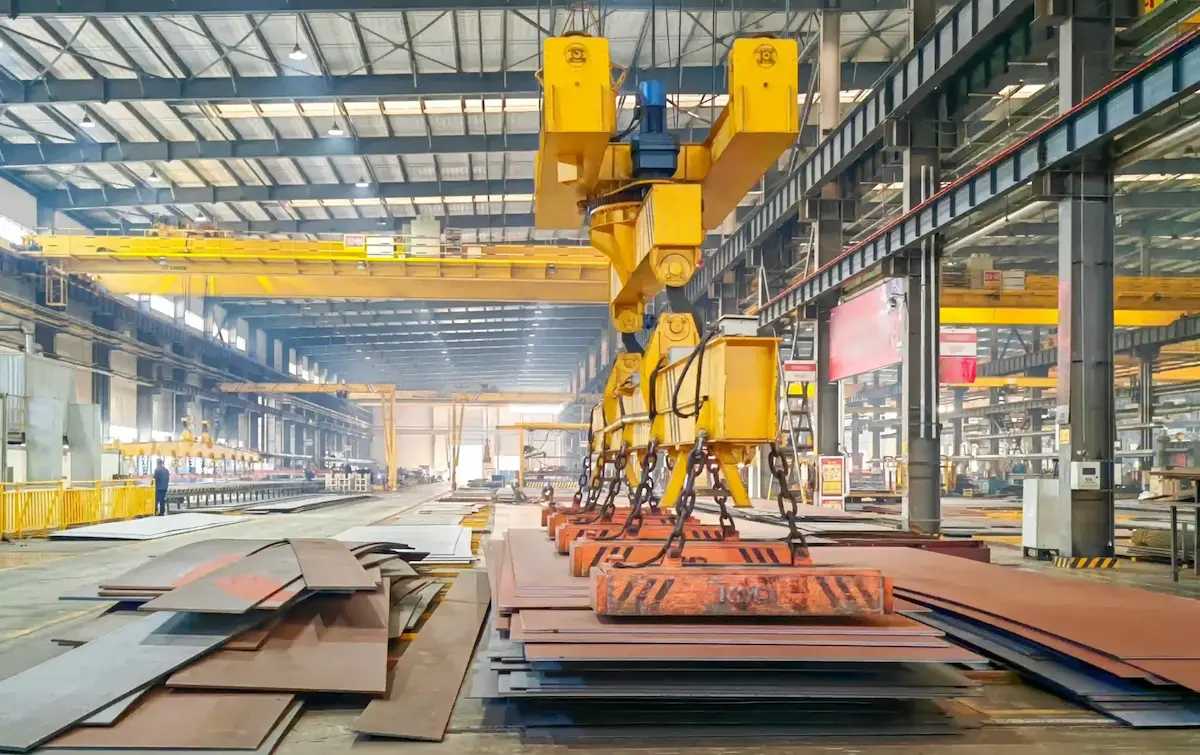
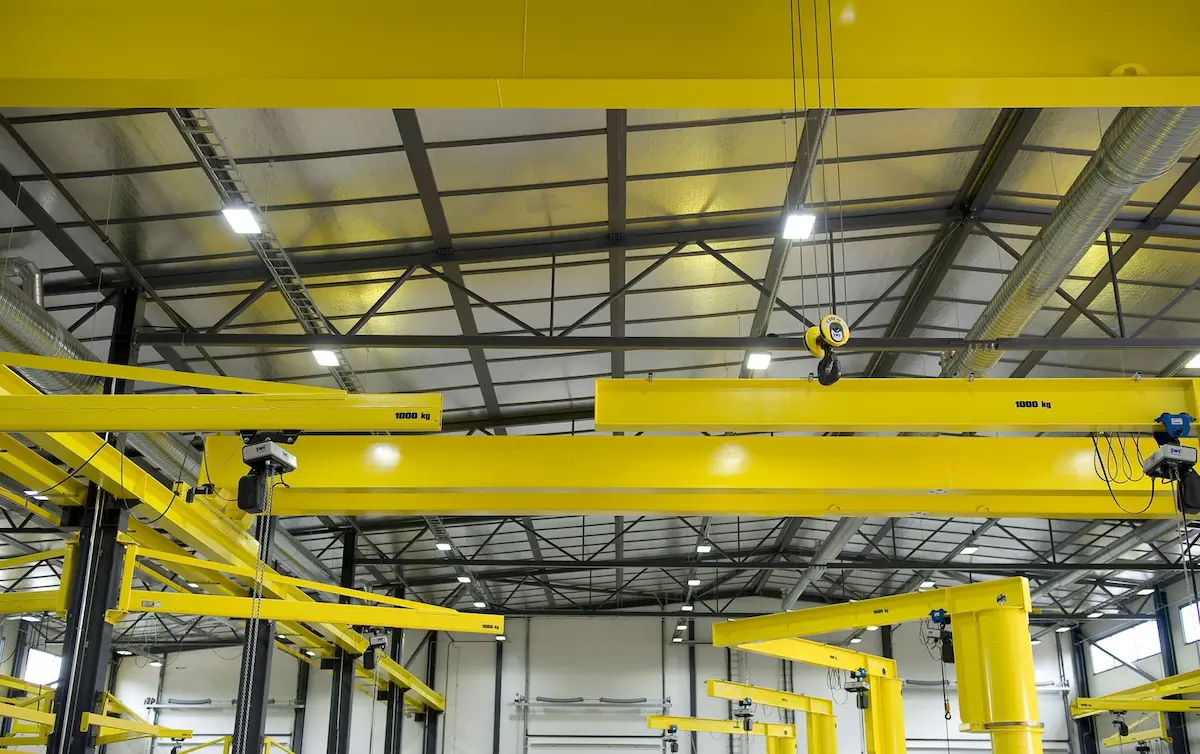
In the steel manufacturing battlefield, space is productivity. Logistics routing is profit margin. A reasonable overhead crane layout is not just hanging equipment. It makes every overhead crane a precise logistics metronome. From raw material storage to final shipment, every lifting optimization matters. It directly translates to smoother processes and earlier deliveries.
We understand every steel enterprise’s caution. This happens when facing capacity expansion or equipment selection. You need more than just a crane. You need a logistics system that dynamically evolves with your capacity growth. HSCRANE wants to be your workshop’s technical partner. We eliminate every hidden logistics bottleneck with scientific design and high-quality equipment.
Want to know how your workshop can run faster?
HSCRANE’s senior team has provided targeted lifting plans for hundreds of steel factories. Contact us now for a free layout design evaluation and equipment configuration list. Let your workshop operational efficiency reach new heights starting today.
[Contact us now to start your exclusive workshop upgrade plan]
Planning a workshop logistics solution? You cannot miss this selection guide!
The workshop structure determines the crane configuration standards. From steel flexibility to concrete stability, HSCRANE summarizes key selection factors. These are crucial for overhead crane selection. Whether your workshop is newly built or expanded, this guide provides scientific parameter references.
[Click here to view: Steel Structure Workshop vs Concrete Workshop: Complete Guide to Overhead Crane Selection]
Q1: Does limited workshop height affect the overhead crane layout?
A: Yes. If clearance is tight, we recommend European low-headroom double girder cranes. Optimized structures maximize lifting height. This ensures large steel components flip safely within limited heights.
Q2: If the workshop expands later, how does the current solution leave room?
A: We consider safety margins early. We add extra capacity to corbels and reserve track joints. If you increase tonnage or extend spans later, you will not remove the system. This saves future costs.
Q3: Why does the steel structure industry strongly recommend A5 to A7 cranes?
A: Steel workshops have heavy, high-frequency lifting. Standard A3 or A4 cranes easily overheat and fail. A5 to A7 cranes use thicker steel and reinforced drives. They handle continuous full-load work, keeping your factory running.
Q4: Does HSCRANE support multiple overhead cranes running on one track simultaneously?
A: Yes. Our smart anti-collision system accurately sets safe distances between cranes. We provide mature scheduling strategies. They work for both collaborative lifting and independent transport.
This document is for reference only. Specific operations must strictly comply with local laws and regulations and equipment manuals.